


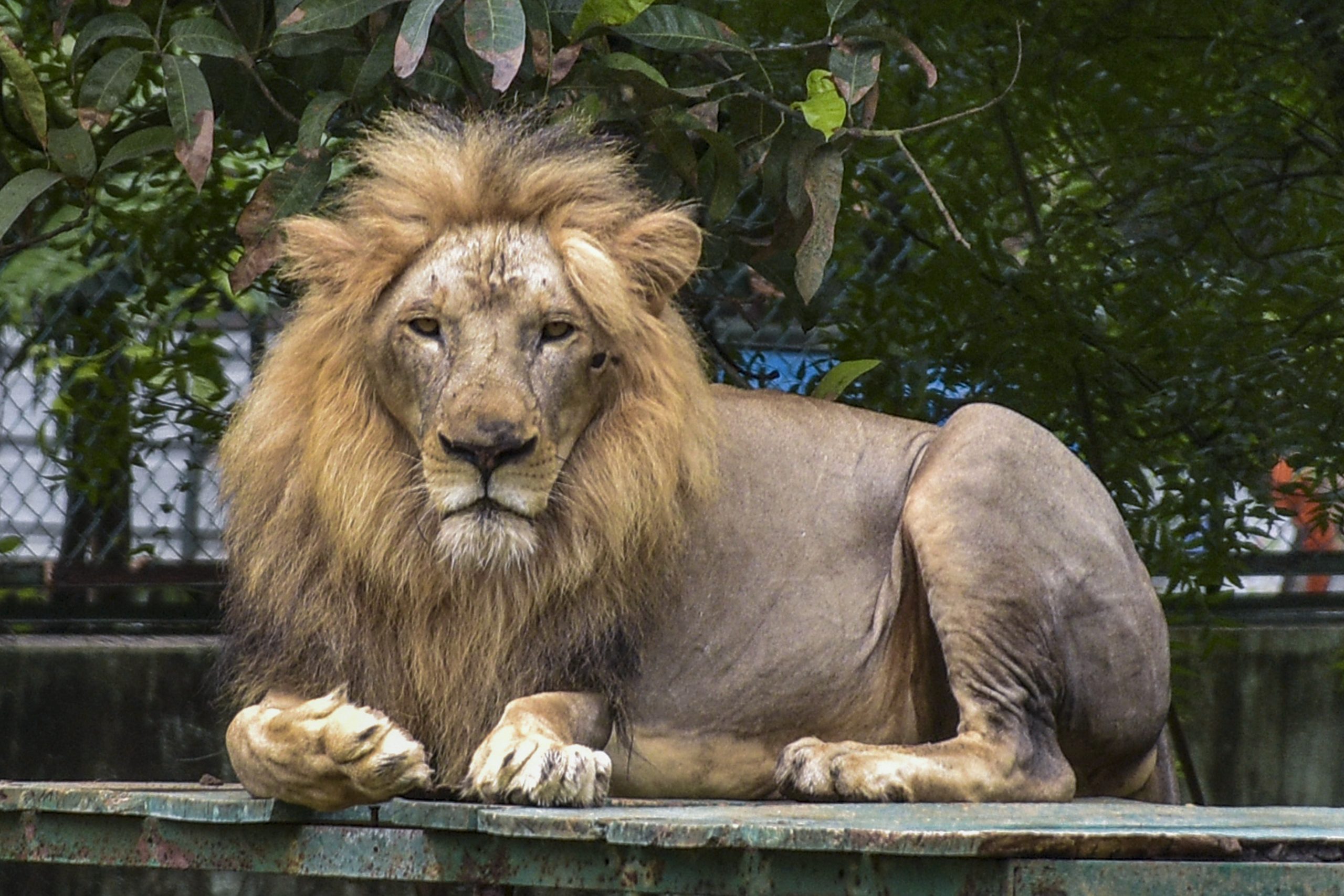
The Asiatic lion population in Gujarat, India, surged by 32% from 2020 to 2025, reaching 891 individuals, according to the Gujarat Forest Department’s 16th Lion Population Estimation released on May 25, 2025. Confined to Gir National Park and surrounding areas, this growth, celebrated as a conservation success, raises concerns about habitat constraints, human-wildlife conflict, and ecological sustainability.
In This Article:
The report, covering nine districts in Saurashtra, highlights the lions’ expanding range, now at 35,000 sq. km, but also underscores challenges like livestock attacks and inbreeding risks, sparking debate on whether this boom is a blessing or a worry.
A Conservation Triumph with Challenges
The Asiatic lion (Panthera leo persica), once on the brink with only 180 individuals in 1974, has grown to 891, with 330 adult females signaling future growth. Amreli district hosts the highest population (339), followed by Gir-Somnath (222) and Junagadh (191). Conservation efforts, including prey availability (e.g., wild boars) and community tolerance by pastoral Maldharis, who receive compensation for livestock losses, have driven this success. Prime Minister Narendra Modi’s ₹2,927 crore Project Lion, approved in 2025, aims to develop Barda Wildlife Sanctuary, currently home to 17 lions, as an additional habitat. However, experts like Y.V. Jhala, former Dean of the Wildlife Institute of India, warn that Gir’s capacity, estimated at 2,000 lions, is strained by human proximity, risking conflict.
Rising Human-Wildlife Conflict
The lions’ range expansion, up 16.67% since 2020 to 35,000 sq. km, includes 497 individuals in satellite populations outside protected areas, such as Jetpur and Babra-Jasdan. This dispersal into human-dominated areas has led to increased livestock attacks and occasional human fatalities,, Inbreeding in the isolated Gir population also threatens genetic diversity, potentially weakening disease resistance. Lions venturing into villages heighten tensions, despite compensation schemes. Experts suggest translocating lions to Kuno National Park in Madhya Pradesh to reduce pressure, but Gujarat’s reluctance to share its conservation success delays progress.
Ecological and Socioeconomic Impacts
Lions, as apex predators, regulate herbivore populations, preventing overgrazing and preserving ecosystems. However, their growing numbers strain prey resources, pushing them toward livestock. The Smithsonian notes that lions keep crop-damaging herbivores in check, benefiting farmers, but retaliatory killings remain a risk. Economically, lion-based tourism boosts Gujarat’s revenue, yet infrastructure development near Gir threatens habitat, per the National Zoo. The balance between conservation and human safety is delicate.
A Double-Edged Sword
While Gujarat’s lion population growth is a conservation milestone, it poses challenges of habitat saturation, human conflict, and genetic risks. Project Lion and proposed translocations to Kuno could alleviate pressure, but only if paired with community education and robust habitat management. As @mygovindia celebrates this “proud symbol,” balancing ecological benefits with human safety remains critical to ensure the king of the jungle thrives without becoming a worry.
-By Manoj H