


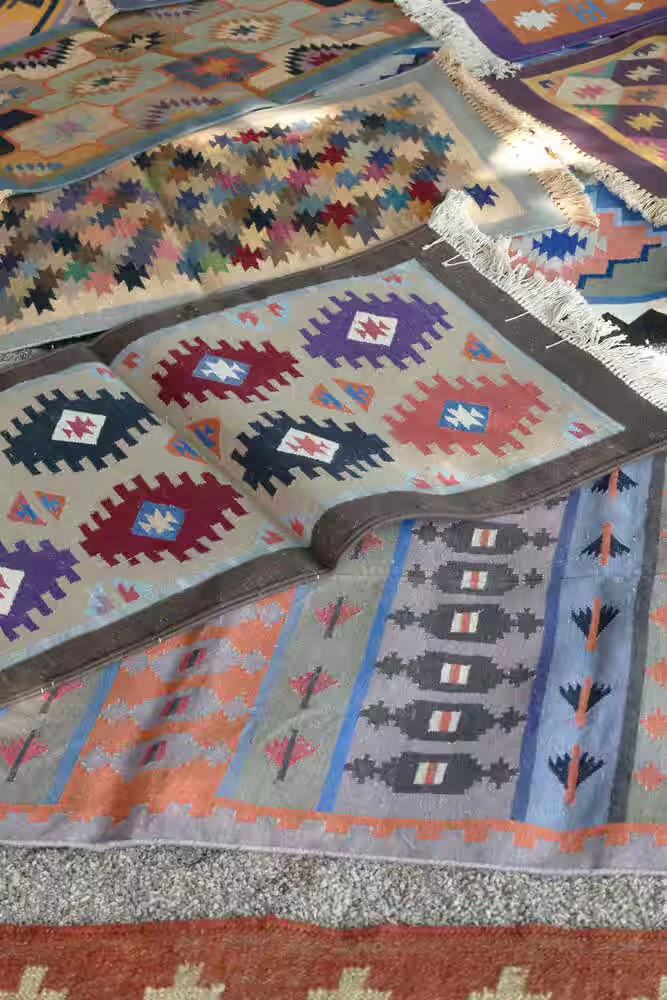
In the vibrant cultural landscape of Uttar Pradesh, Mirzapur Handmade Dari holds a special place — not just as a home furnishing item but as an icon of India’s weaving heritage. Recognized for its geometric patterns, bold colors, and sturdy quality, the Mirzapur dari (rug) is a masterpiece of handloom craftsmanship that continues to grace homes both in India and abroad.
In This Article:
Awarded a Geographical Indication (GI) tag in 2013, this handmade treasure is a flagship product under the One District One Product (ODOP) initiative, proudly representing the identity of Mirzapur district.
A Rug Woven with Culture and Skill
- The Mirzapur dari is a handwoven cotton rug, traditionally used for sitting, sleeping, or floor decoration.
- Crafted on a pit loom, it is made with coarse cotton, wool, or jute yarns, woven into vivid patterns.
- Designs often feature stripes, zig-zags, diamonds, and tribal motifs, combining visual appeal with functionality.
- The product is reversible, lightweight, and eco-friendly — making it a sustainable decor option.
A Legacy Woven Through Generations
- Dari weaving in Mirzapur dates back to the Mughal period, when the art was patronized by kings and landlords.
- The region’s proximity to Varanasi gave it access to a steady supply of yarn and trade networks.
- Today, the tradition continues in villages like Bhojpur, Bhadohi, Chunar, and Lalganj, involving over 5,000 weavers.
GI Tag and ODOP Recognition
- The GI tag (No. 112) was granted in 2013, officially acknowledging the unique identity of Mirzapur dari.
- It is promoted as the primary handicraft of Mirzapur district under ODOP by the Government of Uttar Pradesh.
- Various national exhibitions like Hunar Haat, India International Trade Fair, and Shilp Mela have displayed these artisanal rugs to global buyers.
Modern Challenges Facing Traditional Weavers
- Due to low wages and rising raw material costs, younger generations are reluctant to take up the craft.
- Machine-made imitations have entered the market, threatening the authenticity of handmade products.
- Limited digital access and marketing tools prevent artisans from selling directly to end consumers.
A Path Forward: Digital Empowerment and Design Integration
To preserve this timeless art, there is an urgent need for e-commerce onboarding, design innovation, and better artisan wages. Collaborations with designers, NGOs, and platforms like Amazon Karigar and Flipkart Samarth are beginning to uplift the weaving community.
The Mirzapur Handmade Dari is more than just a floor covering — it’s a story of tradition, resilience, and identity that deserves a place in every conscious home.
By – Nikita