


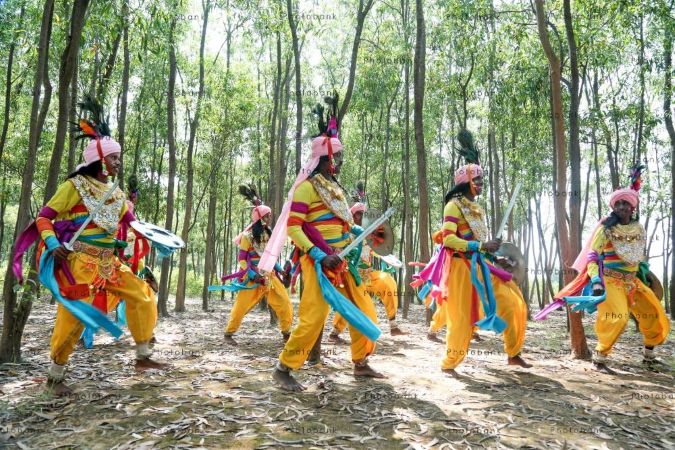
In the heart of Odisha’s tribal heartlands, as the sal trees bloom and whisper their ancient secrets to the wind, a vibrant festival stirs the earth with joy—Sarhul.
In This Article:
Rooted in reverence for nature, ancestors, and renewal, Sarhul is not just a festival; it is a living pulse of tribal India, a celebration where the forest becomes a temple, the earth a mother, and the community a single soul dancing together.
What Is Sarhul?
Derived from two words—‘Sarai’ (sal tree) and ‘Hul’ (collective celebration or worship)—Sarhul is an annual tribal festival that welcomes the arrival of spring and the new year among the Ho, Munda, and Oraon tribes of Odisha.
It is observed during the Chaitra month (March–April) on the third day of the bright fortnight, just as the forests burst into bloom.
The Sacred Sal Tree: A Living Deity
In Sarhul, the sal tree is not just a plant; it is a sacred symbol of life, fertility, and resilience. Tribes believe the sal blossoms signal the Earth Mother’s readiness to nurture another cycle of life. No seeds are sown, no land is tilled until the rituals of Sarhul are performed.
Rituals Rooted in Ancestral Wisdom
At the heart of Sarhul lies a ritual as old as the land itself:
- The village priest, known as Pahan, leads the worship under a sal tree.
- Offerings of flowers, fruits, and rice beer (handia) are made to Gram Devi (village goddess) and the spirits of ancestors.
- No modern altars. Just the earth, the tree, and human spirit bound in devotion.
This intimate communion with nature sets Sarhul apart from most urban festivals. It reminds us that rituals were once wild, raw, and sacred.
When the Forest Becomes a Dance Floor
Sarhul is also a time of joyful abandon and cultural pride:
- Villagers wear traditional red and white garments, often handwoven.
- Youth and elders alike join in folk dances like Jhumar and Chhau, circling bonfires and echoing the rhythm of madal and nagara drums.
- Songs sung in tribal dialects speak of harvests, legends, and love.
In places like Sundargarh, Mayurbhanj, Keonjhar, and Similipal, this celebration isn’t a performance—it’s a heartbeat.
Why Sarhul Still Matters
At its core, Sarhul is a ritual of gratitude—to the earth, to ancestors, and to each other.
In a world racing toward modernity, this festival reminds us of:
- The interconnectedness of all life
- The importance of community over consumerism
- And the power of preserving indigenous wisdom
It’s no wonder that Sarhul is now celebrated in cities like Rourkela and Bhubaneswar, where tribal youth keep the flame of tradition alive in the modern world.
More Than A Festival—A Philosophy
Sarhul isn’t about rituals alone. It’s a philosophy of living lightly, gratefully, and harmoniously with the natural world. It teaches us that before we sow, we must first give thanks. Before we talk, we must remember.
In the forests of Odisha, as sal leaves rustle and drums echo into the night, Sarhul speaks—a language of ancient joy, of seasonal cycles, and of the sacredness of the soil beneath our feet.
By – Nikita