


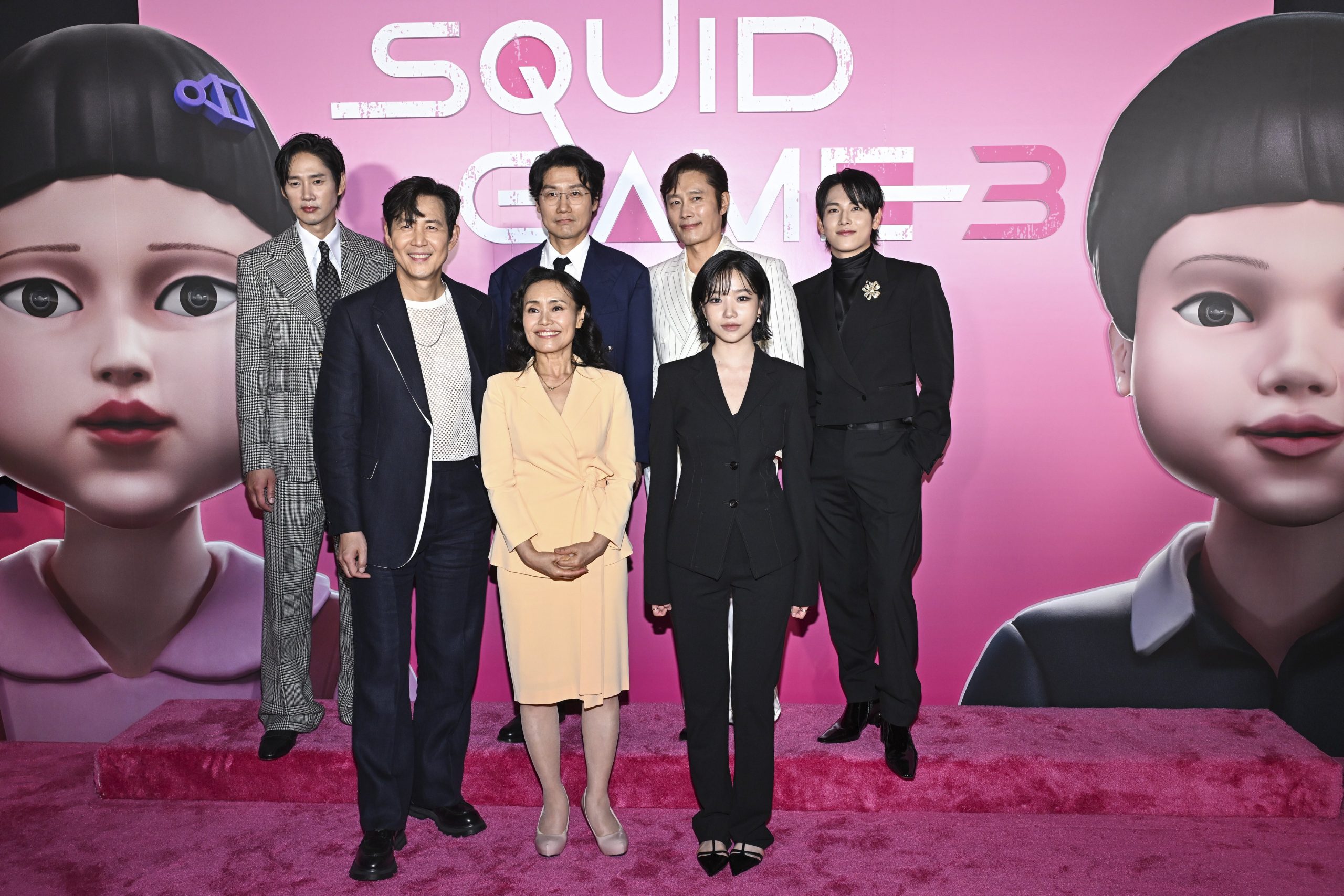
Released globally on Netflix on June 27, 2025, Squid Game Season 3 debuted with much anticipation—but quickly fell under scrutiny due to a controversial sequence in Episode 2. The scene in question depicts contestant Kim Jun-hee (Player 222) giving birth in the middle of a deadly game challenge. Shockingly, she delivers her baby in under five minutes, experiences no visible pain or complications, and—with no medical intervention—miraculously walks off, recovering swiftly.
In This Article:
Viewers were stunned. One exclaimed, “So no one’s going to talk about how she gave birth in five minutes?” While another observed, “Gihun made it to the final games twice. Junhee gave birth in less than 15 minutes, no bleeding, nothing, but her broken ankle was treated as more painful than childbirth”. Criticism quickly focused on the unrealistic portrayal of labor, concerns over narrative plausibility, and the absence of standard childbirth elements like amniotic fluid, the placenta, postpartum fatigue, or diapers.
Director Criticised for Lack of Medical Accuracy
The creative choice to compress childbirth into a stylized, trauma-free moment triggered backlash, largely aimed at the show’s male director, who fans accuse of overlooking feminist sensibility and medical realism. As one commenter raged, “It’s not just unrealistic—it’s lazy writing. It shows how little the creators consulted women or medical experts”. Many have urged that such a significant moment warranted authentic representation over narrative shock value.
CGI Baby Divides Opinion
The episode also introduced the newborn as a ‘player’ in subsequent games—raising questions about CGI quality too. Critics described the digital infant as poorly animated, comparing it unfavorably to other infamous CGI babies. While some defended the creative liberty as metaphorical rather than literal, others found the sequence’s combination of fast-paced delivery and cartoonish visuals alienating.
Audience Split on Emotional Symbolism vs. Plot Convenience
Public reactions illustrate a stark divide. On one hand, some viewers praise the thematic ambition: the birth as an allegory of rebirth, resilience, or a commentary on human dignity amid dystopia. The dramatic twist fuels powerful imagery—Gi-hun sacrificing himself to secure the baby’s survival in the finale, further emphasizing sacrifice and compassion.
On the other hand, many fans feel the choice undermines the show’s realism and emotional depth. They argue that rushed plotting, implausible medical portrayal, and character inconsistency weaken key themes. The question has even been raised whether a “pro-life” or misogynistic agenda lurks behind the narrative—especially given the near-absence of adult female representation after Episode 4.
One harsh critique claimed: “Worst possible ending imaginable … How is this infant treated as more important than these adults?”
Critical Reception: Stellar Yet Controversial
Despite the online backlash, Season 3 maintains commendable critical standing. Rotten Tomatoes reports an 81% positive review rate from 43 critics, with Metacritic averaging 66/100—indicating “generally favorable” reception. Time magazine notes “brutal” emotional depth and themes that resonate “cut to the bone.” Moreover, the season shot to the top of Netflix charts in Australia amid its heated reception.
But the birth scene remains the lightning rod. Many fans echo the view that the franchise peaked in Season 1 and that subsequent chapters risk diluting its gritty realism.
Broader Fan Reactions: From Reddit to Newsfeeds
Social platforms like Reddit and Twitter have lit up with critiques. One popular tweet noted:
“even outside of the other baby plot issues it was so strange … she literally WALKED OFF childbirth”
Another user quipped:
“player 222 gave birth … when actually first labour lasts maaaaaany hours”
Through meme culture and commentary threads, the sequence has become both mockery fodder and a pivot for broader discussions on narrative trust.
What Does It Mean for the Franchise’s Legacy?
The controversy over the five-minute birthing scene calls into question Squid Game’s ability to balance surreal spectacle with grounded storytelling. While director Hwang Dong-hyuk has signaled Season 3 as the final installment, backlash suggests he may have overplayed his thematic license. Gone is the stark social realism of Season 1; in its place are brand-new narrative gambits that many feel strain credibility.
Some praise the boldness, calling it a fitting farewell to dystopian extremity. Others condemn it as an unnecessary stretch, arguing the series “lost the plot.” With a divided fanbase, many wonder: did Squid Game evolve into something new or lose its visceral core?
Controversy or Creative Triumph?
Squid Game Season 3 ended on a provocative note—telling a story about sacrifice, rebirth, and the endurance of hope. Yet the birth scene in Episode 2 stands out as a controversial misfire for many, undermining realism and character credibility. What remains clear is that the series continues to provoke strong, polarized reactions—ensuring its legacy remains indelible, even if increasingly contested.
By – Sonali