


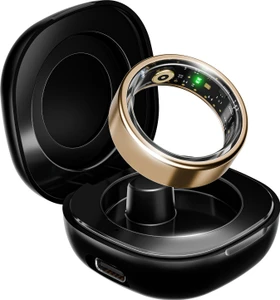
Ever wish your fitness tracker could be less bulky and more stylish? Enter the smart ring—a piece of wearable tech that’s redefining how we track our health, manage our lives, and interact with our devices. It’s small enough to fit on your finger, but powerful enough to monitor your heart rate, track your sleep, and even unlock your phone.
In This Article:
So what exactly is packed inside these futuristic-looking rings? Let’s take a closer look.
What Is a Smart Ring, Really?
A smart ring is essentially a miniature computer wrapped around your finger. Think of it as a smartwatch, minus the screen and bulk. Most smart rings come equipped with sensors to monitor your health, a Bluetooth module to sync with your phone, and in some models, an NFC chip to make contactless payments or unlock doors.
According to Wikipedia, the idea of smart rings emerged in the early 2010s, and today they’re part of a growing wave of discreet wearables designed for health, productivity, and convenience.
So, What’s Actually Inside a Smart Ring?
You’d be surprised how much tech fits into such a tiny frame. Here’s a breakdown of the core components:
- Sensors: These track biometrics like heart rate, blood oxygen (SpO₂), skin temperature, and movement.
- Bluetooth Module: This allows the ring to pair with your smartphone and apps.
- Battery: Typically a mini lithium-polymer battery, lasting 3–7 days on a single charge.
- Microcontroller Unit (MCU): The “brain” that processes data from the sensors.
- NFC Chip (in select models): Used for contactless payments and keyless authentication.
- Vibration Motor (optional): For discreet alerts without the need for a screen.
The Android Police guide confirms that despite their tiny size, smart rings offer robust performance, especially in health-focused models like Oura or Ultrahuman.
Why Are People Using Smart Rings?
Smart rings have quietly built a fanbase that spans athletes, wellness junkies, remote workers, and even cybersecurity professionals. Here’s how people are putting them to use:
For Health and Wellness
- Rings like Oura are popular among athletes and biohackers who want to optimize sleep, recovery, and readiness scores.
- Many also use them to track body temperature trends, which can help in early illness detection or cycle tracking for women.
For Work and Productivity
- Some users employ smart rings for gesture controls like flipping slides or controlling media playback (though this is more common in older or experimental models).
For Security and Payments
- NFC-enabled rings such as McLEAR and K Ring are used for contactless payments and keyless entry.
- They’re also handy for 2FA (two-factor authentication) and device unlocking.
Post-pandemic, the appeal of contact-free health tracking and hygienic user interaction has further pushed smart ring adoption.
What Makes Them Different from Smartwatches?
Unlike smartwatches, smart rings are:
- Minimalist and non-intrusive
- Better for nighttime tracking since you don’t have to charge them as often
- Lacking screens—meaning fewer distractions
- Designed to be worn 24/7, even while sleeping
They’re perfect for people who want “invisible tech”—tools that work in the background without dominating their attention.
What’s Next for Smart Rings?
Smart rings are only getting smarter. Newer models are beginning to offer:
- AI-driven stress and readiness analysis
- Fertility and ovulation tracking
- Real-time metabolic monitoring
While it’s still a niche category compared to smartwatches, experts estimate that the global smart ring market could exceed $1 billion by 2027.
Final Thoughts: Small Ring, Big Potential
In a world that’s constantly demanding more data, more insights, and more personalization, smart rings deliver—all without asking much of your time, space, or attention.
They might not replace your smartwatch (yet), but if you’re after seamless wellness tracking or secure access at your fingertips, these little rings might just be your next smart investment.
By – Nikita