


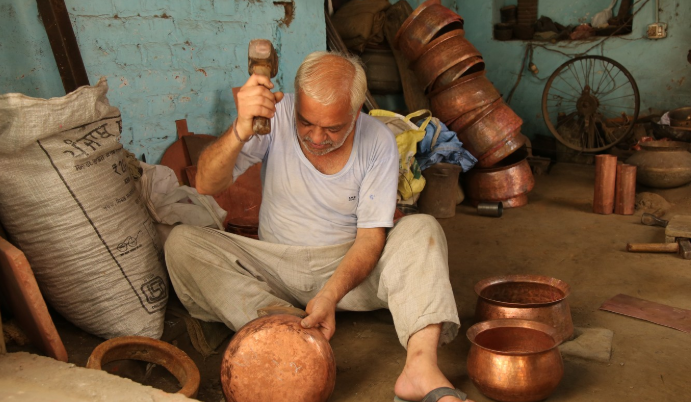
The Thatheras of Jandiala Guru, a small town 10 km from Amritsar, Punjab, are master artisans renowned for their traditional brass and copper utensil-making, a craft inscribed on UNESCO’s Intangible Cultural Heritage List in 2014. In 2025, this centuries-old art, practiced by 400 Khatri families in Bazaar Thatherian, Gali Kashmirian, faces survival challenges due to modern competition, yet thrives through initiatives like P-TAL and government support, blending heritage with innovation.
In This Article:
A Craft Steeped in History
Originating over 200 years ago under Maharaja Ranjit Singh, who invited Kashmiri metalsmiths to settle in Jandiala Guru, the Thatheras’ craft flourished post-1947 when Hindu and Sikh artisans migrated from Gujranwala, Pakistan. Using copper, brass, and kansa (a zinc-tin-copper alloy), believed to have Ayurvedic health benefits, they create utensils like katoris, thalis, and deghs for households, weddings, and gurdwara langars. The process involves melting metal scraps in mud-brick kilns, casting nuggets in iron molds, rolling them into plates, and hammering them into shapes with precise temperature control via wood-fired stoves and bellows. Polishing with sand and tamarind juice and dented designs complete the artistry, as documented by the Indian Culture portal.
Cultural and Social Significance
For Thatheras, metalwork is more than livelihood; it defines family structure, work ethic, and social status, passed orally from father to son. Their settlement, a vibrant crafts colony, reflects a shared identity rooted in Sikh and Hindu traditions. The craft’s ritualistic importance shines in items like the Madhupurkha bowl used in weddings. However, only 30 of the original 500 families remain active, with younger generations taking urban jobs due to low earnings (₹6,000-7,000 monthly), as reported by The Tribune in 2020. Health issues from prolonged hammering, including hearing and lung problems, further threaten the community.
Revival Efforts and Innovation
The 2014 UNESCO listing spurred revival initiatives like Project Virasat, launched by Amritsar’s Deputy Commissioner and Enactus Shri Ram College of Commerce. P-TAL, a brand under this project, has uplifted 55 artisan families, boosting incomes by 1200% through modern designs like water dispensers and planters, sold on platforms like souvnear.com. Navjot Singh Sidhu’s 2018 ₹10 lakh corpus fund and exhibitions in Delhi have expanded market reach, per Times of India. Digital platforms and YouTube videos showcasing the ‘thak thak’ of hammering amplify global awareness, aligning with India’s ₹101 billion entertainment sector’s digital push.
A Legacy at a Crossroads
Despite accolades, the Thatheras face rising raw material costs and competition from aluminum and steel. As Jujhar Singh told The Indian Express in 2015, “We need markets, not just reports.” With 467 million social media users in India, their craft’s story resonates online, yet sustained government support and consumer demand are crucial. The Thatheras’ enduring skill, blending tradition with modern utility, remains a cultural jewel, poised to shine if nurtured in 2025 and beyond.
-By Manoj H