


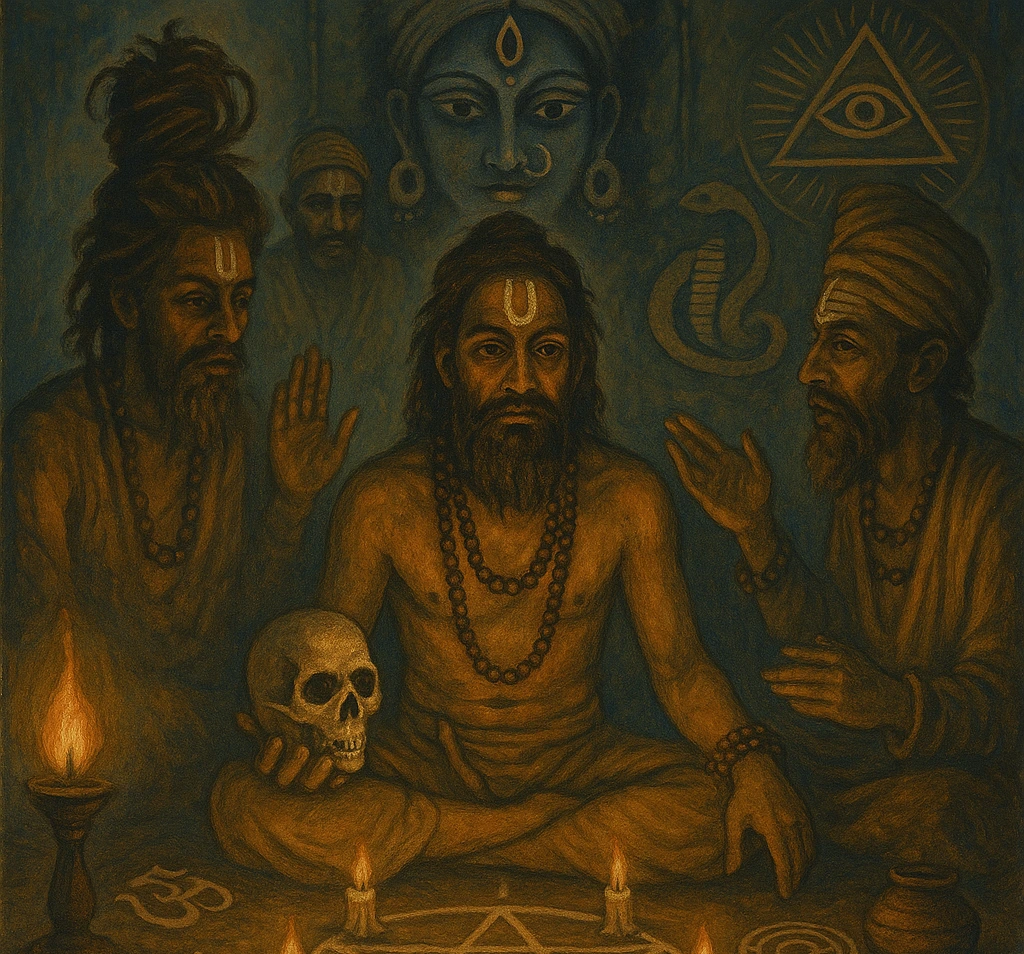
India, with its rich tapestry of cultures and histories, harbors a shadowy undercurrent of secret societies and occult beliefs that have thrived for centuries. From the legendary Nine Unknown Men, linked to Emperor Ashoka in 270 BCE, to modern-day mystical practices, these clandestine groups and traditions span regions like West Bengal, Maharashtra, and the Himalayas. As of July 13, 2025, interest in these phenomena persists, driven by curiosity about their influence on society, spirituality, and even politics, amid a blend of historical reverence and skepticism.
In This Article:
Ancient Roots and Mystical Orders
The tale of the Nine Unknown Men, attributed to Ashoka post-Kalinga War, claims he formed a secret society to safeguard knowledge—spanning microbiology, alchemy, and gravity—that could destabilize humanity if misused. Popularized in 1923 by Talbot Mundy’s novel, this narrative suggests a structured effort to preserve esoteric wisdom, though historical evidence remains elusive. Similarly, the Thuggees, active from the 13th to 19th centuries, were an organized group of assassins blending ritual with crime across India, hinting at a historical penchant for secrecy, possibly to control power, though colonial accounts may have exaggerated their scope.
Occult Practices Across Regions
Occult beliefs flourish in India’s diverse landscapes. In Assam, the Kamakhya Temple is tied to Tantric practices, with secret mantras and goddess worship drawing devotees and researchers. The Aghori sect, based near Varanasi’s cremation grounds, practices cannibalism and black magic, believing it transcends norms for spiritual liberation—a stark contrast to mainstream Hinduism. In Maharashtra, the Daayan cult, emerging in the 15th century, involves women with mystical hair-based powers linked to Kali worship, with rural fears fueling occasional witch-hunts. These practices, often hidden, reflect a complex interplay of faith and taboo, though their scale is debated.
Modern Echoes and Controversy
Today, the Freemasons, established in India by the 18th century, blend global influences with local elites, influencing architecture and governance. The Abhinav Bharat Society, founded in 1904 by Vinayak Savarkar, was a revolutionary secret group shaping India’s independence movement through covert actions, though occult ties remain speculative. Contemporary occultism, like faith healing among Sikkim’s Lepcha tribes, persists, often clashing with laws like Karnataka’s 2017 Anti-Superstition Bill. Posts found on X suggest fascination, but evidence of active, powerful societies is thin, raising questions about myth versus reality.
Unraveling the Truth
While India’s secret societies and occult beliefs captivate, their historical accuracy is contested. Colonial narratives may have amplified threats like the Thuggees to justify control, and Ashoka’s Nine Men lack archaeological proof, leaning on literary embellishment. Occult practices, though real, are often localized and marginalized, challenging the idea of a unified secret network. As of July 11, 2025, these traditions endure as cultural curiosities, their influence possibly overstated by outsider perspectives, yet their allure persists in India’s mystical identity.
-By Manoj H