


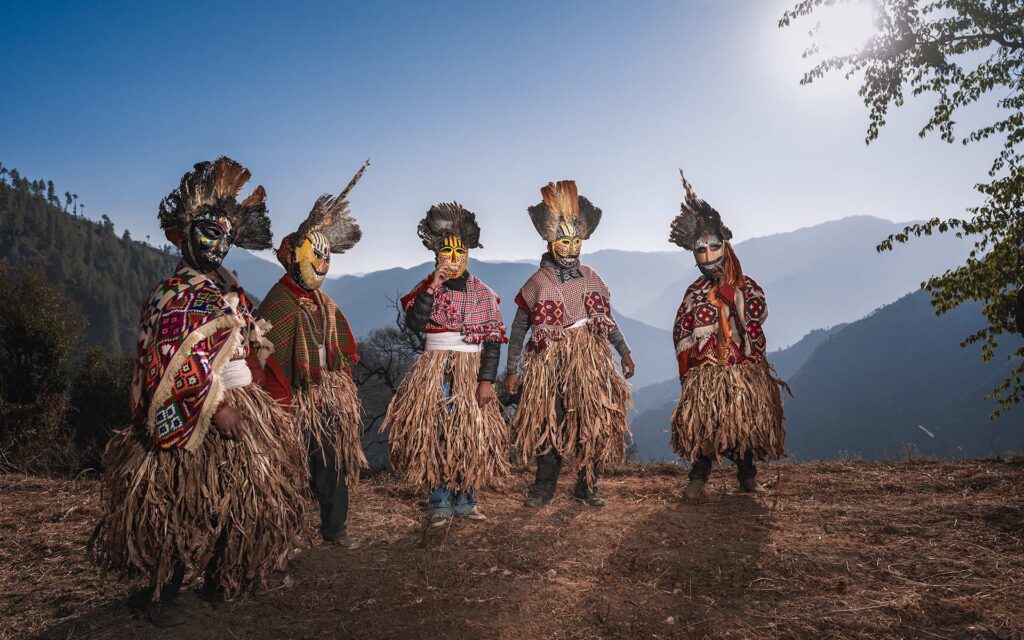
The Fagli Festival, a vibrant celebration in Himachal Pradesh, unfolds every February or March in the Kullu, Kinnaur, Shimla, and Lahaul-Spiti districts, marking the end of winter and the arrival of spring. Men don intricate wooden masks, colorful attire, and dry grass skirts, performing ritualistic dances to honor deities like Lord Vishnu-Narayan, symbolizing the victory of good over evil. Held in villages like Sharchi, Jibhi, and Malana, the festival blends myth, music, and communal bonding, captivating locals and tourists.
In This Article:
- Mythological Roots and Rituals
- The Masks: Art and Symbolism
- Cultural and Social Impact
- Challenges and Future
Mythological Roots and Rituals
Fagli, named after the month of Phalgun, celebrates the awakening of deities from their winter slumber, believed to protect villages from evil spirits. In Kullu’s Banjar Valley, masked dancers, called Madayales, perform the Nati folk dance, wielding sticks like the phallus-shaped “Daa-Du” to signify fertility. The festival’s unique tradition of singing “abusive” songs, a ritual to purge grudges with divine permission, adds a mischievous charm. In Malana, three barefoot dancers, wrapped in cannabis leaves, represent rakshasas (demons).
The Masks: Art and Symbolism
Fagli masks, crafted from wood, clay, or brass, are heirlooms passed down generations, adorned with feathers, flowers, and polychrome designs. Vishnu and monkey masks, symbolizing divine and animal realms, lead processions, while rakshasa masks in villages like Chachogi feature serrated teeth and dark faces, per Ethnoflorence. These masks, sacred and revered, are worn or carried during dances, with strict rules against disrespect, believed to invite divine wrath.
Cultural and Social Impact
Fagli fosters community unity, with men dancing and women spectating from balconies. The Beeth ceremony, where a villager hosts a feast, strengthens bonds, per Tripoto. In 2025, tourists flock to Tirthan Valley, drawn by the festival’s offbeat allure, boosting local economies.
Challenges and Future
Urbanization and fading oral traditions threaten Fagli’s authenticity, per Villagesquare.in. Yet, its resilience, driven by 780-language diversity and India’s ₹101 billion entertainment sector, ensures its survival. Enhanced documentation and sustainable tourism, as seen in Jibhi’s homestays, can preserve this masked dance of myths, keeping Fagli a living testament to Himachal’s heritage in 2025 and beyond.
-By Manoj H