


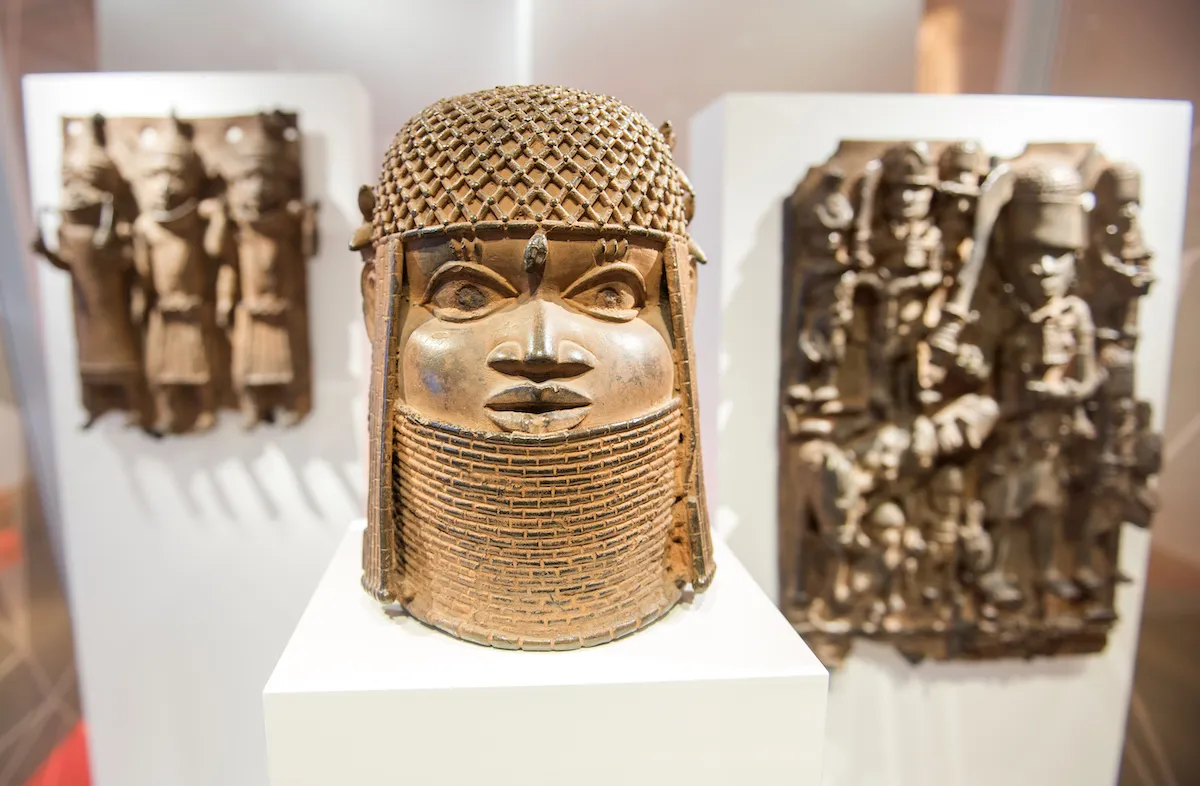
In recent years, museums across Europe and North America have come under mounting pressure to return culturally significant artifacts looted during colonial rule or acquired under dubious circumstances. High-profile restitution cases include Nigeria’s Benin Bronzes, Italy’s looted antiquities, and Indigenous items from Asia, drawing global scrutiny over cultural heritage, historical justice, and museum ethics.
In This Article:
- Case Studies: Restitution in Action
- Arguments For Returning Artefacts
- Arguments Against Immediate Return
- The Middle Ground: Loans and Partnerships
- True restitution lies in shared narratives
Case Studies: Restitution in Action
Benin Bronzes to Nigeria
- On June 19, 2025, the Netherlands handed back 119 Benin Bronzes, marking the largest single restitution from a former colonial power.
- Germany has already repatriated over 1,100 bronzes since 2022, and negotiations with the UK continue, although parliamentary constraints slow progress.
India’s Ancient Artefacts from the US & UK
- In November 2024, the US returned 1,400+ artifacts valued at $10 million to India, marking the largest repatriation to date.
- Glasgow also repatriated seven Northern Indian artifacts in a 2022 ceremony after 18 months of reciprocal dialogue.
Italian Artefacts from the US
- Earlier, around 60 looted items from Italy, including frescoes and marble sculptures, were returned after a joint investigation involving the NYC DA and Italian authorities.
Arguments For Returning Artefacts
- Correcting Colonial Injustices
Advocates say restitution is a necessary step toward redressing historical exploitation. Nigerian cultural leaders describe receiving objects as “divine intervention” restoring dignity to ancestral legacies.
- Reconnecting Communities
Artefacts hold profound religious, historical, and cultural resonance. For many, repatriation represents restoring a piece of their living heritage.
- Global Management of Collections
Innovative models, like shared stewardship agreements, have emerged, balancing international preservation with eventual local return.
Arguments Against Immediate Return
- Institutional Preservation Concerns
Critics argue some source countries lack adequate facilities, risking deterioration of returned artifacts. This view persists in debates about the Benin Bronzes and Nigerian museums.
- Wider Interpretive Access
Figures like Sir Trevor Phillips in the UK maintain that looted pieces can inspire global audiences and contribute to broader diasporic storytelling.
- Legal and Logistical Barriers
In places like the UK, legal frameworks (for example, the British Museum Act) restrict institutions from permanently disposing of acquisitions.
The Middle Ground: Loans and Partnerships
Many museums are turning to compromise:
- Long-term loans instead of outright returns, like the V&A handing back a Roman marble head to Turkey, all the while planning reciprocal cultural exchanges.
- Shared stewardship models: The Smithsonian currently safeguards looted Yemeni antiquities until Yemen is ready to assume care.
- Joint exhibitions and digital co-curation are exemplified by the Museum of Looted Antiquities (MOLA), which transparently documents repatriations and contextualizes provenance.
Challenges and Outlook
Capacity-building remains essential:
For institutions like Nigeria’s Nanna Living History Museum, inadequate infrastructure (no toilets, climate control, or electricity) highlights the need for investment alongside restitution.
Global momentum is rising:
From Egypt’s recovery of 25 smuggled antiquities in May 2025 to the Smithsonian’s repatriation of dozens of Southeast Asian items, cross-border collaboration is accelerating.
Legal reforms pending:
Campaigners are urging the UK to revise restrictive legislation. Similar debates are unfolding in other former colonial states to allow more flexible, ethically grounded museum practices.
True restitution lies in shared narratives
The repatriation of looted artifacts is at a critical inflection point. A paradigm shift is underway, from museum-as-treasure-house to museum-as-partner. While restitution deals mark progress, true transformation requires:
- Commitment to infrastructure development in source countries,
- Adaptive legal frameworks to facilitate ethical transfers,
- Continued collaboration through loans, joint stewardship, or digital accessibility.
Ultimately, whether museums should return looted artifacts depends on aligning moral imperatives with practical safeguards and mutual respect. True restitution lies not just in physical return but in shared narratives, equitable partnerships, and restored dignity for communities historically denied their heritage.
By – Sonali