


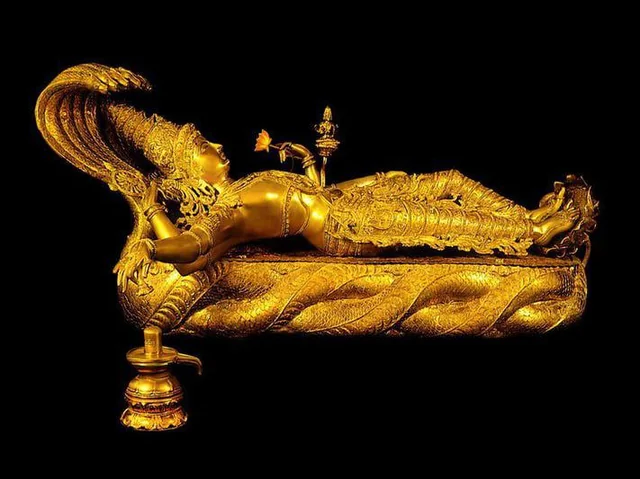
India, a land of kings and temples, holds within its soil treasures beyond imagination—some so legendary, they’re believed to be cursed. From the vaults of Padmanabhaswamy Temple to long-lost Mughal riches, many of these treasures remain untouched, unclaimed, or shrouded in mystery.
In This Article:
- The Padmanabhaswamy Temple Treasure – Fact or Folklore?
- Vault B – The Mysterious Sealed Chamber
- Why Is It Called a “Cursed Treasure”?
- The Bigger Question – Who Really Owns the Treasure?
- Other Legends of Cursed Wealth in India
- Final Thoughts – Should We Open the Sealed Vaults?
The Padmanabhaswamy Temple Treasure – Fact or Folklore?
Located in Thiruvananthapuram, Kerala, the Padmanabhaswamy Temple came into global spotlight in 2011 when a Supreme Court-ordered inventory led to the discovery of treasure worth over ₹1 lakh crore (approx. $22 billion) in its underground vaults.
These hidden chambers, built into the ancient structure of the temple, held:
- Gold coins and bars
- Precious diamonds, emeralds, and rubies
- Golden idols, ceremonial attire, and antique artifacts
- Ornaments from different dynasties including Travancore and beyond
Vault B – The Mysterious Sealed Chamber
Among the six known vaults (A to F), Vault B remains sealed to this day. Believed to be protected by Naga bandham (serpent curses) and divine guardians, locals and temple priests warn against opening it, fearing it could bring disaster.
Legend has it that anyone attempting to force it open would invoke doom on themselves or the land.
Despite pressure from researchers and activists, Vault B has never been officially opened, maintaining its mystique and spiritual fear.
Why Is It Called a “Cursed Treasure”?
The notion of a “curse” comes from the unexpected tragedies and legal battles that followed the discovery:
- Litigations over temple ownership reached the Supreme Court, dividing royal family members and devotees.
- A security guard and a temple worker reportedly died under mysterious circumstances, fueling superstition.
- Massive debates erupted over whether the treasure belonged to the people of India or the deity Padmanabhaswamy.
Many believe that divine forces protect the wealth, meant only for ritualistic use, not human consumption.
The Bigger Question – Who Really Owns the Treasure?
In 2020, the Supreme Court of India ruled that the royal family of Travancore would retain control over temple administration. However, the treasure remains untouched, with strict orders from the court and the temple trust.
As of now, no part of the treasure has been used, sold, or transferred for public use.
Other Legends of Cursed Wealth in India
While Padmanabhaswamy’s vaults are the most famous, they’re not the only ones tied to dark legends:
- The Mughal Peacock Throne, once embedded with the Kohinoor, is said to have brought misfortune to every ruler who possessed it.
- Raja Raja Chola’s Hidden Gold, supposedly buried beneath temples in Tamil Nadu, has never been found.
- The Nizam’s Jewels, some of the most expensive gems in the world, have also been linked to court disputes and internal family feuds.
Final Thoughts – Should We Open the Sealed Vaults?
The debate continues: Preserve or reveal? Myth or history? Curse or coincidence? India’s cursed treasures remain more than just wealth—they are symbols of faith, heritage, and mystery.
Until Vault B is opened (if ever), these treasures will continue to fascinate, frighten, and fuel theories for generations to come.
By – Nikita