


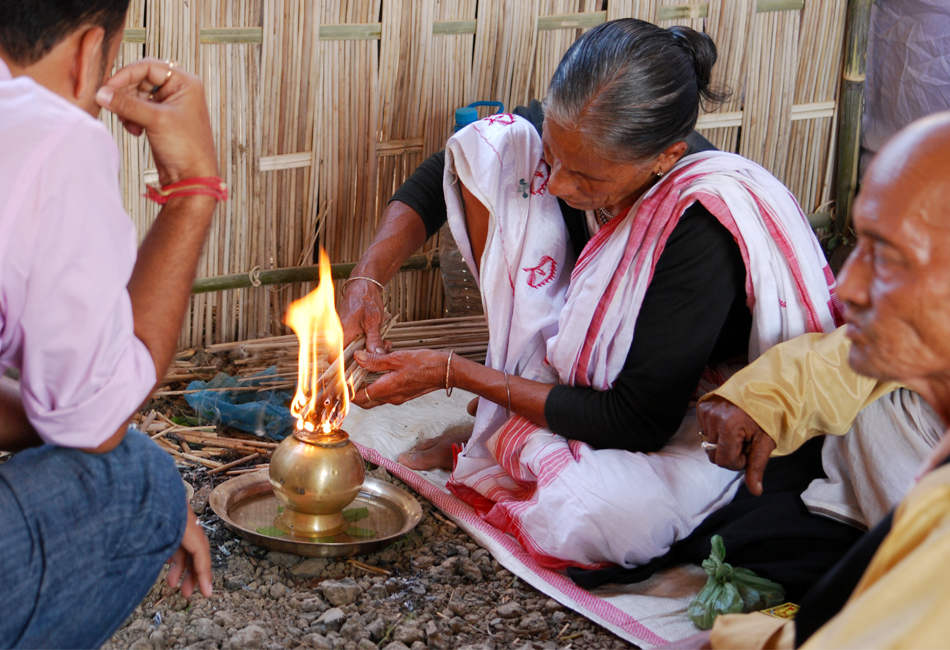
In Assam, the term “Bej” refers not merely to a healer but to a deeply respected spiritual and cultural figure. Rooted in centuries of indigenous knowledge, Bej practices form an essential part of the region’s traditional medicine and belief systems.
In This Article:
- Who Is a Bej?
- Rituals Rooted in Nature and Belief
- Gender, Identity, and Recognition
- Modern Challenges and Revival Efforts
- Moving Ahead
Who Is a Bej?
A Bej (also spelled Bejali for female practitioners) is a folk healer or spiritual intermediary in Assamese culture. The Bej acts as a bridge between the physical and the spiritual realms, employing rituals, herbal remedies, chants, and prayers to cure ailments, remove curses, and restore mental well-being.
- Bejs are traditionally found across rural Assam, especially among tribal and agrarian communities.
- Their role combines physical healing with spiritual guidance, addressing both visible and invisible afflictions.
- Bejs are believed to possess divine intuition or a “calling” rather than formal medical training.
Rituals Rooted in Nature and Belief
The healing rituals of Bejs involve:
- Use of locally sourced herbs and roots to treat fevers, wounds, and infections.
- Chants (mantras) specific to ailments, often in the regional dialect or a blend of Assamese and Sanskrit.
- Possession rituals, in which Bejs enter trance-like states to communicate with spirits or deities.
- Diagnosis through divination, sometimes using rice grains, ash, or animal behavior.
These rituals are closely tied to agricultural cycles, nature worship, and the Assamese folk cosmology. Bejs are often called upon during times of epidemics, crop failures, and family misfortunes.
Gender, Identity, and Recognition
- Female practitioners, known as Bejali, are often marginalized despite their vital community role.
- Bejs may not receive formal recognition from the modern healthcare system, yet they are trusted by entire villages.
- Some Bejs claim to have received their powers through dreams, divine visions, or ancestral lineage.
Modern Challenges and Revival Efforts
While Bej practices continue to survive, they face existential threats due to:
- Urbanisation and scientific scepticism
- Declining intergenerational transmission of knowledge
- Lack of state documentation or support
However, ethnographers, cultural scholars, and some local NGOs are documenting these healing traditions to preserve Assam’s intangible heritage.
Moving Ahead
The Bej tradition of Assam isn’t merely about curing illnesses — it’s a socio-spiritual system that connects communities to nature, ancestry, and collective memory. At a time when wellness is commodified, the Bej reminds us that healing can be both sacred and shared.
By – Nikita