


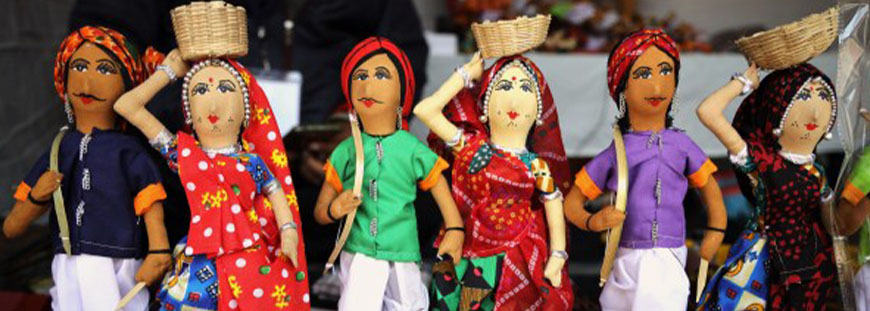
Jhabua, a predominantly tribal district in western Madhya Pradesh, is gaining attention for its unique Adivasi Gudiya Hastashilp, handcrafted cloth dolls that beautifully capture the customs, attire, and spirit of the Bhil and Bhilala tribes. Historically rooted in local traditions, these dolls now serve as cultural emblems and sources of livelihood for artisan women in rural hamlets such as Bani, Meghnagar, Ranapur, and Fulmalgao.
In This Article:
- A Living Tradition and Its Origins
- Materials, Craftsmanship, and Process
- Sizes, Style, and Symbolism
- Economic and Cultural Significance
- Symbol of Resilience
A Living Tradition and Its Origins
The craft saw a significant resurgence in the 1960s when non-governmental organisations introduced it to help tribal communities earn sustainable incomes. For tribes in Jhabua, cloth dolls have long held cultural importance: they’re gifted to newborns, accompany brides when they marry, and celebrate rites of passage, underscoring the dolls’ role as tangible expressions of tribal identity.
While cloth dolls have existed globally for millennia, the Jhabua variant stands out for its strong visual linkage to local tribal costumes and tools, depicting daily life and traditional professions.
Materials, Craftsmanship, and Process
The creation of Jhabua dolls is a complex combination of upcycling and traditional artistry:
- Raw Materials: Predominantly fabric scraps, recycled cloth, cotton stuffing, clay for heads, metal wire frames, wooden bases, paints, ribbons, beads, zari, sequins, and natural adhesives.
- Assembly: Artisans trace body parts onto fabric, stitch double-layered forms with sturdy knots, turn them inside out, and stuff them with cotton.
- Head and Details: The clay head is sculpted, fired, clothed, and painted by hand, reflecting intricate facial features and expressions.
- Adornment: Female dolls wear bead necklaces, silver ornaments, bangles, and bridal ghagra-choli; male dolls sport dhoti-kurta and carry tools or weapons such as bows, arrows, spears, and farm implements.
- Finishing Touch: Metal-wire legs are affixed to a wooden base for stability, and the final embellishments are added to bring each doll to life.
This process not only avoids waste by repurposing cloth scraps but also imbues every doll with the narratives of tribal life.
Sizes, Style, and Symbolism
Jhabua dolls appear in a wide range of sizes, from compact figurines to life-size replicas standing more than five feet tall, crafted on special orders. Their vivid brown hues mirror the sunbaked skin of Bhil people, while the lively fabrics, rich beadwork, and decorated accessories render them cultural ambassadors that reflect centuries of tribal vibrancy.
Economic and Cultural Significance
Today, Jhabua dolls are appreciated beyond tribal communities; they are sold at handicraft bazaars and galleries across India and internationally. Government initiatives and efforts to obtain a Geographical Indication (GI) status aim to safeguard the craft against unlicensed replicas, ensuring tribal artisans retain recognition and fair remuneration.
However, inconsistent demand remains a challenge. Many artisans depend solely on doll-making for income, making them financially vulnerable. There is growing appeal for innovation, such as educational tools and cultural curation, alongside opening new markets to help the tradition evolve.
Symbol of Resilience
The Adivasi dolls of Jhabua stand as powerful symbols of cultural resilience. What began as humble toys has grown into a heritage craft, underscoring the creativity, strength, and identity of the Bhil and Bhilala artisans. As initiatives to protect and promote these dolls gain steam, there is hope that Jhabua’s fabric storytellers, threaded in traditions and imagination, will continue to inspire the world with their rich tribal narratives.
By – Sonali