


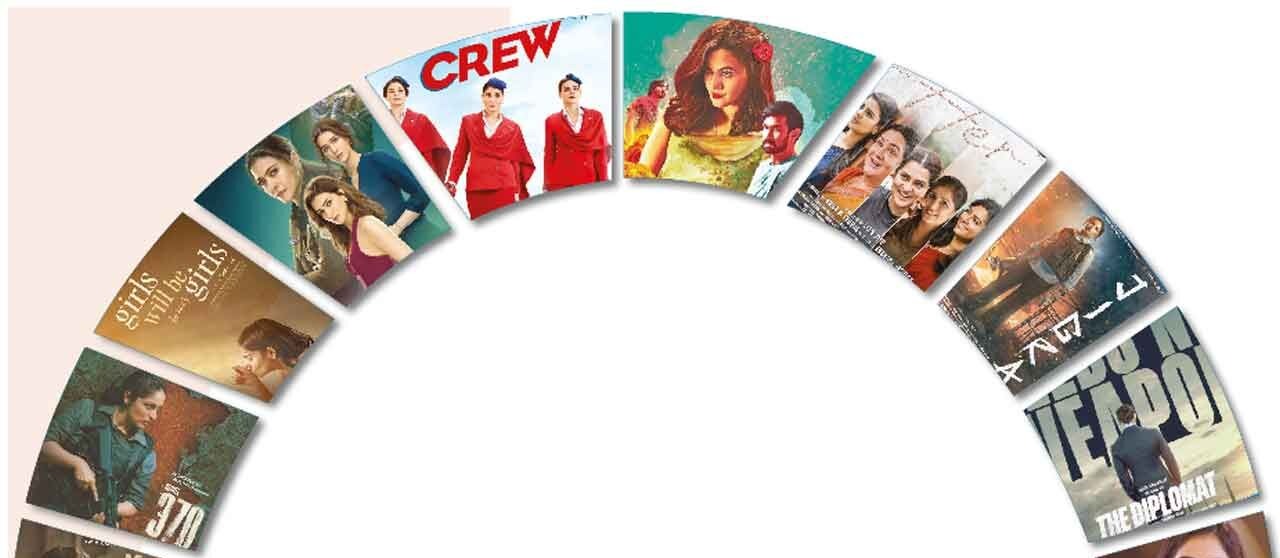
In recent years, Bollywood and regional industries alike have seen a surge in women-led stories—films that place women at the heart of the narrative, shifting away from the traditional male-dominated hero-centric format. But the question remains: is this cinematic evolution a reflection of real change or simply a box-office strategy?
In This Article:
- The Changing Landscape
- Substance or Strategy?
- Industry Shift or Temporary Trend?
- Impact on Society
- Looking Forward
The Changing Landscape
Once relegated to side roles or romantic interests, women in Indian films are now portrayed as complex, flawed, powerful, and independent protagonists. Notable examples include:
- Kahaani (2012) starring Vidya Balan
- Queen (2014) featuring Kangana Ranaut
- Thappad (2020) with Taapsee Pannu
- Raazi (2018) led by Alia Bhatt
- Gangubai Kathiawadi (2022) also starring Alia Bhatt
These films not only received critical acclaim but also performed well at the box office, challenging the myth that women-centric stories lack commercial viability.
Substance or Strategy?
Despite the progress, critics argue that not all female-centric films are genuine attempts at storytelling. Some appear to use gender themes as marketing tools:
- Overuse of “empowerment” without depth
- Tokenism, where female characters are showcased as strong but lack narrative complexity
- Predictable plots that follow a formula rather than offering fresh perspectives
Industry Shift or Temporary Trend?
While more actresses are now commanding lead roles, pay disparity, lack of women directors, and male-dominated production houses still dominate the industry. However, platforms like Netflix, Amazon Prime, and Zee5 have given rise to bold, diverse, and inclusive stories. OTT releases such as:
- Delhi Crime
- Bombay Begums
- Mai
…showcase older women, working-class women, and stories that are not bound by conventional Bollywood formulas.
Impact on Society
Authentic women-centric films have the power to:
- Challenge stereotypes
- Inspire young girls
- Trigger important conversations on gender roles, consent, career, and marriage
- Reflect social realities with nuance
But when used merely for optics, they risk trivializing the very issues they aim to highlight.
Looking Forward
Women-centric cinema in India is undeniably evolving. Some films are truly rewriting the rules and opening doors for meaningful representation. Yet, the line between empowerment and exploitation remains thin. The future depends not just on numbers but on narrative honesty—because true progress in cinema begins with intent, not just investment.
By – Nikita