


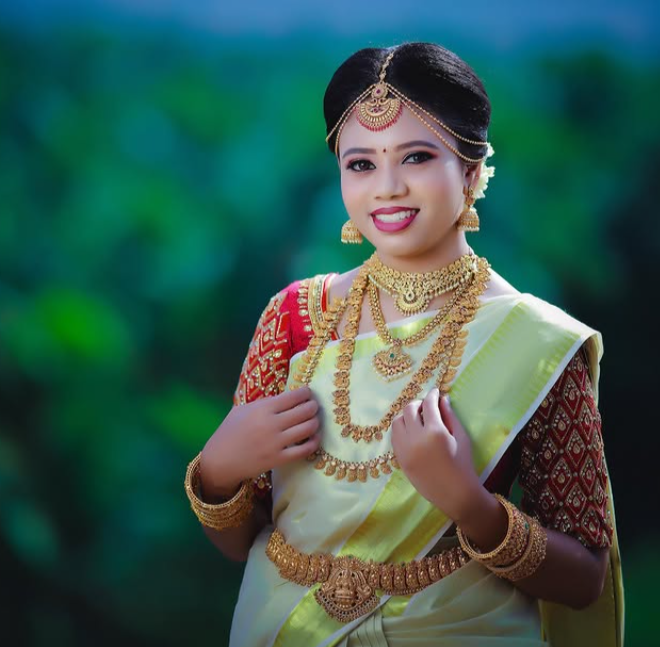
In 2025, Nagercoil temple jewellery, a revered craft from Vadasery near Nagercoil in Tamil Nadu’s Kanyakumari district, captivates with its intricate silver-based, gold-plated designs adorned with vibrant ‘Kuchu kal’ stones. Originating in the 9th-century Chola era, this GI-tagged artform (2007–08) adorns temple deities, Tamil brides, and Bharatanatyam dancers. To preserve a sacred tradition tied to devotion and identity. Through the skilled hands of 40 artisan families, its mythological motifs shine, as #NagercoilJewellery trends on X.
In This Article:
- A Craft Steeped in Tradition
- Cultural Resonance and Modern Appeal
- Challenges Facing Artisans
- Future of a Timeless Art
A Craft Steeped in Tradition
Born during the Chola dynasty, Nagercoil temple jewellery was crafted for temples like Srirangam and Suchindram, using 45% pure silver, 25% gold leaf, and 30% riverbed stones, per en.wikipedia.org. Artisans create chokers, Haaram necklaces, and Maang Tikkas with yali, makara, and lotus motifs, reflecting temple architecture. The process—hand-forging silver, applying gold leaf with lac resin, and setting stones—takes days, producing durable pieces for deities and ceremonies. Artisan S. Muthuswamy told in 2012, “Our crowns for Tiruvallur echo Srirangam’s ancient designs,” highlighting their historical fidelity.
Cultural Resonance and Modern Appeal
Essential for Tamil brides and dancers, this jewellery aligns with Natya Shastra’s prescriptions for Bharatanatyam adornments. Vadasery, India’s sole hub for this craft, supports 52 families. Modern designs, blending traditional motifs with minimalist aesthetics, cost Rs. 4,600–9,340, appealing to urban buyers. Exports to the US, Singapore, and Malaysia thrive, with 60 units boosting Kanyakumari’s economy. A 2024 YouGov survey notes 65% of Indian youth value heritage crafts, driving demand.
Challenges Facing Artisans
Despite its prestige, the craft struggles. Only 40 families remain, down from 700, as younger generations migrate due to low wages—often Rs. 15,000 monthly. Synthetic stones replace rubies to cut costs, diluting authenticity. Artisan L. Balu told, “Power looms and fakes threaten our legacy.” Only 50% of pieces carry the Handloom Mark, risking market trust. Government fairs and e-commerce like GiTAGGED offer hope but fall short, per nabard.org..
Future of a Timeless Art
For artisans like Shanti, 35, crafting a choker for a Chennai bride is a labor of love. “This is our gods’ jewellery,” she says. As #TempleJewellery trends on X, initiatives like NABARD’s training and online platforms signal revival. Protecting this craft demands GI enforcement and fair wages to keep Vadasery’s legacy alive. With India’s youth embracing tradition, Nagercoil temple jewellery—gleaming with history—promises to adorn future generations, blending devotion with artistry.
-By Manoj h