


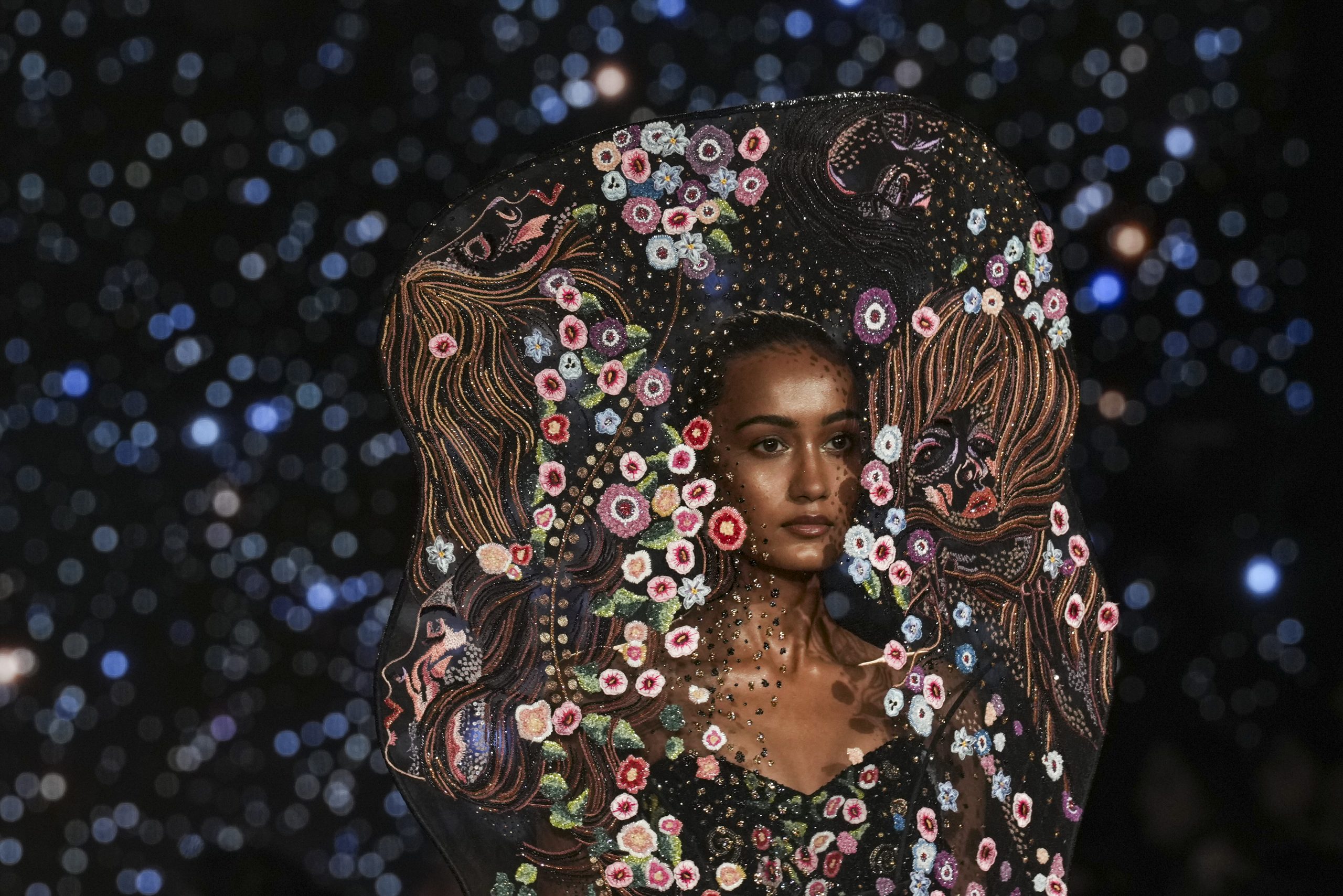
In an industry obsessed with “what’s next,” fashion designers across the globe are turning their gaze back—way back—to tribal cultures that have long been sidelined, exoticized, or outright erased. From Gond beadwork to Nagaland’s warrior jackets, tribal fashion isn’t just an aesthetic—it’s a statement. And finally, it’s being heard loud and clear on global runways.
In This Article:
- The Power of the Primitive: Why Designers Can’t Look Away
- When Appropriation Crosses the Line into Exploitation
- Politics in Print: Tribal Fashion as Resistance
- Modern Designers Who Are Getting It Right
- Final Thought: Fashion That Honors, Not Hijacks
The Power of the Primitive: Why Designers Can’t Look Away
- Color palettes drawn from natural dyes and pigments: Think turmeric yellows, indigo blues, and charcoal blacks.
- Handwoven textures and raw materials: Jharkhand’s tussar silk, Himachal’s wool embroidery, and Nagaland’s bark cloth.
- Symbolism and storytelling: Every motif, every bead, and every stitch has meaning—unlike mass-produced fast fashion.
- Functional art: From the Maasai shuka to the Gond warrior tunics, tribal fashion was utilitarian and expressive.
Fashion houses from Paris to Mumbai are now paying attention—and frankly, playing catch-up.
When Appropriation Crosses the Line into Exploitation
Here’s the hot gossip they don’t want you to hear:
While designers are “inspired,” few give actual credit or financial return to the communities whose designs they lift. We’re talking multi-billion-dollar brands profiting off art that was once dismissed as “ethnic kitsch.”
“Cultural appreciation becomes theft when attribution is missing,” says textile anthropologist Dr. Meenal Joshi.
“When a tribal woman weaves her story, it’s ‘rustic.’ When Dior copies it, it’s ‘avant-garde.’”
Let that sting for a minute.
Politics in Print: Tribal Fashion as Resistance
In regions like Chhattisgarh, Odisha, Mizoram, and Arunachal Pradesh, tribal fashion isn’t just fabric—it’s defiance. These clothes resist homogenization. They preserve language, clan identity, and socio-political memory. In states battling land grabs, displacement, and erasure, fashion is armor.
So when you see tribal patterns on jackets in Zara or earthy beadwork on Gucci’s latest line, ask yourself—who’s really profiting?
Modern Designers Who Are Getting It Right
- Rahul Mishra – Fuses tribal storytelling with haute couture, often collaborating with artisans directly.
- Urvashi Kaur – Known for tribal silhouettes and sustainable textiles.
- Bodice by Ruchika Sachdeva – Merges indigenous textures with minimalist aesthetics.
- NorBlack NorWhite – Elevates Indian tribal dyeing traditions with a pop-culture twist.
These designers aren’t just borrowing—they’re co-creating.
Final Thought: Fashion That Honors, Not Hijacks
Tribal fashion is not a “trend.” It’s a timeline, a culture, and for many, a legacy under threat. The modern design world must either collaborate ethically—or get ready to be called out, cancelled, and culturally critiqued.
By – Nikita