


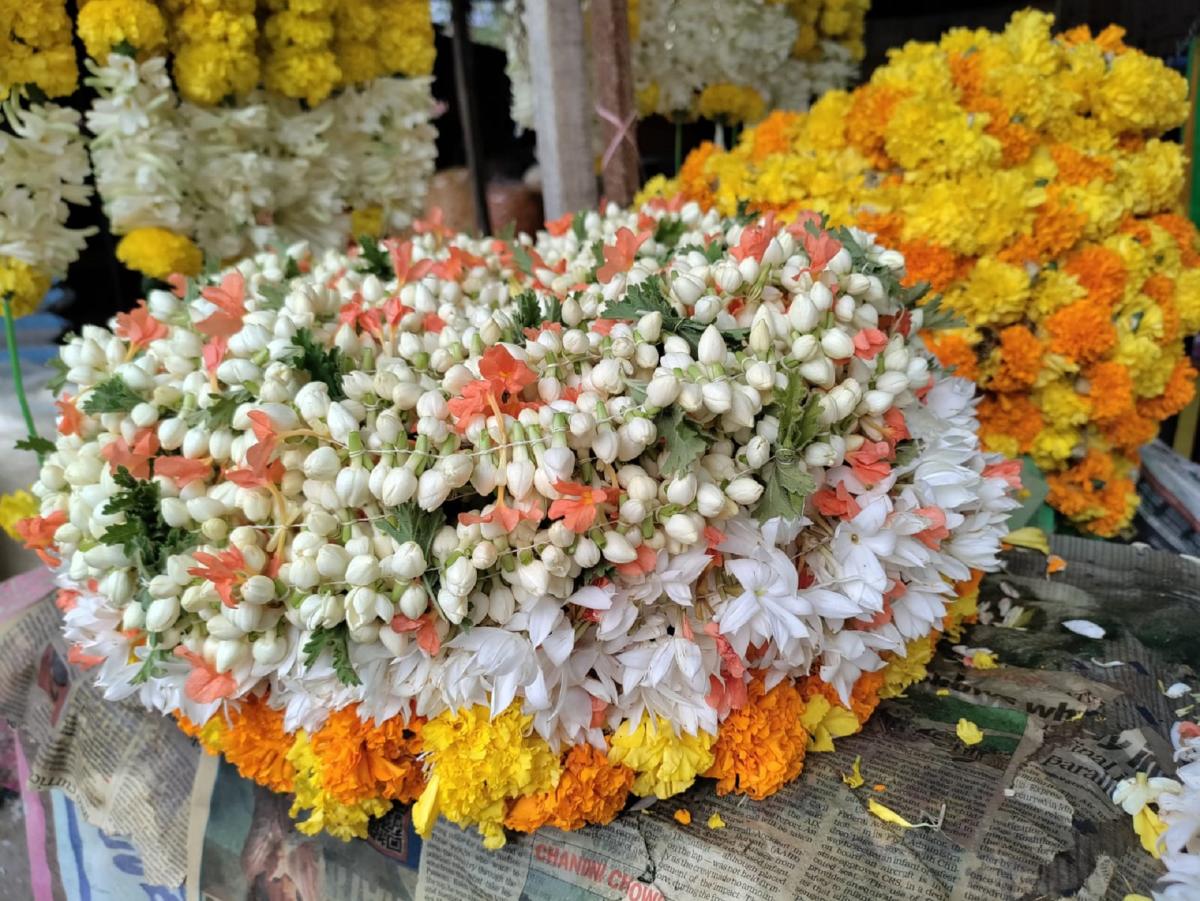
Beneath the delicate white petals of Mysore Malligae (jasmine) lies a bitter truth — a battle between heritage, commercialization, and gendered labour. Once revered as the floral crown of South India’s spiritual and cultural identity, this jasmine now blooms amid rising exploitation, dying traditions.
In This Article:
- More Than a Flower — A Symbol of Identity and Class
- Jasmine in the Corridors of Power
- Bollywood, Beauty Parlours, and the Jasmine Appropriation
- Rotting at the Roots — Where’s the GI Protection Now?
- A Fragrant Flower With a Fetid Future?
More Than a Flower — A Symbol of Identity and Class
Often adorning the braids of women during weddings, temple rituals, and film shoots, the Mysore Malligae is no mere flower. It’s a socio-cultural status symbol, a feminine declaration of grace — and, tragically, a tool of quiet oppression.
- Grown mainly in Mysuru, Mandya, and parts of Hassan, the flower is famed for its intense fragrance and longevity.
- It fetched a Geographical Indication (GI) tag in 2007, meant to protect authenticity. But did it?
- Most jasmine pickers are women from marginalised backgrounds, working under exploitative conditions.
“We wake at 3 AM, pick till 8, and sell by noon. By evening, we earn less than what a bouquet costs at a luxury hotel,” says 48-year-old Selvi, a flower picker from Srirangapatna.
Jasmine in the Corridors of Power
Behind the fragrance lies rot. Flower contractors have quietly monopolised jasmine trading, manipulating pricing and supply chains.
- During election seasons, Mysore Malligae turns into symbolic currency, gifted in garlands to VIPs while the women growing them barely receive minimum wage.
This isn’t just market failure. It’s a flower-scented fraud that’s been politically nurtured for decades.
Bollywood, Beauty Parlours, and the Jasmine Appropriation
Once exclusively South Indian, Mysore Malligae is now a runway darling and spa essential. The jasmine essential oil industry is booming — but none of the profits trickle down to the women breaking their backs in the fields.
- Luxury brands sell jasmine-infused creams at ₹8,000+ per jar.
- Bollywood celebrities flaunt the flower for ‘ethnic chic’ photoshoots, pushing prices up during wedding seasons — hurting local affordability.
Rotting at the Roots — Where’s the GI Protection Now?
The Geographical Indication (GI) tag, meant to protect origin-based products, has turned into a marketing gimmick. There’s little regulation. Market influx from cheaper, artificially fragranced imports has diluted authenticity, yet there’s no legal action in sight.
A GI tag without enforcement is a perfumed coffin for farmers’ rights.
A Fragrant Flower With a Fetid Future?
The Mysore Malligae may smell divine, but the ecosystem surrounding it stinks of exploitation, apathy, and capitalist hijack. Until women workers are unionised, GI protections enforced, and political greed weeded out, jasmine will remain just another token of patriarchal beauty, not prosperity.
Hot Take:
Let’s not pretend a jasmine braid makes one ‘ethnic’ — it makes one complicit, unless you stand for the women behind it.
By – Nikita