


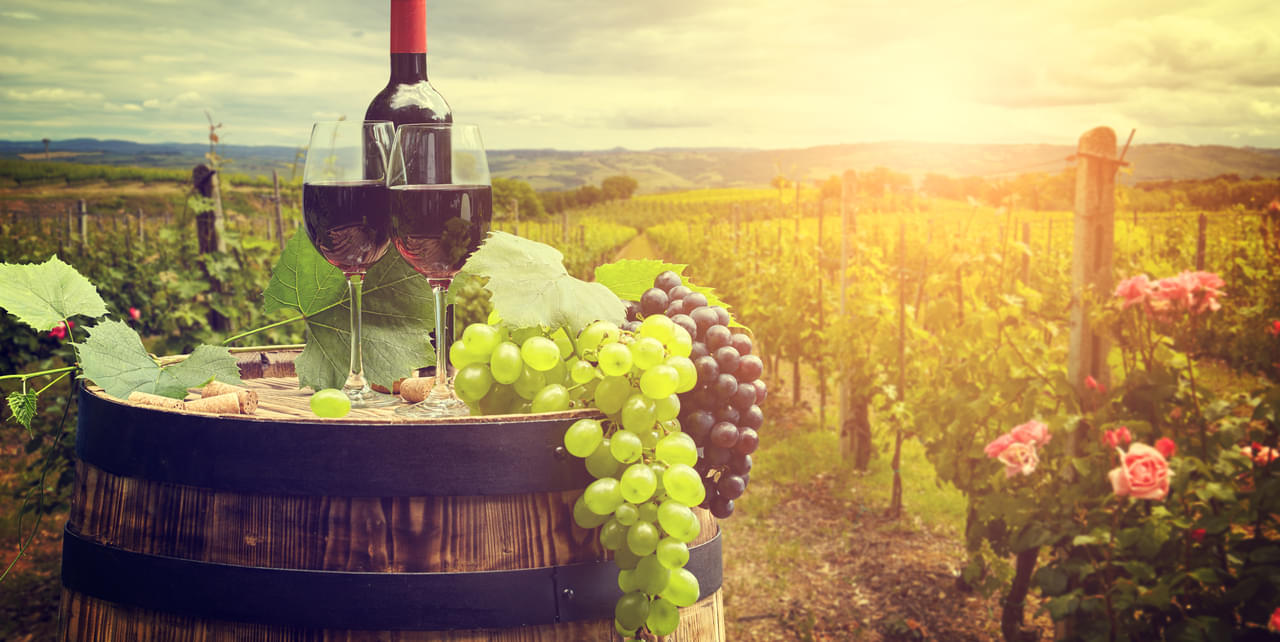
Once primarily known for its spiritual heritage and grape farming, Nashik in Maharashtra has transformed into India’s undisputed wine capital. Dubbed Nashik Valley Wine and registered with a protected GI status, which was granted in the year 2010, this region is charting a new trajectory in wine tourism, sustainability, and global recognition.
In This Article:
- Nashik Valley Wine Gets a National Spotlight
- Geography, Climate & Terroir
- Key Players and Award-Winning Wines
- Wine Tourism & Hospitality Boom
- Regulatory & Economic Challenges
- Sustainability & Future Prospects
- From Vine to Victory: Nashik’s Wine Legacy Grows Stronger
Nashik Valley Wine Gets a National Spotlight
The Government of India recognized Nashik Valley Wine under its One District One Product scheme, elevating it to a flagship regional identity akin to Napa Valley in the U.S. This recognition, framed by the Geographical Indications system, ensures that to bear the Nashik Valley Wine label, at least 75–80% of grapes must originate from the Nashik district, and production, bottling, and labeling must occur within its boundaries.
With over 35 wineries in the district and about 50 across India, Nashik is the hub of more than two-thirds of its nation’s wine output, offering products priced between ₹200 and ₹4,000 per 750 ml bottle.
Geography, Climate & Terroir
Situated at approximately 600 m elevation near the Western Ghats, Nashik benefits from a unique combination of hot days and cool nights during the growing season, allowing grapes to ripen slowly and preserve acidity. Its red lateritic soil offers excellent drainage, ideal for cultivating a wide range of varietals, including Chenin Blanc, Sauvignon Blanc, Shiraz, Cabernet Sauvignon, Riesling, Viognier, Tempranillo, and more.
Notably, the region produces 80% of India’s wines and annually attracts over 350,000 wine visitors, a testimony to its climatic and scenic appeal.
Key Players and Award-Winning Wines
Sula Vineyards, founded in 1999 by Rajeev Samant, introduced varieties such as Sauvignon Blanc and Zinfandel and has since become the largest and most influential winery in Nashik and India. Its factory tasting room, opened in 2005, has seen over 331,000 annual visitors as of April 2025. Sula’s wines have earned international acclaim, including a gold medal for a Cabernet Sauvignon at Global Wine Masters and recognition for sparkling Shiraz and aspiring sustainable practices.
Boutique wineries such as Vallonné, Grover Zampa, York, Soma, and Chandon India add diversity, sophistication, and regional character to the wine region. Vallonné’s Viognier Reserve is celebrated for its floral-passion-fruit flavors; York’s Chenin Blanc pairs elegantly with vegetarian dishes. International awards have been received by multiple labels, including Viognier from Grover Zampa, winning top honors in global competitions.
Wine Tourism & Hospitality Boom
Wine tourism is thriving in Nashik: guided vineyard tours, sampling sessions, grape-stomping festivals, and boutique resort stays are now a staple. Visitors may experience “bhakri-wine” pairings, a local flatbread meal matched with regional wines, designed to mimic Napa-like hospitality in an Indian context. SulaFest, held every February, is India’s premier wine-and-music festival, drawing some 20,000 attendees. The economic impact extends to hotels, restaurants, and local enterprises, energizing the region’s hospitality sector.
Regulatory & Economic Challenges
Despite its popularity, Nashik Valley wine producers continue to lobby for uniform taxation across Indian states. Presently, wines incur intrastate duties up to 100% of the MRP, complicating interstate sales and limiting market reach. Industry representatives are pushing for simplification of tax structures to expand access beyond Maharashtra.
Meanwhile, exports remain robust. Despite erratic weather including heavy rains and unseasonal showers during 2024–25, Nashik district maintained grape exports at 1.57 lakh tonnes, matching the previous year. Of these, 1.10 lakh tonnes went to Europe and 47,000 tonnes to other regions, with favourable farm gate prices boosting farmer income in early 2025.
Sustainability & Future Prospects
With climate variability posing a major challenge over the past 15 years, wineries are turning to eco-conscious methods. Sula Vineyards has committed to 100% sustainable winemaking, embracing practices in water management, soil conservation, and climate resilience, making it a leader in green innovation within Indian agribusiness.
As consumer awareness and homegrown wine appreciation grow, Nashik is strategically positioned to expand both domestic and international wine markets. Major areas of growth include premium red varietals, sparkling wines, food-and-wine education, and wine tourism infrastructure.
From Vine to Victory: Nashik’s Wine Legacy Grows Stronger
Nashik Valley Wine has successfully shed its modest past to emerge as India’s front-runner in premium wine production, tourism, and eco-friendly viticulture. Anchored by pioneering wineries like Sula and Vallonné, and reinforced by robust exports and national branding, Nashik is redefining its identity as a global wine region. As policy reforms, sustainable practices, and international interest converge, Nashik’s journey from grape-growing district to Wine Capital of India is a compelling story of transformation, and one that is only just beginning.
By – Sonali