


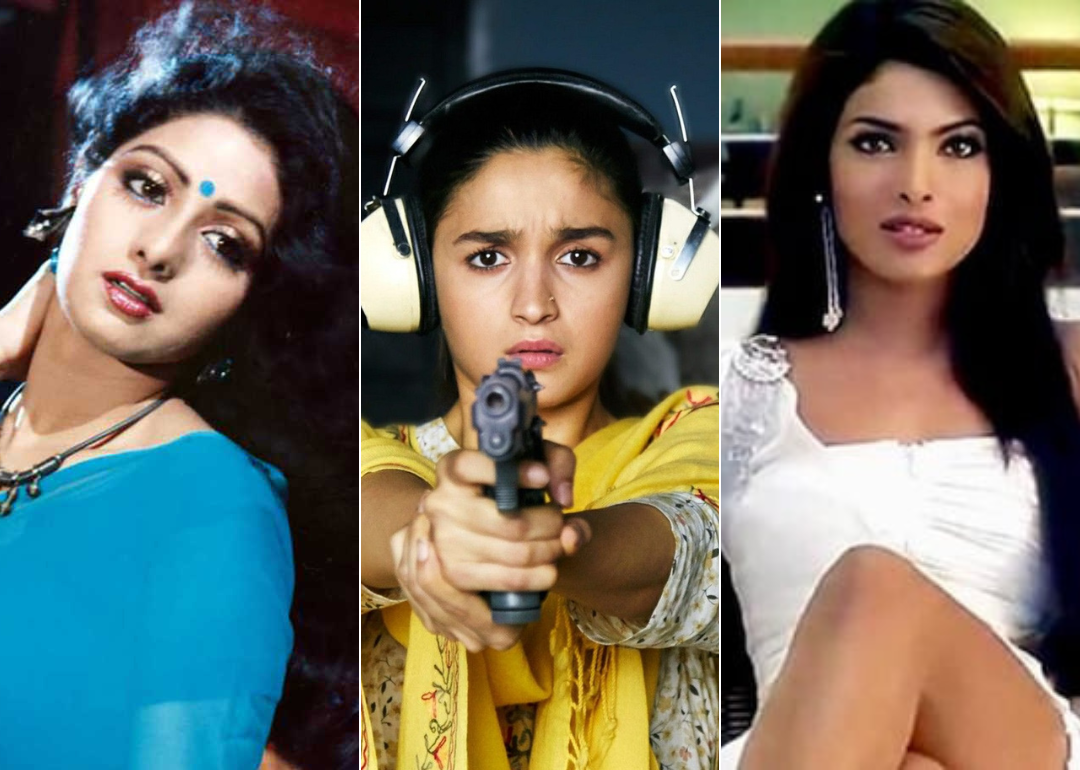
As dawn breaks on August 4, 2025, in the bustling lanes of Mumbai and the quiet corners of India’s heartlands, Bollywood’s female leads have undergone a breathtaking metamorphosis. From the demure damsels of the 1950s to the fierce, multi-dimensional heroines lighting up screens today, this journey spans decades, weaving through the lives of icons like Nargis, Vidya Balan, Alia Bhatt, and the bold new faces of OTT. A cultural awakening, fueled by societal shifts and the digital revolution, has shattered stereotypes, demanding women who mirror real struggles and triumphs. Through cinematic courage, audience demand, and the liberating expanse of streaming platforms, this evolution dances to a rhythm of resilience, sparking reflections on X with #WomenOfBollywood.
In This Article:
- From Silent Ornaments to Soulful Voices
- The Modern Maelstrom: Alia Bhatt’s Rise
- OTT’s Rebel Renaissance
- A Provocative Pause
From Silent Ornaments to Soulful Voices
In the black-and-white era, Nargis dazzled as the epitome of sacrifice in Mother India (1957), her character Radha toiling under a scorching sun, her tears watering the fields of a patriarchal narrative. She was the quintessential “sacrificial lamb,” her strength cloaked in subservience, reflecting a society where a woman’s worth was tied to her endurance. Fast forward to the 2000s, and Vidya Balan flipped the script with Parineeta (2005) and Kahaani (2012), embodying Vidya Bagchi—a pregnant widow unraveling a mystery with steely resolve. Her unapologetic curves and raw emotion challenged the size-zero obsession, proving women could lead without conforming. Imagine Vidya, a middle-class dreamer from Palghat, Kerala, breaking glass ceilings with every frame—her journey mirrors countless Indian women defying norms.
The Modern Maelstrom: Alia Bhatt’s Rise
Alia Bhatt, born into cinema royalty, redefined the ingénue with Highway (2014), her character Veera finding freedom in captivity, her eyes holding a universe of pain. By Gangubai Kathiawadi (2022), she transformed into a brothel queen turned advocate, her voice a battle cry against exploitation. Alia’s evolution reflects a generation craving authenticity—her openness about mental health resonates with India’s youth, where 1 in 4 faces similar struggles, per a 2024 NIMHANS study.
OTT’s Rebel Renaissance
The OTT wave has birthed a new breed—think Sanya Malhotra in Kathal (2023), a small-town cop with quirky grit, or Rasika Dugal in Mirzapur, a matriarch navigating power with silent ferocity. These platforms, unshackled by theater’s commercial chains, offer roles that delve into messy realities—divorce, ambition, vengeance—mirroring the lives of women like Priya, a 30-year-old Delhi homemaker who found solace in Delhi Crime’s DCP Vartika Chaturvedi.
A Provocative Pause
This evolution isn’t linear—stereotypes linger, with item numbers still thriving, and pay gaps persist, as Shefali Shah recently lamented. But the shift from Nargis’s tearful resilience to Alia’s defiant roar, amplified by OTT’s unfiltered voices, hints at a revolution. Perhaps the true legacy lies not in perfection but in the messy, human struggle to redefine womanhood. As #BoldBollywoodWomen trends, we ponder: Are we witnessing a cultural awakening, or just a fleeting cinematic trend?
-By Manoj H