


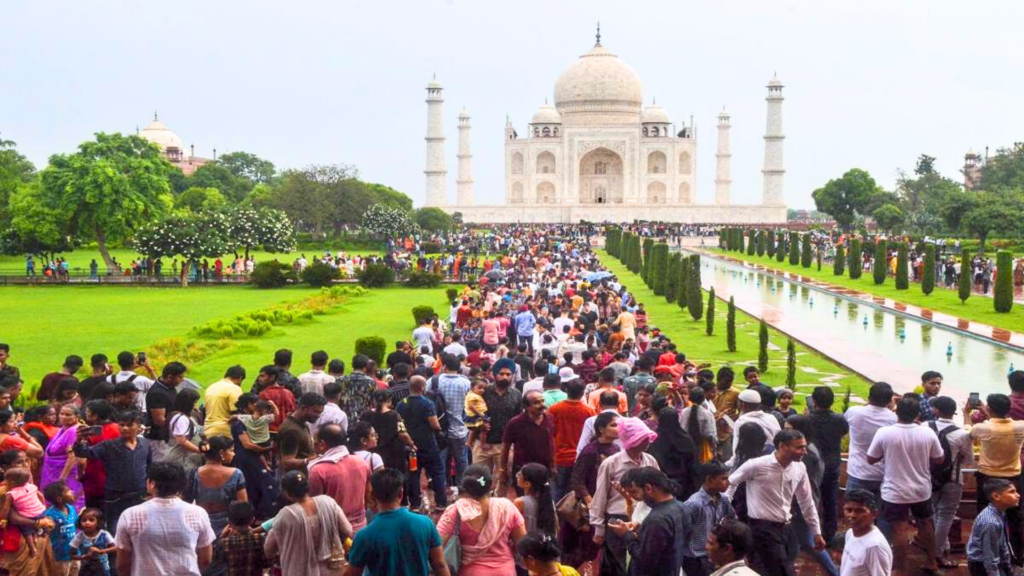
In 2025, overtourism grips India’s iconic destinations like Goa, Agra, and Shimla, where 1.8 billion global tourists, per UNWTO, strain cultural and natural treasures. From Taj Mahal’s crowded pathways to Goa’s littered beaches, the influx overwhelms infrastructure, sparking tensions among locals. Affordable travel, social media hype, and inadequate management fuel the surge. With environmental degradation, rising costs, and cultural erosion, destinations suffer, as #OvertourismIndia trends on X, urging sustainable solutions.
In This Article:
- The Toll on India’s Gems
- The Human and Cultural Price
- Environmental and Social Fallout
- Solutions on the Horizon
- A Call for Balance
The Toll on India’s Gems
India’s tourism, contributing 6.8% to GDP ($250 billion in 2024, per WTTC), thrives on sites like the Taj Mahal, hosting 7 million visitors annually. Yet, overtourism ravages Agra’s infrastructure—roads clog, water shortages hit 30% of residents, and litter mars the monument’s sanctity. In Goa, 8 million tourists in 2023 overwhelmed its 1.5 million residents, turning beaches into crowded hubs with 20% more waste. Shimla’s Mall Road, packed with 50,000 daily visitors in peak season, faces traffic gridlock and wildlife displacement in nearby forests.
The Human and Cultural Price
For locals like Rajesh, a 40-year-old Agra shopkeeper, overtourism is a double-edged sword. “Tourists bring money, but we can’t afford homes anymore,” he told , as short-term rentals like Airbnb drive rents up 40%. In Varanasi, 3 million annual visitors strain ghats, with boatmen like Sunita reporting reduced earnings due to overcrowding. Cultural erosion looms as sacred sites become selfie backdrops, with 65% of Gen Z tourists prioritizing Instagram-worthy shots, per a 2024 YouGov survey.
Environmental and Social Fallout
Overtourism’s environmental toll is stark. In Leh-Ladakh, 2.5 lakh tourists in 2024, a 10-fold rise in a decade, stress fragile Himalayan ecosystems, with melting glaciers and 15% biodiversity loss. Kerala’s backwaters face pollution from 1,000 daily houseboat trips, harming aquatic life. Socially, residents in tourist-heavy areas like Jaipur report a 25% rise in living costs, while protests in Goa echo global anti-tourism sentiments in Barcelona and Venice. Cruise ships in Mumbai and Kochi, docking 200,000 passengers annually, add to pollution, with minimal local economic gain.
Solutions on the Horizon
India is fighting back. The Ministry of Tourism’s 2024 guidelines cap Taj Mahal visitors at 20,000 daily, using timed tickets. Goa’s tourist tax and Himachal’s vehicle restrictions aim to curb crowds. Promoting offbeat destinations like Spiti Valley, with 30% fewer visitors, spreads the load. Travelers are urged to visit during off-peak seasons—October to March—and support local businesses, as 80% of tourism revenue bypasses communities.
A Call for Balance
Overtourism threatens India’s soul—its monuments, beaches, and hill stations. As Rajesh and Sunita navigate rising costs and fading traditions, the nation must balance tourism’s $250 billion boon with sustainability. With 70% of India’s youth craving authentic travel, per IAMAI, embracing offbeat destinations and mindful practices can preserve India’s heritage. As #SustainableTravel trends, the choice lies with travelers and policymakers to ensure destinations like Agra and Goa remain treasures, not tragedies.
-By Manoj H