


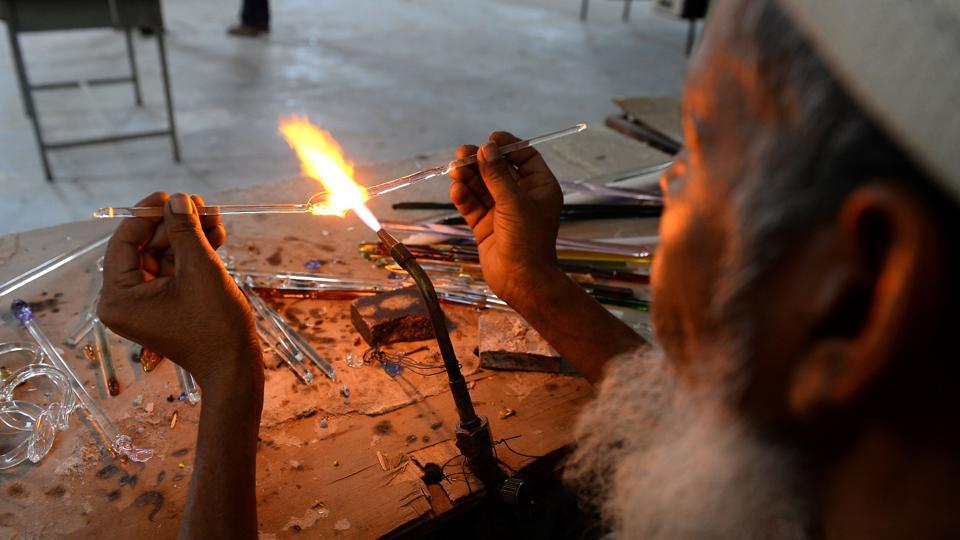
Firozabad—India’s famed “City of ”Glass”—may dazzle global markets with its colorful bangles and glassware, but the truth behind this shimmering industry is hotter, darker, and politically charged than it appears. Situated just 40 km from Agra, this town has built an empire on molten sand. Yet, beneath the glow of its furnaces lies a saga of exploitation, environmental crisis, and political silence that rarely sees the light of day.
The Legacy That Burned Bright — and Still Burns
- The glass industry in Firozabad dates back to the Mughal era, with locals perfecting art forms that now fuel both domestic and export markets.
- It contributes significantly to India’s glass bangle production — over 70% of all bangles sold in the country are made here.
- Firozabad glass is also exported to the Middle East, Europe, and Southeast Asia, making it a soft-power ambassador of Indian craft.
But this glittering legacy comes at a scorching price.
Factories That Run on Child Labour and Broken Promises
Let’s not sugarcoat it — Firozabad’s glass furnaces are modern-day sweatshops hiding behind a heritage tag.
Child labour is rampant.
Despite India’s child labour laws, numerous reports by NGOs and watchdogs confirm that children as young as 8 work in unsafe, poorly ventilated environments.
No social security, no minimum wage.
Over 50% of the glass industry’s workforce remains unorganised and unregistered, stripping them of any legal protection or insurance benefits.
Political inaction.
Every election season, promises to “modernise Firozabad” flood local speeches — only to vanish in smoke once votes are cast. No major reforms in labour rights or industrial safety have been implemented in the last two decades.
Pollution Politics — Breathing Glass Dust Every Day
The glass industry consumes coal, gas, and electricity in deadly amounts, contributing to Firozabad’s rising pollution index.
- Air pollution levels are consistently above safe limits (as per Central Pollution Control Board data).
- Groundwater is reportedly contaminated with fluoride and arsenic, causing skeletal deformities and long-term illnesses in children and the elderly.
Yet the local administration maintains a strategic silence — allegedly pressured by powerful industrial lobbies.
Artisans Cry for Recognition, Not Just Sales
Firozabad’s karigars (craftsmen) are not looking for charity. They’re demanding dignity, recognition, and policy reform.
Why hasn’t the Firozabad glass industry been given GI (Geographical Indication) status yet, when even less active art forms have?
Is it caste politics? Many artisans belong to marginalised communities — their voices don’t make it to Delhi unless there’s a vote to gain.
Final Thoughts: Firozabad Glass Shines — But Who’s Getting Burned?
India flaunts Firozabad glassware at expos, gifting ceremonies, and diplomatic meetings — yet refuses to invest in the hands that shape them.
If we’re celebrating “Make in India,” why are we choking the makers in coal smoke and bureaucratic negligence?
Until the government walks the talk, Firozabad will remain a city of broken dreams wrapped in shimmering lies — a tragic case study in how India treats its artisans: like glass — beautiful, brittle, and disposable.
By – Nikita