


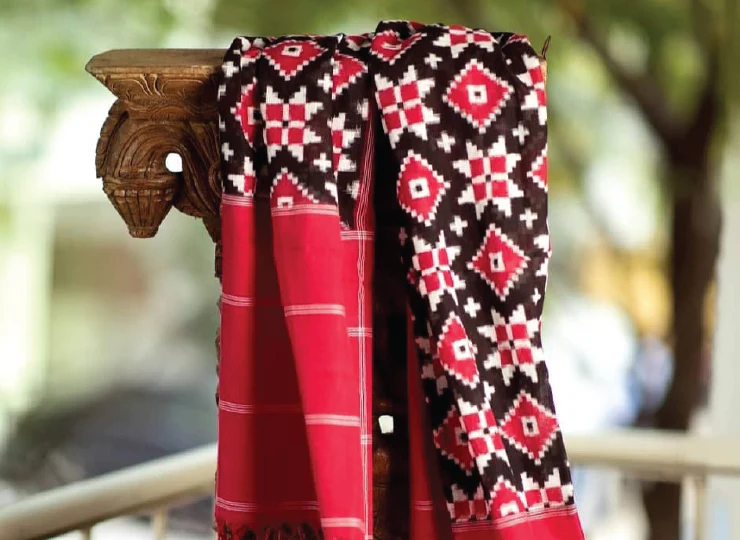
Telia Rumal, a cherished handwoven textile from South India, continues to captivate with its rich heritage and intricate craftsmanship. Originating in the 19th century in Chirala, Andhra Pradesh, this double ikat fabric—named for its oil-treated yarn—has evolved from a practical headscarf to a symbol of cultural identity. Today, its production thrives in Puttapaka, Telangana, thanks to revival efforts, with India’s 900 million internet users celebrating its legacy online. Why does this textile endure? Its unique preparation and historical trade significance keep it relevant.
Origins and Traditional Craftsmanship
Telia Rumal, meaning “oily handkerchief” in Hindustani, reflects its distinctive texture and scent, derived from a 21-day treatment of yarn with sesame or castor oil, ash, and dung. This process, begun in Chirala, softens the cotton or silk and enhances dye absorption, a technique mastered by the Sali caste weavers. Historically, it served as headgear, waist cloths, or turbans, exported to Arabia and Africa as keffiyehs. The double ikat method—resist-dyeing both warp and weft before weaving—creates geometric patterns like diamonds and stars, later expanding to figurative designs like elephants and clocks by the 1930s. Its square form, ranging from 55 to 120 centimeters, was prized by Nizams and zamindars, marking status.
Revival and Modern Significance
The craft waned post-1990s due to economic reforms and power loom competition, but Gajam Govardhana’s efforts in Puttapaka revived it, earning a Geographical Indication (GI) tag in 2020. This recognition protects its authenticity, now showcased in sarees and dupattas sold globally. The process remains traditional: yarn is soaked, treated with oil mixtures, tied for resist-dyeing, and woven on fly-shuttle looms. Modern designs blend heritage with innovation, yet the use of synthetic dyes questions its ecological roots.
Cultural Impact and Future Prospects
Telia Rumal embodies India’s textile diversity, bridging past and present. Its export history and cultural use—from fishermen’s lungis to elite turbans—highlight adaptability. However, declining weaver numbers and market pressures pose challenges. As sentiment on social platforms praises its artistry, the craft’s future hinges on sustainable support.
-By Manoj H