


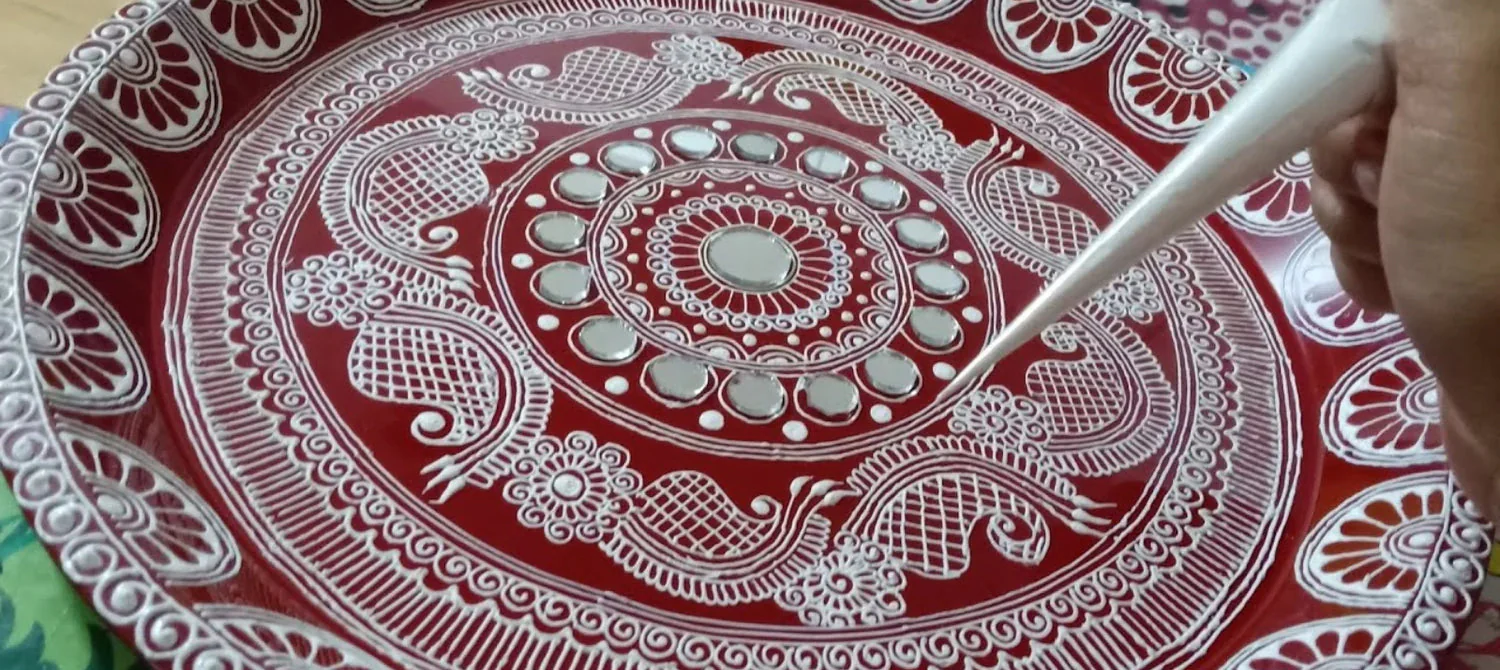
Aipan, the ritualistic folk art of Uttarakhand, especially among Kumaoni women, is more than just decorative geometry. It’s a centuries-old spiritual canvas, traditionally made using geru (red soil) and biswar (rice paste), drawn on walls, floors, and puja sthals to invoke blessings and positive energy.
But for decades, Aipan was relegated to remote village rituals, abandoned by modern homes, and ignored in art curriculums. As Uttarakhand raced toward urbanization, Aipan was being silently erased, brick by brick, replaced by plastic wall stickers and printed wallpapers.
The Instagram Resurrection – Who’s Really Benefitting?
Social media — especially Instagram and Pinterest — brought Aipan roaring back from the dead. DIY kits, fashion apparel, wedding backdrops, and cafe walls in Delhi and Bengaluru now flaunt intricate Aipan designs. Influencers flaunt it with hashtags like #AipanArt, #IndianTribalArt, and #EthnicChic — most without crediting its origins.
Is this revival or cultural looting in digital disguise?
Several Kumaoni women artists claim their original hand-drawn Aipan patterns are being digitally stolen, printed, and mass-sold by urban brands without paying royalties or even acknowledgments.
Political Irony – Big Promises, Zero Budget
In 2020, the Uttarakhand government introduced schemes like ‘Mukhyamantri Swarojgar Yojana’ and GI Tag promotions for Aipan. But insiders say only token workshops were held, with no continuous training or market linkage. As per RTI queries filed in 2024, less than ₹12 lakh was allocated state-wide for Aipan promotion — not even enough to fund one full-year art program in 4 districts.
Politicians love Aipan during elections and forget it during budget season.
The Feminist Flame Within the Art
Traditionally done by women, Aipan has become a symbol of female identity, resistance, and reclaiming space. Today, collectives like Minakriti Foundation, Aipan Udyog, and Bhoomi Aipan Studio are not just teaching the art but employing women across Kumaon — many of whom were previously unpaid homemakers.
A high-profile lady reportedly hired an Aipan artist team for a private wedding mural and paid ₹4 lakh — but not a single credit was given. The artist later exposed the story anonymously on X (formerly Twitter), sparking outrage.
The Road Ahead – Revival or Reinvention?
With Uttarakhand’s youth now turning back to their roots, many are picking up brushes instead of resumes. Aipan workshops are becoming popular in schools, tourism circuits, and even luxury resorts.
However, experts warn that unless a formal framework for artist protection, proper GI-tag enforcement, and royalty rights are instituted, Aipan risks becoming just another buzzword in elite circles.
Bullet Points Summary:
- Aipan is a sacred ritual folk art native to Uttarakhand’s Kumaon region.
- Social media revival has given Aipan a second life but also sparked concerns of digital appropriation.
- Government schemes have largely failed to provide long-term support or funds.
- Women are leading the real grassroots revival, despite lacking formal support.
- Without legal and financial safeguards, Aipan may end up commercialized and disconnected from its cultural roots.
Final Word
Aipan’s future hangs between revival and exploitation. Will it be a tale of empowered heritage or stolen legacy? As Uttarakhand’s most sacred symbols are turned into Instagram filters and product logos, the time has come to ask tough questions — and demand answers from both governments and “artpreneurs.”
By – Nikita