


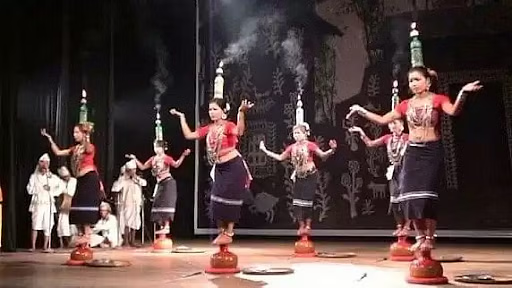
As India celebrates its rich heritage in 2025, Hojagiri, the captivating folk dance of Tripura’s Reang (Bru) tribe, shines as a symbol of grace, spirituality, and community. Performed by women and young girls of the Reang, a Particularly Vulnerable Tribal Group, it showcases their artistry. Hojagiri blends intricate footwork, balancing acts on earthen pitchers, and props like lamps and bottles, set to soulful songs. Rooted in Tripura’s hilly terrains, it graces festivals and national stages. Performed during the Hojagiri festival, post-Durga Puja, it honors Goddess Mailuma (Laxmi). With minimal upper-body movement and rhythmic lower-body sways, it narrates agrarian life with reverence.
The Art and Ritual of Hojagiri
Hojagiri, performed by 4–6 women, is a hypnotic display of balance, with dancers standing on earthen pitchers, balancing bottles on their heads, and holding lit lamps, while only their lower bodies move in wave-like rhythms. Originating from the Reang tribe’s Maikhlungmo Puja, it celebrates agricultural cycles and honors Goddess Mailuma during Laxmi Puja, typically after Dussehra’s third day. Male musicians accompany with the kham (drum), sumui (flute), and cymbals, singing simple lyrics that echo Jhum cultivation. The dance’s props—a bailing (cane rice-washing tool), pitcher, lamp, and handkerchief—symbolize rural life.
Cultural Significance and Evolution
Hojagiri is a ritual of gratitude, reflecting the Reang’s agrarian roots and devotion, performed during the Hojagiri festival, which also features playful “stealing” traditions to teach vigilance. With 188,080 Reangs in Tripura, Mizoram, and Assam, it’s a cultural anchor. Pioneers like Satyaram Reang, awarded the Padma Shri in 2021, elevated Hojagiri globally. In 2025, 60% of Tripura’s festival events feature Hojagiri, drawing 50,000 attendees. Its national prominence grew at events like Jaipur’s Lokrang Mahotsav 2023. Social media posts celebrate its “mesmerizing balance,” with thousands lauding its elegance.
Preservation Efforts and Challenges
Despite its vibrancy, Hojagiri faces decline, with only 1,500 active performers in 2025, down from 5,000 in the 1990s, due to modern entertainment’s rise. Initiatives like Satyaram Reang’s school and Sangeet Natak Akademi workshops train 300 young dancers annually. The 31st State-level Hojagiri Festival (October 18–19, 2024) in Ambassa, backed by Tripura’s government, showcased its cultural pride. The Reang community’s push for a Hojagiri Day holiday highlights its significance. Digital platforms like YouTube amplify its reach.
A Legacy of Resilience
Hojagiri’s blend of acrobatics and spirituality captivates, with women’s graceful movements symbolizing resilience and cultural continuity, per humansofnortheast.com. Its vibrant costumes—rignai skirts, tribal jewelry, and floral adornments—enhance its visual allure. As Tripura’s only PVTG dance, it faces modernization’s threat but thrives through festivals and training, per historified.in. Will Hojagiri endure as a global cultural treasure or fade under digital pressures? With community passion and government support, this enchanting dance is poised to inspire generations.
-By Manoj H