


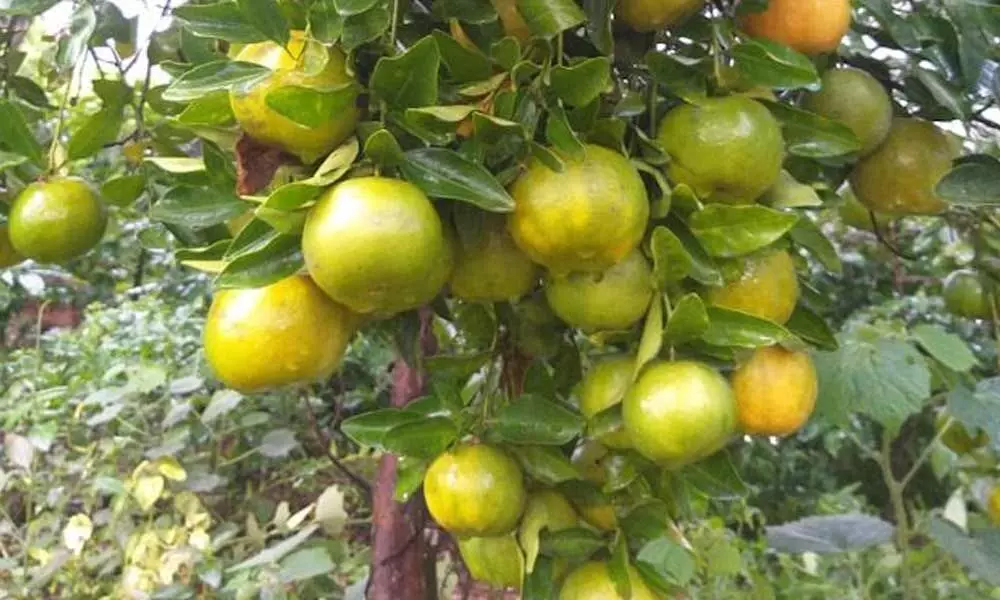
As Kodagu’s misty hills brace for the harvest season, the Coorg orange, also known as the Coorg mandarin, remains a cherished but endangered gem, celebrated for its unique flavor and cultural significance.Farmers in Karnataka’s Kodagu, Hassan, and Chikmagalur districts have cultivated this mandarin hybrid for over 300 years. A Geographical Indication (GI)-tagged fruit since 2006, it’s prized for its sweet-tangy taste and nutritional value. Grown amidst coffee plantations in Kodagu’s hilly terrain, it thrives in well-drained, loamy soil. Harvested from December to February, its cultivation has dwindled since the 1980s. Diseases, competition from Nagpur oranges, and climate challenges threaten its survival, despite revival efforts.
A Flavor Born of Kodagu’s Soil
Coorg oranges, scientifically Citrus reticulata, boast a golden-red hue, a medium-sized oblate shape, and a tight, orange-yellow skin, unlike the loose-skinned Nagpur variety. With 40-45% juice content, 10-12% total soluble solids, and 35-40 mg of ascorbic acid per fruit, they blend sweetness and acidity perfectly. Introduced from Central India around 300 years ago, they flourished as a secondary crop in coffee estates, covering 24,000 hectares in the 1960s but shrinking to under 2,000 by 2025. Their tangy zest and longer shelf life once earned top prizes at the 1957 Delhi and 1964 Bangalore Citrus Shows, per Kirehalli.
The Human and Ecological Toll
For farmers like Ravi, a Kodagu grower, Coorg oranges were a lifeline, buffering volatile coffee prices. “We tied branches to prevent snapping under fruit weight,” he recalls, per Kodagufirst. But citrus greening disease, stem borers, and phytophthora leaf fall slashed yields from 50 kg to 10 kg per plant.
Revival Hopes Amid Challenges
The GI tag, secured in 2004 by Karnataka’s Horticulture Department, aimed to protect and revive Coorg oranges, promoting high-quality planting material and economic growth. Initiatives under the National Horticultural Mission offer subsidies, but challenges persist—shallow roots damaged by coffee farm tilling and chemical overuse disrupt soil microflora. With 45,000 tonnes produced annually, and a sweet-sour allure celebrated by locals like Priya on X—“Nothing beats Coorg’s zing!”—the fruit holds promise. Will revival efforts restore its glory, or will it fade into memory? Kodagu’s farmers are betting on the former.
-By Manoj H