


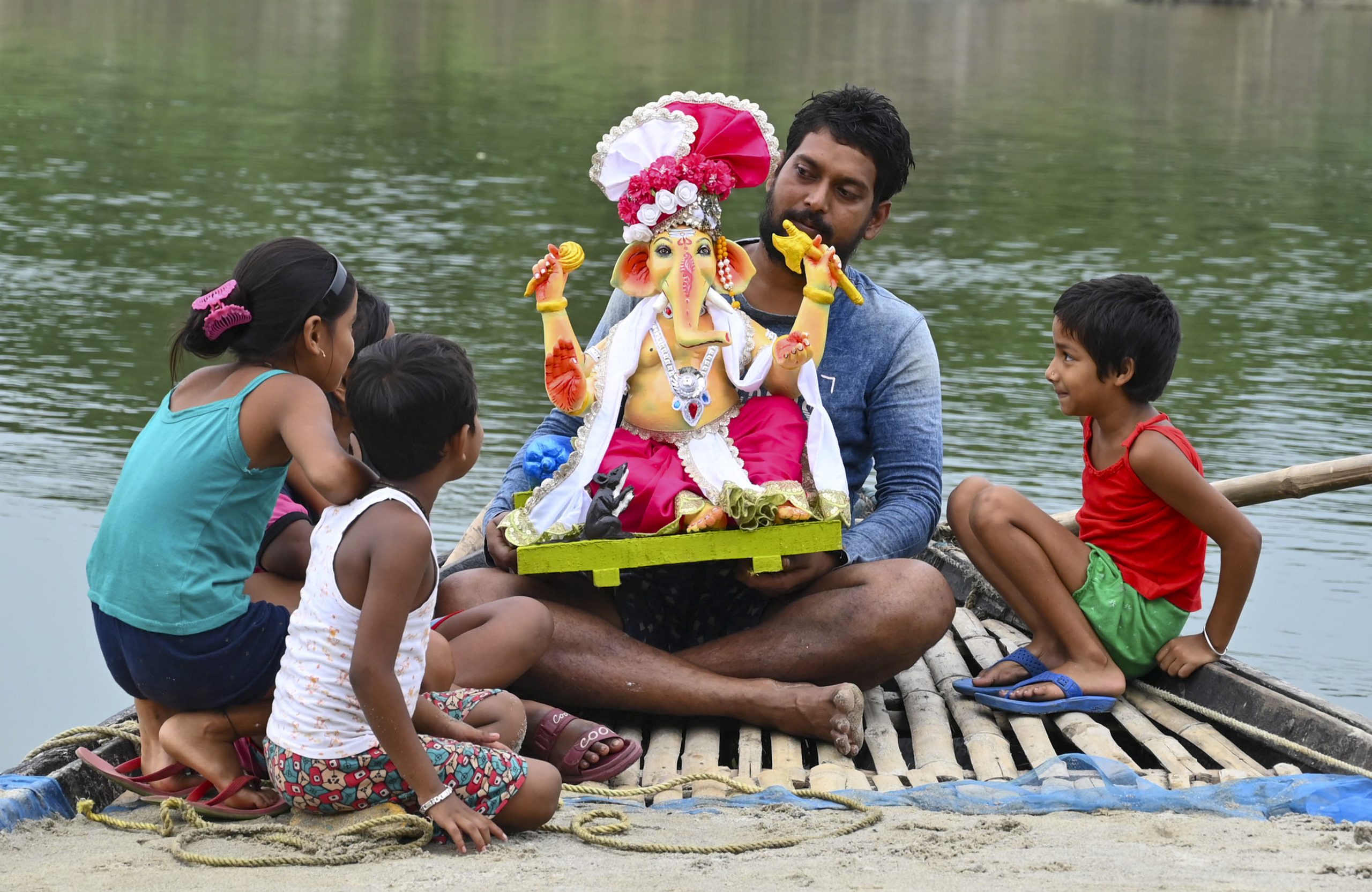
As Ganesh Chaturthi begins on August 27, 2025, the festival, revitalized by Lokmanya Tilak in 1893, evolves with digital pandals enhancing accessibility and sustainability. Tilak, a freedom fighter, made it a public celebration, now embraced by millions. From community pandals to virtual darshan, the festival blends tradition with technology. Celebrations thrive in Maharashtra, Hyderabad, and globally, with digital platforms extending reach. Spanning August 27 to September 6, 2025. Digital pandals offer live streams, eco-friendly initiatives, and global participation, rooted in Tilak’s unifying legacy.
Tilak’s Revolutionary Vision
Ganesh Chaturthi, celebrating Lord Ganesha’s birth, traces its public roots to 1893, when Lokmanya Bal Gangadhar Tilak transformed it from a private ritual into a mass movement in Pune and Mumbai. Facing British restrictions on public gatherings in 1892, Tilak used the festival to unite Hindus across castes, fostering nationalism. His newspaper Kesari promoted sarvajanik (public) celebrations, introducing large idols and immersion processions. By 1893, pandals like Keshavji Naik Chawl in Girgaon became cultural hubs.
The Traditional Pandal Culture
Historically, pandals—temporary stages housing Ganesha idols—became the heart of Ganesh Chaturthi, adorned with lights, flowers, and themes ranging from mythology to social issues. Iconic pandals like Mumbai’s Lalbaugcha Raja, established in 1934, draw 1.5 million devotees daily. Pune’s Dagdusheth Halwai Ganpati, adorned with 40 kilograms of gold, blends grandeur with charity. Hyderabad’s Khairatabad Ganesh, with its 60-foot idols, captivates lakhs. These pandals host aartis, bhajans, and community events, fostering unity.
The Digital Pandal Revolution in 2025
In 2025, Ganesh Chaturthi embraces technology with digital pandals, driven by sustainability and global reach. Mumbai’s mandals, like GSB Seva Mandal, offer “digital darshan” via live streams on platforms like YouTube, allowing devotees worldwide to participate. Eco-friendly initiatives, such as clay idols and virtual immersions, address environmental concerns, with 62,500 sarvajanik idols in Mumbai adopting sustainable practices. Telangana’s free electricity for pandals, announced by TGSPDCL for August 27–September 6, 2025, supports vibrant displays.
-By Manoj H