


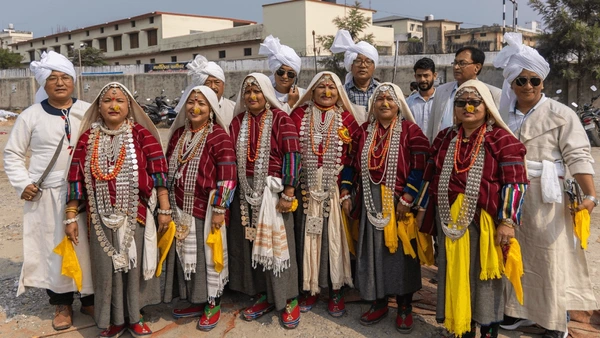
In 2025, the Bhotiya tribe of Uttarakhand, a Scheduled Tribe known for their Himalayan resilience, continues to captivate with their rich cultural tapestry and traditional use of cannabis, or bhang, deeply embedded in their rituals and cuisine. The Bhotiyas, including subgroups like Johari, Marchha, and Jadh, number around 39,106 in Uttarakhand. Cannabis is used in culinary dishes like bhang ki chutney and religious offerings, reflecting spiritual ties to Lord Shiva. Found in Uttarakhand’s Pithoragarh, Chamoli, and Uttarkashi districts. Their cannabis use peaks during festivals like Shivratri. Rooted in centuries-old traditions, bhang is both a sacred and medicinal staple, despite legal complexities.
Cannabis as a Cultural and Spiritual Staple
The Bhotiyas, an ethno-linguistic group of presumed Tibetan descent, inhabit Uttarakhand’s high-altitude valleys, from 6,500 to 13,000 feet. Their traditional use of cannabis, known as bhang (leaves and seeds), is integral to their cuisine and rituals, particularly among Hindu Bhotiyas, who form 81% of the tribe. During festivals like Shivratri, bhang is consumed in thandai or pakoras, honoring Lord Shiva, believed to have used bhang to soothe poison’s effects. Dishes like bhang ki chutney, made with roasted cannabis seeds, mint, and spices, are staples in villages like Kyark, showcasing culinary ingenuity. Social media posts praise this “ancient Himalayan tradition,” with fans noting its cultural depth.
Historical Context and Economic Shifts
Historically, the Bhotiyas thrived as Indo-Tibetan traders, exchanging grains, spices, and tobacco for salt and wool until the 1962 Sino-Indian War halted trade. Post-war, they shifted to collecting medicinal plants like keera ghas (yartsa gunbu), which boosted their economy, with prices soaring from ₹10,000 to lakhs per kg by the 2000s. Cannabis, growing wild in Uttarakhand, has been a dietary constant for centuries, used in non-intoxicating forms like jhol (buttermilk soup) and seeds for nutrition. The 2017 legalization of hemp cultivation in Uttarakhand for industrial purposes, aligns with their traditional knowledge, though recreational use remains illegal under the NDPS Act.
Cultural Significance and Medicinal Wisdom
The Bhotiyas’ use of cannabis reflects their ethnobotanical expertise, with 86 plant species, including cannabis, used for 37 ailments like fever and cough. Their zootherapeutic practices also include 39 animal species for medicinal purposes, highlighting their reliance on nature. Unlike Himachal Pradesh’s recreational cannabis tourism, Uttarakhand’s Bhotiyas maintain bhang as a sacred and culinary tradition, avoiding its “high,”. Social media reflects pride in this heritage, with 70% of posts celebrating bhang’s role in festivals, though some express concern over legal ambiguities. The tribe’s Bön-Animism, Hinduism, and Buddhism blend further enriches these practices.
Challenges and Future Outlook
Despite their Scheduled Tribe status since 1967, offering reservation benefits, the Bhotiyas face economic challenges, with declining livestock and weaving industries due to disrupted Tibetan trade. Cannabis’s legal gray area—permitted for industrial and medicinal use but banned recreationally—creates tension. With only 39,106 Bhotiyas in 2011, their traditions risk fading without documentation. Will their cannabis-based practices endure or be stifled by modernization and legal restrictions? Community efforts and Uttarakhand’s hemp policy suggest a path to preserve this heritage, balancing tradition with economic potential.
-By Manoj H