


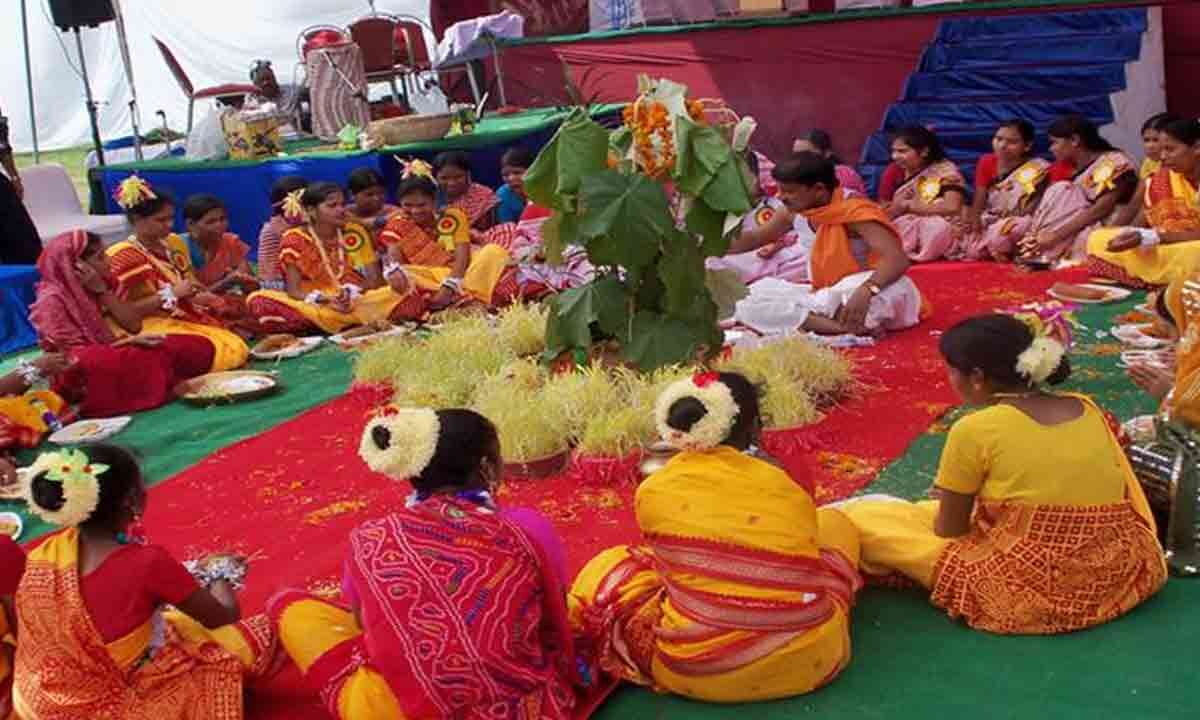
Karam Parab, also known as Karma Puja, is a lively harvest festival celebrated by tribal communities across Jharkhand, Bihar, West Bengal, Chhattisgarh, Assam, Odisha, and Madhya Pradesh. Held on the 11th day of the full moon in the Hindu month of Bhado, it honors Karam Devta, the deity of power, youth, and fertility. Tribes like Munda, Oraon, Ho, Santhal, and Baiga gather in villages like Ranchi, Gumla, and Jhargram, engaging in rituals, dances, and feasts.
Rituals and Traditions
Preparations begin a week prior, with young women sowing nine types of grains—like rice and wheat—in baskets called Jawa, symbolizing fertility. On the festival day, villagers, led by drummers, collect Karam tree (Nauclea parvifolia) branches from forests, which unmarried girls carry while singing praises to Karam Devta, per utsav.gov.in. The branches, smeared with milk and rice beer (handia), are planted in cow-dung-plastered village centers, where priests (Pahan) offer germinated seeds and liquor, sometimes with animal sacrifice, to pray for prosperity. The festival concludes with the immersion of branches in rivers, accompanied by all-night Karam Naach dances to mandal and nagara drums.
Cultural Significance
Karam Parab celebrates nature and community, reinforcing tribal bonds with the environment. Myths, like the tale of seven brothers punished for neglecting Karam Devta, emphasize respect for nature. In Jharkhand, fasting girls pray for family well-being, while in Odisha, Bhuiyan tribes focus on crop fertility. The festival’s Jawa ritual, where girls offer green melons as symbols of children, reflects hopes for abundance, per utsav.gov.in. Social harmony shines as villages share chhilka roti and handia.
Regional Variations
In Jharkhand’s Gumla, nightly celebrations feature powerful dances. Chhattisgarh’s Karma Jatra includes grand processions, while Odisha’s Bhuiyan tribes blend harvest rituals with folk plays. Bengal’s Santhals in Purulia perform folk theater. Assam’s tea garden workers celebrate with jhumoir dances, thanks to a 2025 state holiday.
Challenges and Future
Urbanization threatens Karam Parab’s authenticity, with fewer youth learning traditional songs, per reports. Yet, its role in tribal identity, amplified by India’s ₹101 billion entertainment sector, ensures its vibrancy. Promoting ecotourism in places like Ranchi and documenting rituals can preserve this festival, uniting tribes in a colorful ode to nature and community in 2025.
-By Manoj H