


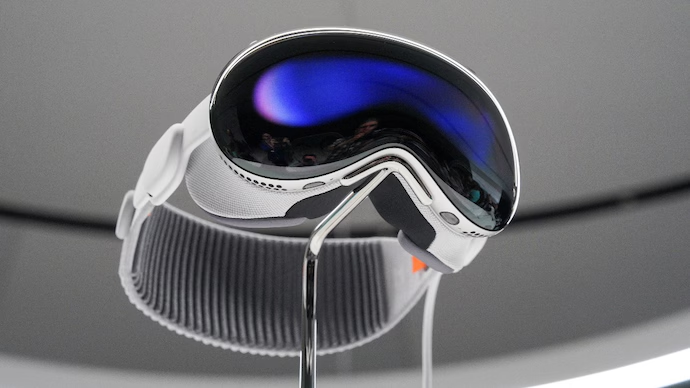
Apple, the tech titan behind the iPhone and Apple Watch, is set to launch the Vision Air headset in the third quarter of 2027, a lighter and more affordable successor to the $3,499 Vision Pro, per analyst Ming-Chi Kuo. Aimed at democratizing spatial computing, this mixed-reality device will debut globally, including in India’s ₹101 billion tech market, targeting 467 million social media users and tech enthusiasts. By slashing weight by over 40% and halving the price to around $1,500–$2,000, Apple seeks to make immersive technology a daily essential, crafted in Asia’s cutting-edge supply chains.
A Lighter, Leaner Vision
The Vision Air, codenamed “N100,” tackles the Vision Pro’s biggest flaws: its 600-650 g weight and premium price, which limited sales to 400,000 units. Using plastic instead of glass, magnesium alloy over aluminum, and fewer sensors, the headset will weigh under a pound (~360 g). Powered by an iPhone-grade A-series chip—likely the A21 on TSMC’s 2nm process—it sacrifices the Pro’s M2 muscle for efficiency, ensuring comfort for extended use. India’s urban youth, glued to gaming and OTT platforms, will find its sleek design and vibrant “Midnight” blue hue, teased by leakers on X, a stylish draw.
Why now? A Strategic Pivot
The Vision Pro, launched in February 2024, dazzled with micro-OLED displays and eye-tracking but flopped with casual users due to its bulk and cost. Apple’s 2027 timeline aligns with a broader XR roadmap, including a 2025 Vision Pro refresh with an M5 chip and smart glasses by 2028. Meta’s Quest 3S dominates the budget VR market; Apple’s Vision Air aims to capture the middle ground, projecting 1 million units shipped in 2027. In India, where AR/VR adoption lags at under 1% of tech users, affordability could spark a revolution.
Human Impact and Cultural Shift
Imagine a Delhi student designing 3D models or a Mumbai gamer diving into Apple Arcade’s 250+ titles on a 100-foot virtual screen, all without neck strain. The Vision Air’s visionOS, backward-compatible with iOS apps, promises seamless integration with iPhones and Macs, per Apple. Yet, concerns linger: will cost-cutting compromise the Pro’s sci-fi immersion? X users question if fewer cameras and no EyeSight display dilute the experience. India’s privacy-conscious users, wary after 2023 data breaches, demand robust safeguards like Optic ID, per Apple.
Is it a game-changer or a gimmick?
Apple’s pivot to accessibility could make spatial computing as ubiquitous as smartphones, especially in India’s tech-hungry market. But skeptics warn of ecosystem lock-in and developer hesitancy—Netflix and Spotify skipped visionOS apps, per Wikipedia. As Rajamouli’s SSMB 29 captivates with African vistas, Vision Air could bring such epics to life in 3D, merging India’s ₹101 billion entertainment sector with tech innovation. By 2027, will it redefine how we work, play, and connect, or remain a niche toy? Only time will tell.
-By Manoj H