


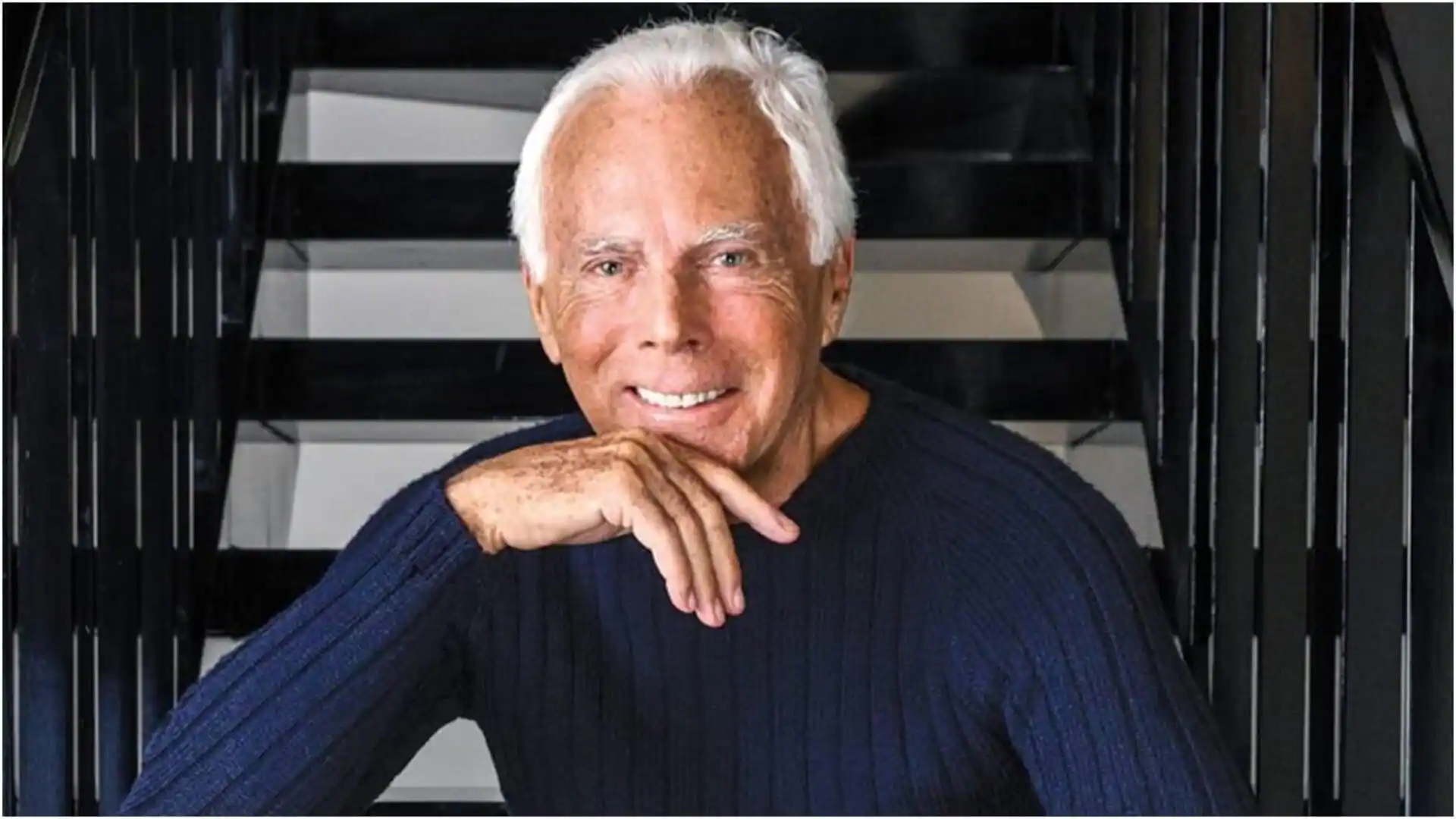
Italian fashion legend Giorgio Armani died at the age of 91, his fashion house confirmed on September 4, 2025. Armani, often hailed as “Re Giorgio” (King George), passed away at home due to age-related illness. His death marks the end of an era in global fashion, where his vision of understated elegance reshaped both Hollywood red carpets and corporate boardrooms.
From Piacenza to the Pinnacle of Fashion
Born on July 11, 1934, in Piacenza, a small town south of Milan, Armani’s early ambition was to become a doctor. But fate pulled him toward fashion when a part-time job as a window dresser opened his eyes to style and aesthetics.
In 1975, with his partner Sergio Galeotti, Armani sold a Volkswagen to raise seed money for their first menswear line. That modest beginning became the foundation of a multi-billion-dollar empire. By the 1980s, Armani had become the face of “power dressing” — introducing women’s pantsuits and redefining masculine tailoring with softer, unstructured jackets.
An Empire Beyond the Runway
At the time of his death, Armani had built a brand worth over $10 billion, encompassing:
- Fashion lines (Armani, Emporio Armani, Armani Exchange)
- Luxury hotels in Dubai (2009) and Milan (2010)
- Over 20 restaurants and bars worldwide
- A professional basketball team, EA7 Emporio Armani Milan (Olympia Milano)
- Perfumes, cosmetics, furniture, and even chocolates
Unlike many designers who sold their labels to conglomerates, Armani remained fiercely independent throughout his career, never bowing to corporate takeovers. That uncompromising stance only strengthened his reputation as a businessman with vision.
Hollywood’s Designer of Choice
Armani’s Hollywood breakthrough came with “American Gigolo” (1980), where Richard Gere’s sleek suits became iconic. From then on, Armani became a fixture in film wardrobes, earning credits in over 200 movies.
Oscar nights sparkled with his creations — from Sean Penn’s all-black tuxedo in 2009 to Anne Hathaway’s white Prive gown. Stars like Jodie Foster, George Clooney, Sophia Loren, and Brad Pitt were all devoted Armani loyalists. Even David and Victoria Beckham became the faces of his underwear campaigns.
Legacy: Elegance Without Noise
Armani’s style philosophy was simple yet revolutionary: “I design for real people. There is no virtue in creating clothes that are not practical.” His muted palette, minimalism, and fluid tailoring made his clothes timeless, earning him museum retrospectives and global acclaim.
Yet critics often accused Armani of androgyny, blurring gender lines in fashion. In hindsight, that very androgyny has become a forward-looking, politically charged hallmark — aligning him with conversations on gender identity decades before they became mainstream.
The Final Word
Giorgio Armani’s passing isn’t just the loss of a designer — it’s the closing chapter of a man who democratized luxury and proved that fashion can be powerful without being loud. He lived life on his own terms, never selling out, always steering his empire with quiet authority.
Today, as Milan prepares to mourn its most celebrated son, one question lingers: Can the fashion world ever produce another Armani — a designer who was as much philosopher as stylist, as much businessman as artist?
By – Nikita