


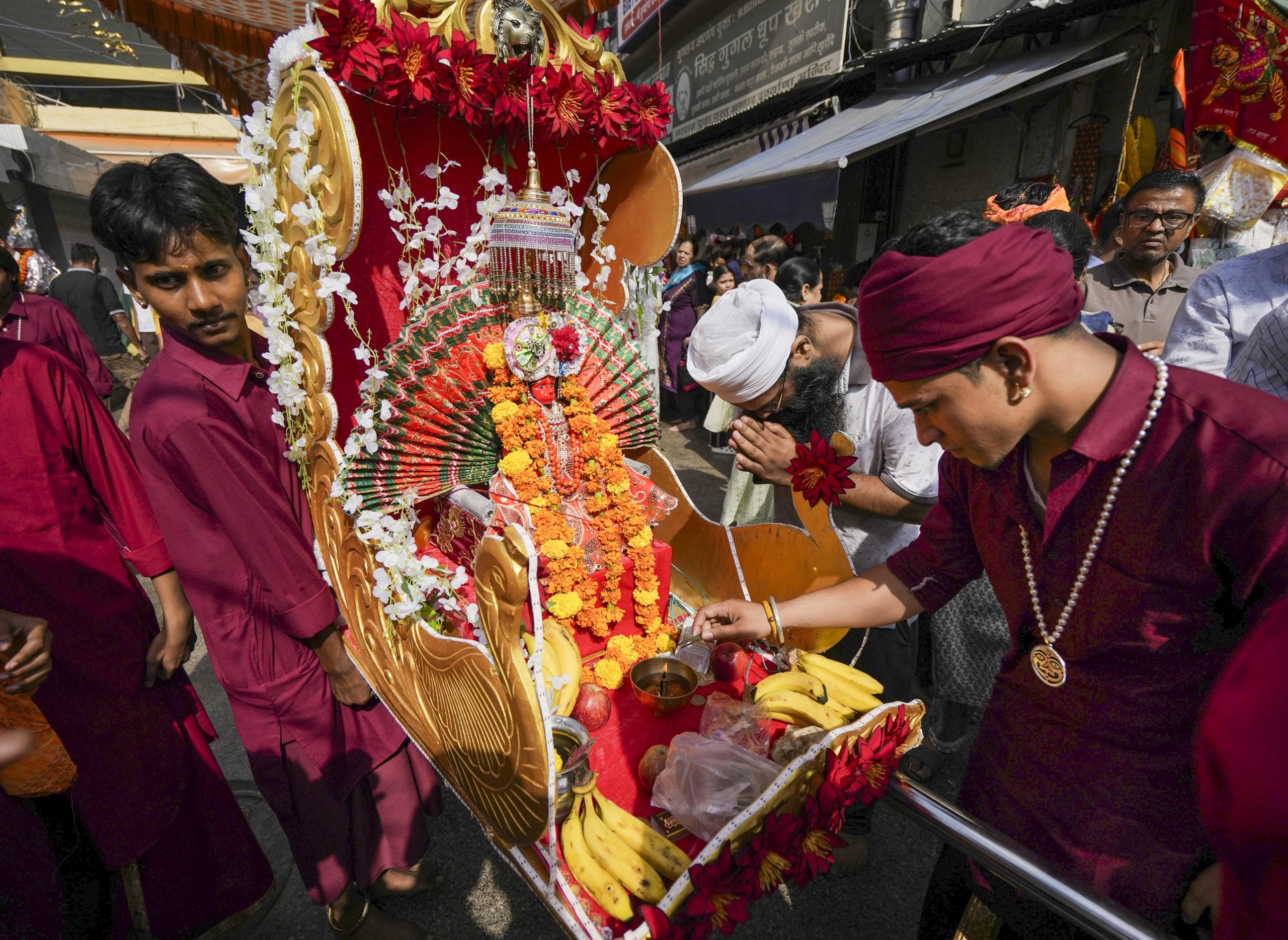
Langur Mela, a colorful and heartfelt festival unique to Amritsar, Punjab, transforms the Durgiana Temple complex into a lively celebration during Navratri, where families dress children as langurs (monkeys) to honor Lord Hanuman. Held annually for 10 days from the first day of Navratri to Dussehra, the 2025 edition begins on September 22 and runs until October 2, drawing thousands of devotees. Rooted in ancient beliefs, the mela involves processions, drumbeats, and temple visits, blending faith with festivity at the historic Durgiana Temple, a sacred site mirroring the Golden Temple’s architecture. This tradition, celebrated barefoot with chants of “Jai Bajrang Bali,” unites communities in gratitude, reflecting Amritsar’s spiritual vibrancy.
Historical and Cultural Roots
Langur Mela traces back centuries to the Bara Hanuman Temple within the Durgiana complex, believed to be where Lord Hanuman was subdued by Lord Rama’s sons, Luv and Kush. Legend holds that childless couples pray for a son, vowing to dress the child as a langur—symbolizing Hanuman’s devoted vanara sena in the Ramayana—once the wish is granted. The festival, tied to Navratri’s theme of Durga’s victory over evil, honors Hanuman’s strength and loyalty. Historical records, including the 1893 Amritsar District Gazetteer, mention the temple’s ancient significance, with the mela evolving into a symbol of fulfilled vows and family joy. In Amritsar’s walled city, it fosters unity, attracting NRIs and locals alike, with over 40,000–50,000 visitors daily.
Rituals and Celebrations: A Riot of Color and Chants
The mela kicks off on Navratri’s first day (September 22, 2025), with families adorning children—mostly boys, but increasingly girls—in glittering langur outfits: conical caps, red-silver clothes, face paint with Multani mitti, and tails, carrying silver maces (gada). Barefoot processions, led by dhol drummers, wind through streets to the Bara Hanuman Temple, adjacent to Durgiana Mandir. Devotees chant “Jai Bajrang Bali” and offer prayers, ringing bells and distributing prasad. TThe temple, rebuilt in 1921 by Guru Harsai Mal Kapoor in a Sikh architectural style, sees children dance to rhythmic beats, symbolizing Hanuman’s army. On Ekadashi (October 3), langurs “shed” outfits near a banyan tree, marking the vow’s fulfillment. Evening aartis and dhunuchi dances add to the spectacle, with the complex illuminated during Navratri.
Regional Uniqueness and Modern Evolution
Unique to Amritsar, Langur Mela stands out from pan-Indian Navratri festivities like Gujarat’s garba, blending devotion with playful tradition. IIt is a family affair, with parents carrying infants and teens participating, which breaks gender barriers as more girls get involved, according to recent reports. The mela’s cultural significance lies in gratitude—couples from across the globe visit, including NRIs, turning it into a pilgrimage. In 2025, amid post-monsoon recovery, it boosts local economies through stalls selling outfits and sweets. Social media amplifies its joy, with #LangurMela trending among 467 million users, sharing videos of tiny langurs dancing. Eco-initiatives, like biodegradable paints, reflect modern sustainability.
A Timeless Tradition of Faith and Fun
Langur Mela at Durgiana Temple isn’t just a festival—it’s a celebration of fulfilled promises and Hanuman’s eternal devotion. In Amritsar’s spiritual heart, it asks: Can ancient vows inspire modern joy? As children in langur garb ring bells, the mela proves yes, weaving faith, family, and festivity into Punjab’s rich tapestry.
-By Manoj H