


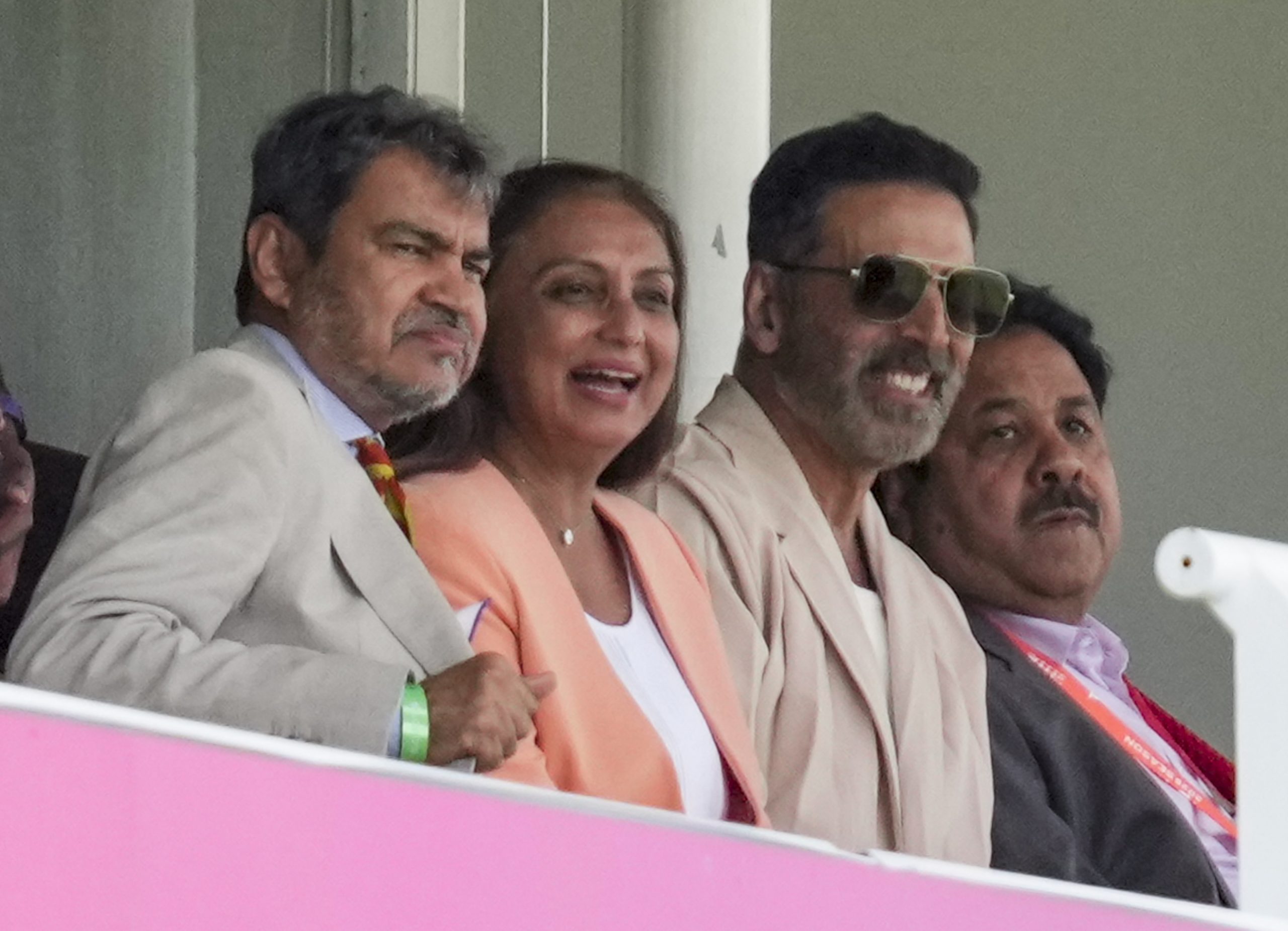
Bollywood superstar Akshay Kumar has taken a firm public stance against the misuse of artificial intelligence after discovering fake videos featuring him as Maharishi Valmiki circulating widely across social media platforms. On Tuesday, September 23, the actor issued a comprehensive statement on social media, expressing deep concern over the rapid proliferation of AI-generated content that falsely portrays celebrities without their consent.
The manipulated videos, which presented Kumar in traditional saintly attire with a flowing beard, were part of an elaborate fake film trailer that had been circulating on YouTube for several months. The deceptive content claimed to feature Kumar alongside renowned actors Pankaj Tripathi and Paresh Rawal in a supposed biographical film about the revered sage Valmiki.
Media Houses Fall for Digital Deception
Kumar’s statement particularly highlighted his disappointment with news outlets that had reported on the fake videos without proper verification. “What’s worse, some news channels decide to pick these up as ‘news’ without even verifying if these are real or morphed,” the actor wrote in his social media post. This criticism underscores a growing problem in digital journalism where the pressure to break news quickly sometimes supersedes the fundamental responsibility of fact-checking.
The actor specifically called attention to the broader implications of this trend, stating, “In today’s time, when misleading content is being produced at great speed through manipulative AI, I sincerely request media houses to verify and report only after authenticating the information”.
Growing Concern in Entertainment Industry
Kumar’s public warning reflects a mounting crisis facing the entertainment industry, where celebrities increasingly find themselves victims of sophisticated deepfake technology. The issue has gained significant attention throughout 2024 and 2025, with multiple high-profile personalities falling prey to similar AI-generated misinformation campaigns.
Earlier this year, veteran actress and politician Hema Malini addressed the Lok Sabha specifically about deepfake misuse targeting celebrities, emphasizing how these manipulated videos not only damage reputations but also significantly impact victims’ mental health. The parliamentary discussion highlighted that celebrities invest years building their credibility, only to see it threatened by technology that can create convincing false content within hours.
Context of India’s Deepfake Challenge
The timing of Kumar’s statement comes amid India’s ongoing battle against AI-generated misinformation, which became particularly prominent during the 2024 election cycle. The country witnessed unprecedented use of deepfake technology during the national elections, with manipulated content featuring politicians, celebrities, and public figures becoming a cornerstone of misinformation campaigns.
India has responded to this threat by establishing the Deepfakes Analysis Unit (DAU) to combat AI-generated misinformation, though legal frameworks to regulate such content remain under development. The government is currently working on the Digital India Act to address these emerging technological challenges.
Kumar’s Current Professional Success
Despite the distraction caused by the fake videos, Kumar continues to enjoy professional success with his latest release “Jolly LLB 3”, which has performed impressively at the box office since its September 19 release. The courtroom comedy-drama, co-starring Arshad Warsi, has collected approximately ₹59 crore in its first four days, demonstrating the actor’s continued box office appeal.
The film, directed by Subhash Kapoor, represents the third installment in the popular Jolly LLB franchise and features both Kumar and Warsi as competing lawyers tackling a case based on the 2011 Bhatta Parsaul incident. Despite the AI controversy, Kumar expressed gratitude for audience support, stating, “Nothing matters more than the audience’s love”.
Industry-Wide Implications
Kumar’s public stance against AI-generated misinformation highlights several critical issues facing the modern entertainment industry. First, the vulnerability of public figures to sophisticated manipulation technology that can create convincing false content using readily available images and videos. Second, the responsibility of media outlets to maintain journalistic integrity in an era where verification becomes increasingly complex.
The incident also demonstrates how quickly false information can spread across digital platforms, potentially causing reputational damage that may persist long after corrections are issued. For celebrities like Kumar, who maintain carefully cultivated public images, such false content represents both a personal violation and a professional threat.
Call for Digital Responsibility
Kumar’s statement serves as both a warning and an appeal for greater digital responsibility across multiple stakeholders. His request for media verification reflects broader concerns about information integrity in the digital age, where the distinction between authentic and manipulated content becomes increasingly blurred.
The actor’s experience exemplifies the challenges facing public figures in an era where artificial intelligence can be weaponized to create misleading content at unprecedented speed and scale. His public response may encourage other celebrities to speak out against similar misuse and prompt industry-wide discussions about protective measures.
By – Sonali