


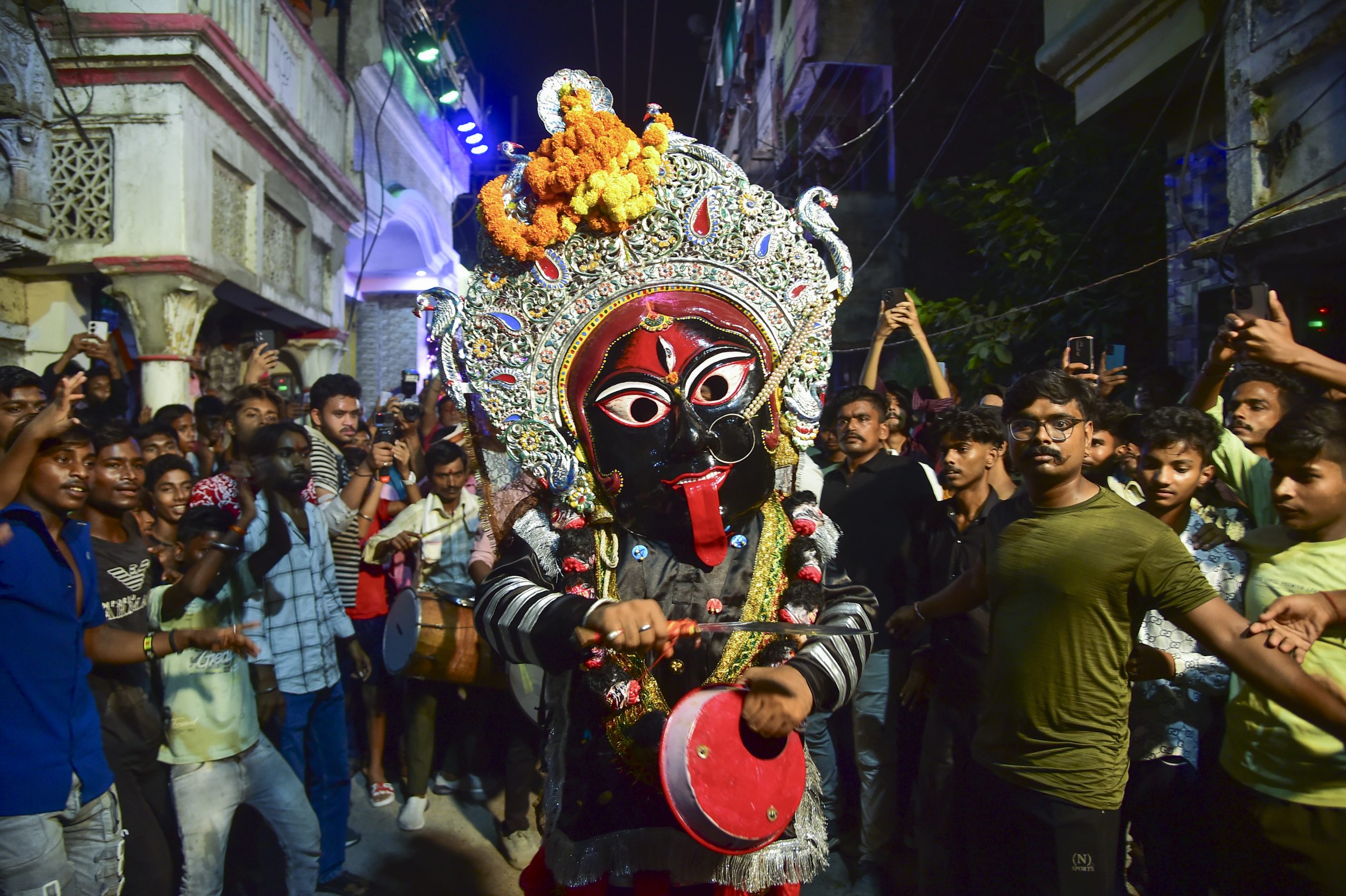
Kali Swang, a captivating folk theatre tradition blending mythology, music, and mimicry, comes alive in Prayagraj (formerly Allahabad), Uttar Pradesh, during Navratri. Organized annually by the Daraganj Ramlila Committee, the 2025 edition unfolds from September 22 to October 2 at the historic Durgiana Temple complex and surrounding streets. Devotees and performers, led by local artists and community groups, reenact scenes from the Ramayana, with a female lead portraying Goddess Kali in a groundbreaking twist. This immersive procession, featuring vibrant costumes, dhol drums, and dramatic enactments, draws thousands, celebrating Durga’s triumph over evil amid the city’s sacred ghats and temples.
Mythological Roots and Ritualistic Drama
Kali Swang draws from the Ramayana’s intense episode where Sita, disguised as Kali, aids Rama in battle against demon Khardushan after Surpanakha’s humiliation. The performance, a highlight of Navratri, symbolizes feminine power and divine intervention, with actors mimicking the goddess’s fierce form—adorned in red, wielding weapons, and leading processions. Traditionally male-dominated, the 2025 edition breaks barriers with a female artist as Kali, echoing the festival’s theme of empowerment. Rooted in Uttar Pradesh’s folk traditions, it fuses Ramlila’s narrative style with Swang’s satirical edge, where performers use exaggerated gestures and dialogues to evoke laughter and awe. The event, starting at dusk, winds through Daraganj’s lanes, culminating at the Durgiana Temple, a Sikh-Hindu site mirroring the Golden Temple.
Vibrant Celebrations and Community Spirit
The mela kicks off with the Ram Dal procession on the first day, featuring 10-foot-high chariots carrying idols and actors. Dhol beats, conch shells, and chants of “Jai Maa Kali” fill the air as participants in colorful attire—warriors, demons, and deities—enact battles with mock swords and shields. Stalls offer sweets, toys, and handicrafts, turning streets into a festive bazaar. In 2025, amid Prayagraj’s post-monsoon vibrancy, the event coincides with Kumbh Mela preparations, drawing NRIs and tourists. A French film crew documented the 2024 edition, showcasing its global appeal, with videos going viral on YouTube.
Cultural Significance and Modern Twists
Kali Swang embodies Prayagraj’s syncretic heritage, blending Hindu devotion with theatrical flair in a city sacred for the Triveni Sangam. It promotes gender roles through the female Kali, challenging stereotypes, and fosters community bonds in Uttar Pradesh’s diverse landscape. However, urbanization threatens its authenticity, with calls for preservation. In India’s 780-language tapestry, it highlights regional folklore, inspiring similar enactments in Bihar and Bengal. Social media amplifies its reach, with #KaliSwang2025 trending among 467 million users, sharing procession reels.
A Timeless Spectacle of Faith and Fury
Kali Swang isn’t just drama—it’s a living epic of courage and culture. In Prayagraj’s sacred streets, it asks: Can ancient tales ignite modern devotion? As Kali leads the charge in 2025, the answer roars with dhol beats and divine fire.
-By Manoj H