


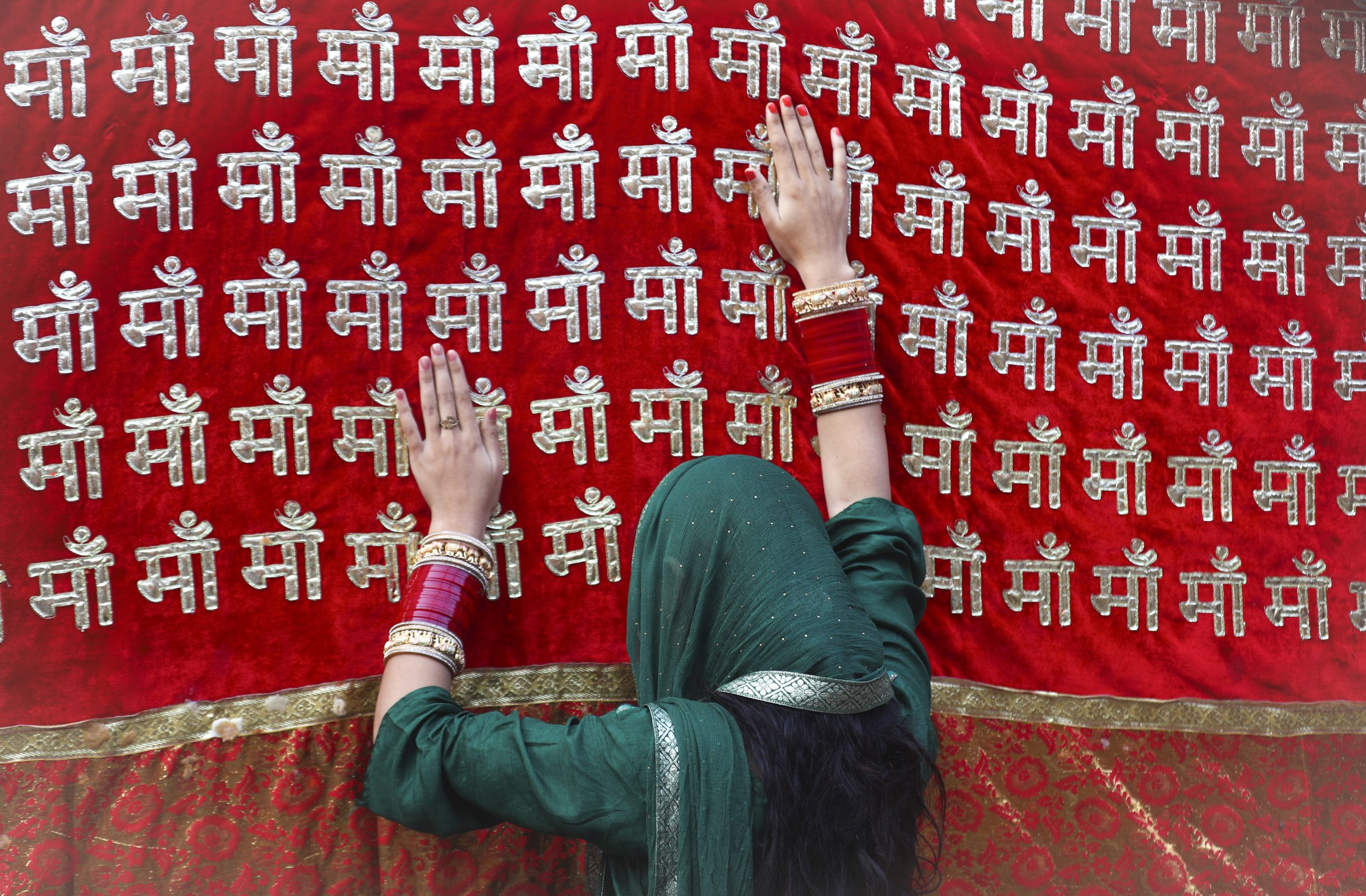
As millions across India prepare to celebrate Navratri 2025, this nine-night festival offers profound spiritual guidance that transcends mere religious observance. In an era marked by digital overwhelm, mounting stress, and spiritual disconnection, Navratri’s ancient wisdom provides a roadmap for personal transformation and inner awakening.
The Sacred Architecture of Nine Nights
Navratri, literally meaning “nine nights,” represents more than a festival, it embodies a carefully structured spiritual journey designed to elevate human consciousness. Each night corresponds to a different form of Goddess Durga, creating a progressive pathway from darkness to light, from ignorance to wisdom.
The festival’s architecture follows the three fundamental qualities of existence: the first three nights address tamas (darkness and inertia), the middle three focus on rajas (action and passion), and the final three cultivate sattva (purity and wisdom). This progression mirrors the spiritual evolution every individual can experience in their daily life.
Lesson One: Embracing New Beginnings with Strength
Day 1 – Shailaputri: The Foundation of Resilience
Shailaputri, literally meaning “daughter of the mountain,” teaches the fundamental lesson of groundedness and unshakeable strength. In today’s volatile world, where career uncertainties and relationship challenges can destabilize us, this goddess reminds us to develop mountain-like resilience.
Modern application involves cultivating stability through consistent daily practices, whether meditation, exercise, or maintaining healthy boundaries. Just as mountains remain unmoved by storms, we can develop the inner strength to remain centered amid life’s turbulence.
Lesson Two: The Power of Disciplined Focus
Day 2 – Brahmacharini: Mastering Self-Control
Brahmacharini embodies perseverance, devotion, and disciplined focus. In an age of constant distractions, social media notifications, endless entertainment options, and information overload, her teachings become particularly relevant.
This goddess demonstrates that true achievement comes through sustained effort and single-pointed concentration. Whether pursuing career goals, academic excellence, or personal growth, Brahmacharini’s example shows that discipline creates the foundation for all meaningful accomplishments.
Lesson Three: Courageous Action in Challenging Times
Day 3 – Chandraghanta: Grace Under Pressure
Chandraghanta represents courage combined with grace, the ability to face challenges without losing one’s composure. In contemporary life, where we frequently encounter workplace conflicts, social pressures, and personal setbacks, this teaching proves invaluable.
The goddess shows us that true bravery isn’t the absence of fear, but taking righteous action despite fear. Whether speaking up against injustice, pursuing difficult conversations, or making tough life decisions, Chandraghanta empowers us to act with both strength and wisdom.
Lesson Four: Cultivating Creative Joy
Day 4 – Kushmanda: The Power of Positive Energy
Kushmanda, whose smile is said to have created the universe, teaches us about creativity, optimism, and the transformative power of joy. In a world often dominated by negativity and stress, her message becomes a powerful antidote.
This goddess reminds us that positive energy is not passive but actively creative. Modern practitioners can embody this through creative problem-solving, maintaining optimistic perspectives during difficulties, and consciously choosing joy as a spiritual practice.
Lesson Five: Nurturing Compassion and Care
Day 5 – Skandamata: The Healing Power of Love
Skandamata, the mother figure, represents unconditional love, nurturing care, and emotional healing. In contemporary society, where individualism often overshadows community care, her teachings remind us of our interconnectedness.
This lesson extends beyond biological motherhood to encompass caring for colleagues, supporting community members, and even nurturing our own inner child. In a world marked by isolation and emotional disconnection, Skandamata’s compassion offers a healing balm.
Lesson Six: Destroying Negative Patterns
Day 6 – Katyayani: The Warrior Against Inner Demons
Katyayani embodies fierce determination to destroy negativity and protect righteousness. In modern context, the demons she battles are internal- anxiety, depression, addictive behaviors, and limiting beliefs that prevent personal growth.
Her teachings encourage us to identify toxic patterns in our lives, whether negative self-talk, unhealthy relationships, or destructive habits and take decisive action to eliminate them. This requires both courage and strategic thinking, qualities Katyayani abundantly provides.
Lesson Seven: Transforming Darkness into Light
Day 7 – Kalaratri: Embracing Transformation
Kalaratri, the fierce dark goddess, represents the necessary destruction that precedes renewal. Though intimidating in appearance, she teaches that sometimes we must face our deepest fears and shadows to achieve genuine transformation.
In psychological terms, this corresponds to what Carl Jung called “shadow work” acknowledging and integrating the parts of ourselves we typically avoid. Modern practitioners can use this time to confront uncomfortable truths, break through denial, and emerge stronger and more authentic.
Lesson Eight: Achieving Inner Purity
Day 8 – Mahagauri: The Radiance of Purified Consciousness
Mahagauri represents purity, serenity, and the beauty that emerges from spiritual cleansing. After facing the darkness represented by Kalaratri, consciousness becomes purified and radiant.
In practical terms, this involves releasing grudges, forgiving both others and ourselves, and cultivating mental clarity through practices like meditation and mindful living. This purity isn’t about perfection but about releasing what no longer serves our highest good.
Lesson Nine: Attaining Spiritual Wisdom
Day 9 – Siddhidatri: The Completion of Spiritual Powers
Siddhidatri, the granter of supernatural powers, represents the culmination of spiritual development and the attainment of wisdom. She teaches that the ultimate goal isn’t accumulating material wealth or social status, but developing spiritual insights that bring lasting fulfillment.
Modern interpretation focuses on developing emotional intelligence, intuitive wisdom, and the ability to make decisions aligned with one’s highest values. This goddess reminds us that true power comes from self-knowledge and spiritual understanding.
Contemporary Relevance: Navratri in the Digital Age
Managing Information Overload
In an era of constant connectivity, Navratri’s emphasis on periodic fasting, not just from food but from digital stimulation, offers crucial mental health benefits. The practice of vratam (conscious restraint) can be applied to social media consumption, news intake, and digital entertainment.
Building Emotional Resilience
The progressive nature of Navratri’s nine lessons provides a structured approach to developing emotional resilience. Each day’s focus offers specific tools for managing contemporary stressors from workplace pressures to relationship challenges.
Cultivating Mindful Living
The festival’s emphasis on daily spiritual practices aligns perfectly with modern mindfulness approaches. Rather than viewing spirituality as separate from daily life, Navratri integrates sacred awareness into routine activities.
Practical Implementation: Making Ancient Wisdom Modern
Week-Long Transformation Challenge
Contemporary practitioners can adapt Navratri’s teachings into manageable daily practices:
- Morning intention-setting inspired by each day’s goddess
- Mindful breaks throughout the day for reflection
- Evening gratitude practices acknowledging growth and challenges
- Weekly reviews to assess progress and insights gained
Community and Connection
While individual practice is important, Navratri emphasizes community celebration. Modern practitioners can create supportive groups, whether family, friends, or colleagues to share insights and encourage mutual growth.
Sustainable Spirituality
Rather than viewing Navratri as a once-yearly observance, its teachings can become ongoing practices. The nine lessons provide a repeating cycle of spiritual development that can be revisited monthly or seasonally.
The Ultimate Victory: Inner Transformation
The festival culminates in Vijayadashami (Victory Day) which celebrates not just mythological triumphs but personal victory over internal limitations. Modern practitioners discover that the greatest battle is not against external circumstances but against the negative patterns within our own minds.
The ten heads of demon king Ravana, traditionally defeated on this day, represent contemporary challenges: lust, anger, greed, attachment, ego, fear, jealousy, inertia, hatred, and guilt. Navratri provides systematic tools for overcoming each of these obstacles to inner peace and authentic success.
As we enter this sacred period, Navratri offers not escape from modern life but deeper engagement with it. The nine nights illuminate a path where ancient wisdom meets contemporary challenges, providing timeless guidance for anyone seeking genuine transformation in today’s complex world.
In embracing these nine lessons, we discover that spirituality isn’t about rejecting modernity but about bringing conscious awareness to every aspect of our lives. Navratri reminds us that within each of us lies the same divine power that created the universe and these nine nights provide the roadmap for awakening it.
By – Sonali