


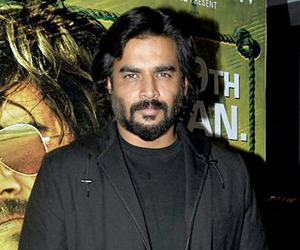
R Madhavan has sparked a crucial industry conversation by revealing how Bollywood’s lack of residual payments forces actors into financial insecurity and risk-averse career choices. The acclaimed actor stated that if India followed Hollywood’s residual payment system, just three of his blockbuster films would have been sufficient to secure his family’s future for generations.
The Missing Residuals: A System That Rewards Past Success
In a candid interview with Akshaye Rathi, Madhavan explained how residuals function like royalties, providing ongoing income whenever a film or show generates revenue through television, streaming, or other distribution channels. Unlike Hollywood, where actors continue earning from their past work for years, Bollywood actors receive payment only once, regardless of how successful their films become later.
“If I was a Hollywood actor, two or three films would be enough – maybe 3 Idiots, Rang De Basanti, and Tanu Weds Manu – to feed the rest of my generations if they live sensibly,” Madhavan revealed. This stark comparison highlights the financial vulnerability that Indian actors face throughout their careers.
Star Trek Success Story: How Hollywood Residuals Work
The effectiveness of Hollywood’s residual system was perfectly illustrated by actor Adil Hussain’s experience with Star Trek: Discovery. Despite being paid relatively little for his three-episode guest appearance, Hussain continues to earn approximately ₹5 lakh ($5,000-6,000) every few months through residual payments.
“It was a three-episode guest appearance. They paid me little money, but the good thing is that I keep getting residuals every two months. If they are earning money, I earn money, 1%. So every three or four months, I get $5000 or $6000 (around Rs 5 lakh). Crazy, no?” Hussain shared on Cyrus Broacha’s podcast.
Financial Insecurity Breeds Creative Caution
Madhavan argued that the absence of residuals creates a “pension-less” environment where actors must constantly worry about their next paycheck. This financial uncertainty forces even successful actors to prioritize immediate monetary gains over experimental or meaningful projects.
“When you know that there is no pension, but you’ve built a lifestyle that you need to maintain, then you start thinking ‘paise toh lelo, pata nahi kal milega ke nahi milega’ (take the money, who knows if you’ll get it tomorrow),” the actor explained.
Industry Hierarchy: Different Rules for Different Tiers
When discussing Shah Rukh Khan’s early transition to producing, Madhavan highlighted how financial security varies dramatically across Bollywood’s hierarchy. “If you’re commanding double-digit salaries, the rules that apply to them are different, simply because they have secured their future,” he noted.
Top-tier stars like Shah Rukh Khan can afford to take creative risks because their massive upfront salaries have already secured their financial future. However, actors in lower industry strata lack this luxury and must remain cautious about their project choices.
Legal and Contractual Challenges
Madhavan also addressed the broader systemic issues plaguing the industry, including faulty payments and weak contract enforcement. He pointed out that many actors don’t challenge payment discrepancies due to limited time and resources.
“The judiciary has to support the contracts that we sign,” Madhavan emphasized, calling for stronger legal frameworks to protect actors’ interests. He suggested that once residuals become possible, actors would be more willing to pursue passion projects rather than purely commercial ventures.
Amrish Puri: The Exception That Proves the Rule
Madhavan referenced veteran actor Amrish Puri as a rare example of an Indian actor earning Hollywood-style residuals. Puri continues to receive payments for his role in Steven Spielberg’s Indiana Jones and the Temple of Doom, demonstrating the long-term financial benefits of the residual system.
This example serves as powerful evidence of what Indian cinema could offer its talent if it adopted similar payment structures.
The Path Forward: Industry Reform Needed
Madhavan’s revelations highlight the urgent need for Bollywood to restructure its payment systems. The current model not only disadvantages actors financially but also stifles creative innovation by forcing talent to prioritize safe, commercial projects over experimental cinema.
The actor’s comparison between Hollywood and Bollywood payment systems reveals a fundamental flaw that affects the entire Indian film ecosystem. “The moment residuals are possible, I’m sure everybody would like to jump in because then you can do the kind of work that you want,” Madhavan concluded.
His candid observations serve as a wake-up call for an industry that could significantly benefit from adopting more equitable and sustainable compensation models that reward long-term success rather than just immediate box office performance.
By – Sonali