


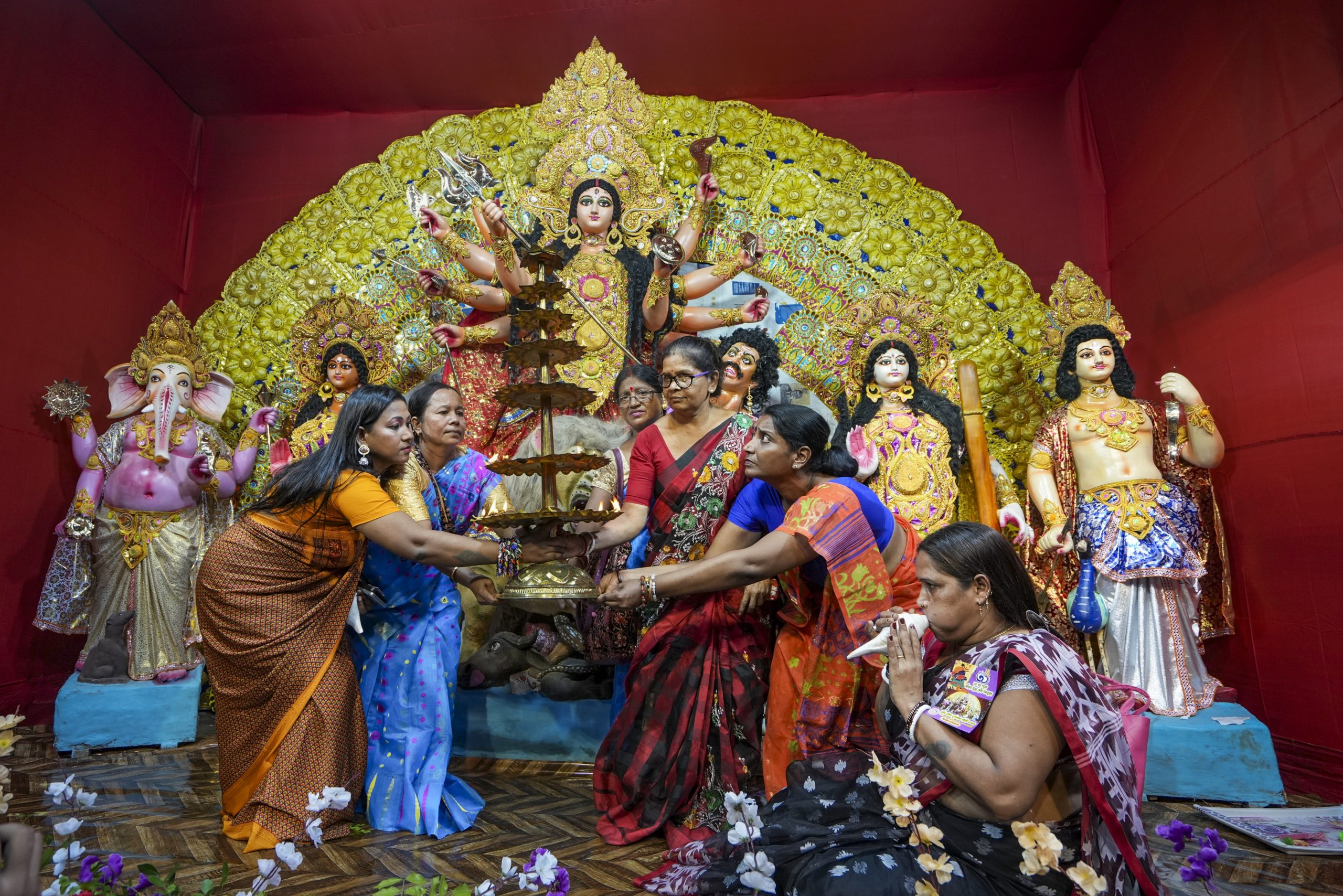
Navratri is more than a festival — it is a celebration of India’s cultural diversity and spiritual unity. From the vibrant Garba nights of Gujarat to the intricate Durga Puja pandals of West Bengal, Navratri transforms the country into a kaleidoscope of devotion, music, and dance. Despite regional variations, the festival carries a common thread of honoring Goddess Durga and celebrating the triumph of good over evil.
The Many Faces of Navratri
Across India, Navratri manifests in unique yet interconnected ways:
- Gujarat & Rajasthan: The state comes alive with Garba and Dandiya Raas, where participants spin in rhythmic circles, clad in colorful traditional attire. These nights are a test of stamina, synchronization, and sheer energy, symbolizing joy and devotion.
- West Bengal: Durga Puja takes center stage with elaborately decorated pandals, idol processions, and cultural performances. Here, artistry meets spirituality, creating an immersive festival experience.
- Maharashtra & Madhya Pradesh: Devotees perform Golu displays and traditional dances, blending devotion with storytelling through figurines representing gods, goddesses, and mythological tales.
- South India: In Tamil Nadu and Karnataka, Navratri includes Bommai Golu and special temple rituals, connecting families to age-old customs while offering prayers for prosperity.
Navratri: A Cultural Melting Pot
While regional styles differ, Navratri’s unifying power lies in participation and inclusivity. Millions engage, regardless of age, gender, or background, making it one of India’s most democratized celebrations. Even corporate spaces and urban communities organize Garba nights, bridging modern lifestyles with traditional values.
Provocative Thoughts & Social Commentary
Navratri also exposes the contradictions of modern India:
- Glamour often overtakes devotion, especially in urban Garba nights, where fashion statements compete with spiritual focus.
- Political figures frequently use Durga Puja pandals and Garba events for visibility, subtly blending religion with political optics.
- Yet, the festival retains authenticity in rural areas, where simplicity and community bonding define the celebrations.
Why Navratri Matters
- It connects communities across linguistic and cultural divides.
- Encourages youth participation, passing traditions to the next generation.
- Reinforces spiritual reflection, reminding participants of the values of courage, righteousness, and collective joy.
The Final Word
Navratri is not just a festival; it is India in miniature — diverse, vibrant, and resilient. From the twirling dancers of Gujarat to the artistic devotion in Bengal, it celebrates both individual expression and communal harmony. In a country often fractured by politics and social differences, Navratri quietly asserts one truth: tradition can unite where everything else divides.
By – Nikita