


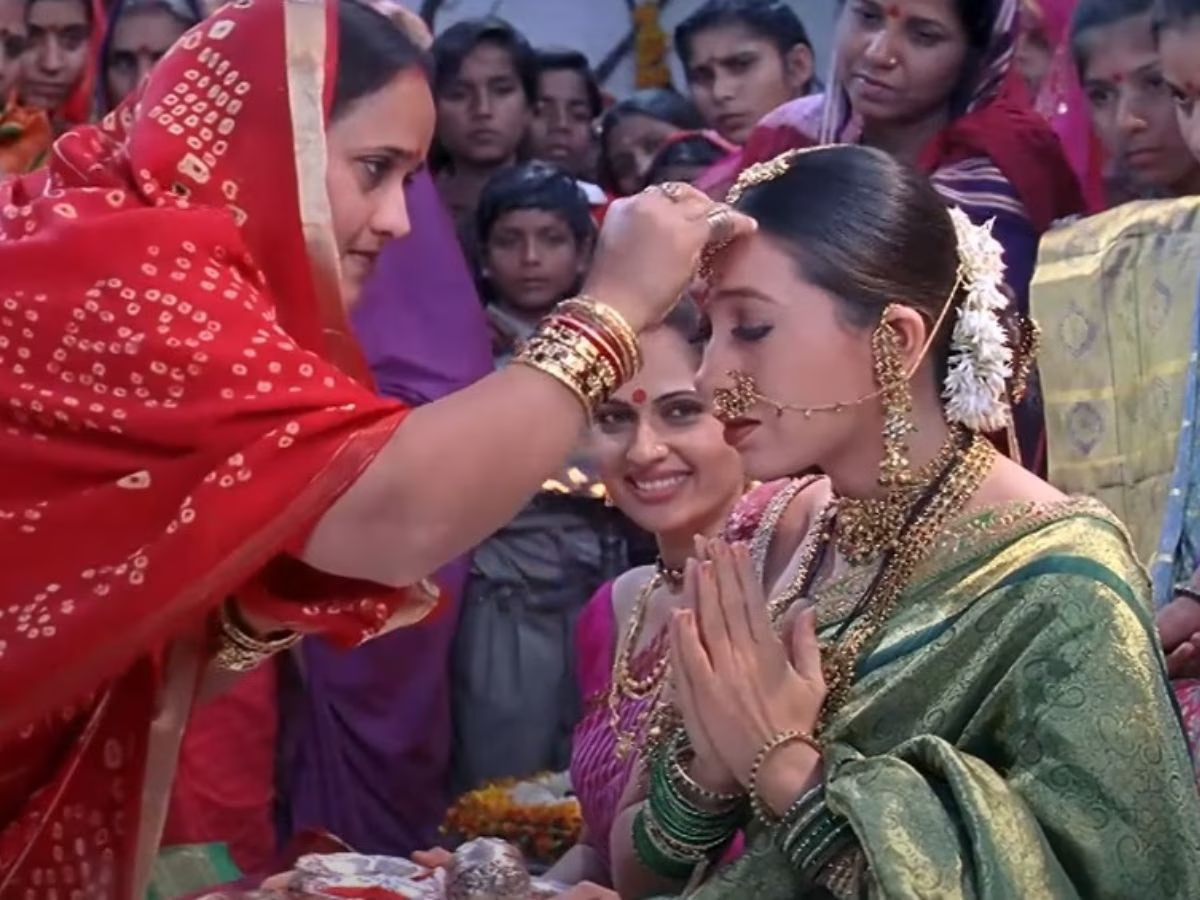
The crimson vermillion adorning a woman’s forehead, the fierce gaze piercing through injustice, and the unwavering resolve to protect the innocent – these elements have long defined the portrayal of feminine power in Indian cinema. As the festive drums of Durga Puja echo across the nation, celebrating the divine feminine’s triumph over evil, Bollywood has consistently drawn inspiration from this eternal symbolism, creating iconic characters where actresses embody the very essence of Shakti.
The Sacred Connection: From Puja to Celluloid
The symbolism of Durga Puja transcends religious boundaries, representing the fundamental victory of righteousness over malevolence. In Bengali culture particularly, the festival serves as a powerful reminder of women’s strength and resilience in the eternal fight between good and evil. This profound cultural significance has found its perfect cinematic expression through actresses who transform into modern-day goddesses, wielding justice as their weapon.
Karisma Kapoor’s Iconic Transformation in Shakti: The Power
Perhaps no film embodies this concept more powerfully than the 2002 drama “Shakti: The Power,” where Karisma Kapoor delivers what is considered one of her career-defining performances. As Nandini, she portrays a Canadian-settled woman who becomes trapped in a violent feudal system in rural India after her husband’s murder. Her transformation from a vulnerable outsider to a fierce protector of her son mirrors the goddess Durga’s own metamorphosis from benevolent mother to wrathful warrior.
The film’s title itself – “Shakti” – directly references the divine feminine power, while Kapoor’s character arc represents the awakening of this dormant strength when faced with injustice. Her performance garnered critical acclaim and a Filmfare nomination for Best Actress, establishing her as a formidable force in women-centric cinema.
Vidya Balan: The Modern Durga of Kolkata
In Sujoy Ghosh’s 2012 thriller “Kahaani,” Vidya Balan creates perhaps the most metaphorically rich portrayal of feminine Shakti in recent cinema. Set against the backdrop of Durga Puja celebrations in Kolkata, the film deliberately interweaves the festival’s symbolism with its protagonist’s journey.
Balan’s character, Vidya Bagchi, appears as a vulnerable pregnant woman searching for her missing husband, but gradually reveals herself as a calculated avenger. The film’s climax, timed with the Durga idol immersion ceremony, serves as a powerful metaphor where Vidya’s triumph over her adversaries parallels the goddess’s victory over the demon Mahishasura. Ghosh’s deliberate use of sindoor-smeared women participating in the festival’s rituals creates a visual parallel between the protagonist and the divine feminine energy she embodies.
Kangana Ranaut: The Warrior Queen as Living Goddess
“Manikarnika: The Queen of Jhansi” presents Kangana Ranaut not merely as a historical figure but as a living embodiment of divine feminine power. Her portrayal of Rani Lakshmibai transcends biographical representation, transforming her into what critics described as a “mortal goddess of nationalism”.
Ranaut’s physical and emotional commitment to the role – including sustaining actual battle scars during filming – reflects the goddess-like sacrifice and dedication that the character demanded. Her co-star Jisshu Sengupta aptly described her as “a true goddess on sets,” highlighting how her off-screen persona mirrored the divine strength she portrayed. The film’s visual treatment presents Lakshmibai as an almost supernatural force, with her “fiery looks” and transformation scenes designed to evoke the wrathful aspect of Durga when confronting evil.
Television’s Divine Portrayals
The medium of television has provided even more direct representations of goddesses fighting injustice. Actresses like Pooja Sharma have brought depth to roles like Mahakali, portraying the fierce destroyer of evil with both grace and terrifying power. Similarly, Sonarika Bhadoria’s portrayal of Parvati transforming into Kali in “Devon Ke Dev Mahadev” captured the duality of feminine divinity – nurturing yet destructive when confronting injustice.
These portrayals serve as modern interpretations of ancient narratives, where the goddess’s multiple forms represent different aspects of justice – from the patient mother to the fierce warrior.
Contemporary Interpretations: Beyond Mythology
Films like “Angry Indian Goddesses” have taken the concept beyond mythological boundaries, presenting contemporary women as modern manifestations of divine feminine power. The 2015 film follows seven women who, when faced with harassment and injustice, respond with the collective strength reminiscent of the goddess’s protective fury.
Similarly, the supernatural thriller “Bulbbul” presents its protagonist’s transformation into a vengeful spirit as a metaphor for women reclaiming their power against systemic oppression. The character’s symbolic association with the blood-red moon – traditionally linked to Kali’s appearances – reinforces the connection between feminine rage and divine justice.
The Puja Connection: Ritual and Reality
The timing of many of these films’ key sequences during festival periods is not coincidental. Directors like Sujoy Ghosh deliberately use Durga Puja celebrations to amplify their narratives’ emotional and symbolic impact. The festival’s atmosphere of collective female participation, the ritualistic application of sindoor, and the community’s reverence for feminine divinity create the perfect backdrop for stories of women’s empowerment.
The “sindoor khela” ritual, where married women apply vermillion to each other, becomes particularly significant in films like “Kahaani,” where it symbolizes women’s solidarity and collective strength against adversity.
Cultural Impact and Modern Relevance
These cinematic portrayals serve a purpose beyond entertainment – they provide contemporary audiences with accessible models of feminine strength rooted in cultural tradition. As actress Dipshikkha Nagppal observes, “Durga Maa represents power, especially for women. She stays calm until it’s time to destroy oppression”. This observation captures the essence of how Bollywood has successfully translated ancient goddess narratives into modern contexts.
The recurring theme across these portrayals is transformation – ordinary women discovering extraordinary strength when confronted with injustice. Whether it’s Karisma Kapoor’s Nandini finding courage to escape rural oppression, Vidya Balan’s calculated pursuit of justice, or Kangana Ranaut’s royal warrior defending her kingdom, each character follows the archetypal journey from vulnerability to empowerment that mirrors the goddess’s own narrative arc.
As the drums of Durga Puja continue to resonate across India, these cinematic interpretations remind us that the goddess’s power lives not just in marble idols and sacred mantras, but in every woman who refuses to bow before injustice. In transforming actresses into modern-day avatars of Shakti, Bollywood has created a powerful bridge between ancient wisdom and contemporary struggles, proving that the divine feminine’s fight against evil is as relevant today as it was in the mythological battles of yesterday.
The red sindoor on their foreheads may wash away, but the strength these portrayals inspire remains eternal – a testament to cinema’s power to channel the sacred into the everyday, making goddesses of us all.
By – Sonali