


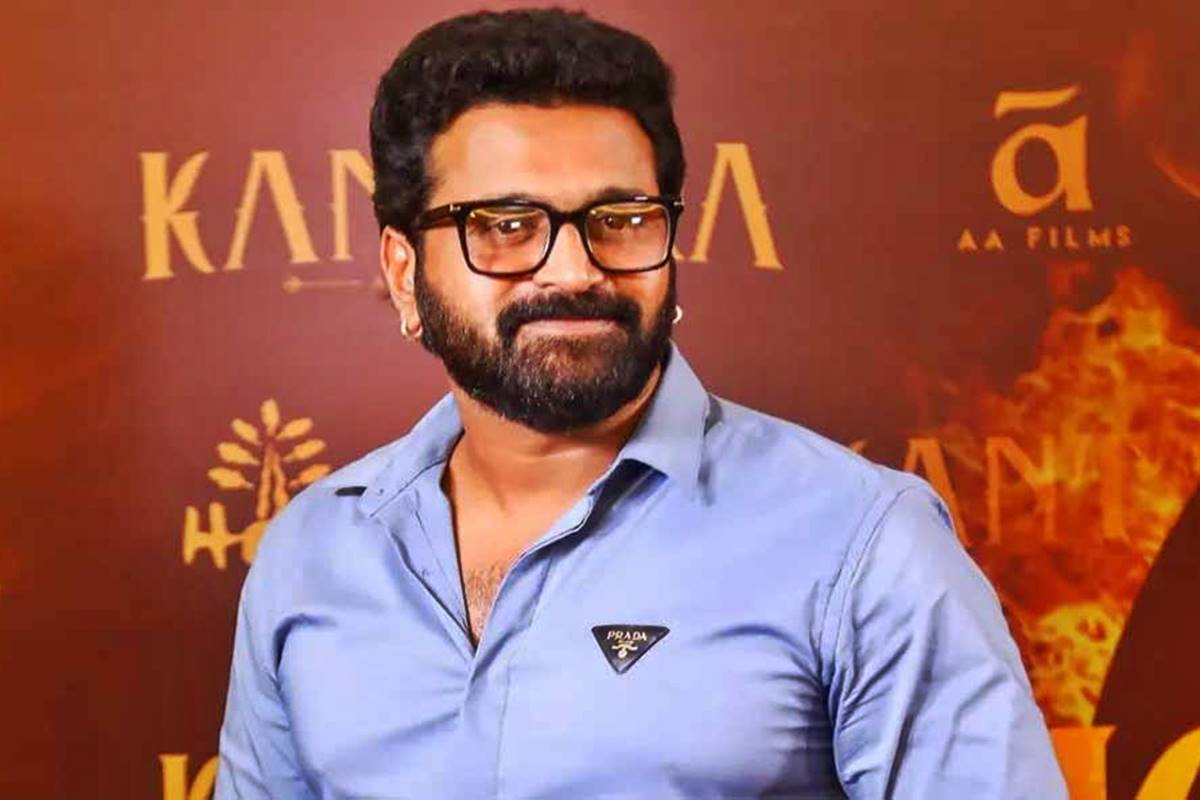
National Award-winning actor-director Rishab Shetty has landed in the middle of a cultural storm after choosing to deliver his speech in Kannada at the pre-release event of Kantara: Chapter 1 in Hyderabad. The event, held ahead of the film’s October 2 release, was meant to woo Telugu audiences, but instead it sparked online debate about language, identity, and respect for local culture.
Telugu Fans Voice Displeasure
For many Telugu-speaking fans, Shetty’s choice felt like a snub. Social media lit up with posts criticizing the actor for not attempting to speak in Telugu at a Telugu-language promotional event.
- One user posted: “When you are promoting your film in Telugu, make an attempt to speak in Telugu.”
- Another commented that Shetty’s speech lacked sensitivity toward the audience that the event was designed for.
Shetty Defends His Choice
On stage, Rishab Shetty explained his decision clearly:
“I will speak in Kannada, as I can speak from my heart.”
He also highlighted his close bond with Jr NTR, saying he considered the Telugu superstar like a brother. He recalled hosting Jr NTR in Karnataka, pointing out that the Telugu actor himself recommended the best local dishes during the trip.
This explanation softened the criticism for some fans, with supporters sharing the full video online to show Shetty’s intent was not arrogance but authenticity.
A Clash of Sentiments
The controversy underscores a recurring tension in Indian cinema’s multilingual landscape. On one hand, regional pride fuels strong fan bases; on the other, the pan-India phenomenon demands adaptability. Critics argue that Shetty, as a filmmaker banking on Telugu audiences, could have made at least a token gesture in their language. Supporters counter that speaking from the heart in one’s mother tongue should never be politicized.
Bigger Than Just One Speech
- Kantara: Chapter 1 is a prequel to Shetty’s award-winning blockbuster Kantara (2022).
- The film also stars Rukmini Vasanth and Gulshan Devaiah.
- The makers are aggressively promoting it across India, tailoring events for each language market.
Ironically, what was meant to be a unifying celebration of cinema turned into a flashpoint of linguistic identity politics. The incident shows how, in India, movies are not just entertainment—they are vessels of cultural pride and emotion.
Final Take
Whether Shetty’s decision was a bold assertion of identity or a misstep in audience connection, the episode has given Kantara: Chapter 1 a spicy publicity boost. And in the entertainment world, controversy often sells better than silence.
By – Nikita