


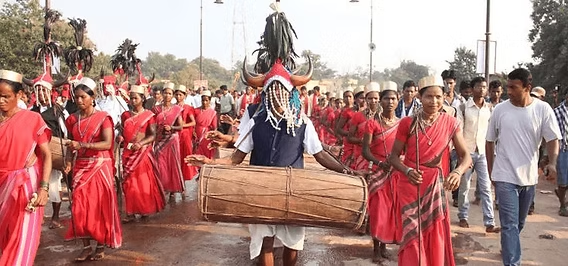
As dawn broke over the dense forests and rolling hills of Bastar, an ancient drumbeat echoed through the valleys, heralding the 75th Bastar Dussehra. Far beyond the conventional ten-day festivities celebrated nationwide, Bastar’s Dussehra unfolds in a mesmerizing 75-day spectacle of ritual, royalty and regional pride, an enduring testament to the living heritage of Chhattisgarh’s tribal heartland.
Ancestral Origins Rekindled
Bastar Dussehra traces its roots to the 15th-century coronation of Raja Purushaottam Deo, whose devotion to the local deity Danteshwari, a fierce emanation of Goddess Shakti, shaped the festival we witness today. Unlike the urban tableaux of Ravana effigies and Lakshmi pandals elsewhere, Bastar’s Dussehra centers on the sovereign authority of the local royal family and their custodianship of tribal customs.
Ascending on the second day, the king, donning the traditional Maagha turban, enthrones himself in the Dewan Khana (royal court) of Jagdalpur, pledging to uphold justice and welfare. The audience of courtiers, priests and village elders bear witness, invoking blessings for a bountiful harvest and communal harmony.
Rituals of Power and Prestige
The Royal Procession
On the festival’s seventh day, the king’s procession, or “Rath Yatra,” winds through Bastar’s narrow streets. Mounted on a caparisoned elephant bedecked in red and gold, the monarch receives a salutation of tribal dancers, whose rhythmic gumka steps and war cries blend seamlessly into the forest’s green tapestry.
Offerings to Danteshwari
At the heart of the ritual lies the ancient Danteshwari Temple. By nightfall on the tenth day, priests chant Vedic hymns as sacred fires flicker beneath ornate brass lamps. Offerings like rice, jaggery, and tribal millet breads are presented at the goddess’s sanctum. Villagers witness the ”prasad” blessed rice grains, rained upon the crowd, symbolizing Danteshwari’s maternal benevolence.
Celebrating Tribal Heritage
Ghotul and Goncha Drums
Most evenings, village youth gather in Ghotul (traditional dormitories) to learn tribal lore and crafts. Master drummers wield goncha, barrel-shaped drums whose resonant boom signifies unity. The pulsating beats guide folk singers recounting heroic ballads of the Murkkhas (forest warriors).
Bastar Artisans on Display
Artisans from the Muria, Gond and Oraon communities converge at the Kala Mela, showcasing bell-metal art, wrought-iron tribal jewelry, and handwoven Kosa silk sarees. Collectors and tourists alike purchase these handicrafts, ensuring that tribal livelihoods and ancestral skills endure through commerce.
Economy and Tourism: A Seasonal Surge
The festival fuels Bastar’s economy: local markets brim with artisans and food stalls serving bore-baasi (fermented rice), bilahi (forest mushroom curry) and tribal sweets made from mahua flowers. Homestays and guesthouses near Chitrakote Falls dubbed the “Niagara of India” report full occupancy. According to the Bastar District Tourism Board, visitor footfall jumped by an estimated 18% during last year’s Dussehra, and this year’s numbers are projected to surpass 250,000.
Security and Sustainable Practices
Given the fragile forest ecosystem and tribal lands, authorities have coordinated with the Chhattisgarh Forest Department to enforce sustainable practices. Plastic ban zones prevent littering along procession routes. Firewood collection is strictly regulated, with designated collection points reducing damage to sacred groves. The Bastar Police have also deployed additional foot patrols to manage crowds and ensure safe transit for pilgrims and tourists.
Voices from the Ground
“Dussehra here is not merely a festival; it is our identity,” reflects Shantabai Muria, a Ghotul elder. “Every beat of the drum, every offering to Danteshwari, binds us to our ancestors.” Meanwhile, visitor Rajiv Menon, a filmmaker from Mumbai, marvels: “I’ve covered festivals across India, but Bastar’s Dussehra stands apart in its blend of ritual authority and tribal vibrancy.”
A Tapestry of Tradition
As the 75-day saga draws to a close with the Chabutar Dashara ritual, where villagers release clusters of lit oil lamps into the air, the forest comes alive with a constellation of flames, flickering like fireflies. In that glowing moment, Bastar’s Dussehra reveals its true magic: not just a triumph of good over evil, but a resplendent celebration of community, culture, and continuity.
From the sovereign throne to the tribal Ghotul, Bastar Dussehra stands as a living tapestry, a festival where every thread, whether royal decree or folk refrain, weaves into the vibrant legacy of Chhattisgarh’s heartland.
By – Sonali