


As the victory of good over evil echoes through temple bells and festive processions this Dussehra, kitchens across India transform into culinary sanctuaries where tradition meets taste. From the royal palaces of Mysore to the bustling markets of Bengal, each region contributes its distinctive flavors to this grand celebration, creating a mosaic of festive foods that tells the story of India’s rich cultural heritage.
Sweet Surrenders: The Dessert Dynasties
Karnataka’s Golden Glory
Karnataka’s contribution to Dussehra’s sweet symphony begins with Obbattu (also known as Holige), a paper-thin flatbread that carries the soul of Mysuru Dasara celebrations. This delicate creation, filled with a mixture of chana dal, jaggery, and fragrant cardamom, represents prosperity and abundance. Often served with generous dollops of ghee or fresh milk, Obbattu transcends mere sustenance to become a vessel of blessings, frequently offered as prasadam in temples across the state.
The royal kitchens of Mysore have gifted India another treasure: Mysore Pak. This melt-in-the-mouth delicacy, crafted from generous amounts of ghee, sugar, and gram flour, originated in the palace kitchens where it was first prepared as an offering to the king. Its crumbly texture and rich sweetness make it a festive favorite that symbolizes indulgence and joy throughout South India.
Bengal’s Sweet Traditions
West Bengal, where Dussehra merges with the grand Durga Puja celebrations, showcases its legendary sweet-making prowess through classics like Sandesh and Mishti Doi. These milk-based delicacies, enhanced with cardamom and sometimes adorned with silver leaf, represent the culmination of Bengali confectionery artistry. The festival also features Rasgulla, the spongy, syrup-soaked spheres that have become synonymous with Bengali hospitality and celebration.
Universal Sweet Favorites
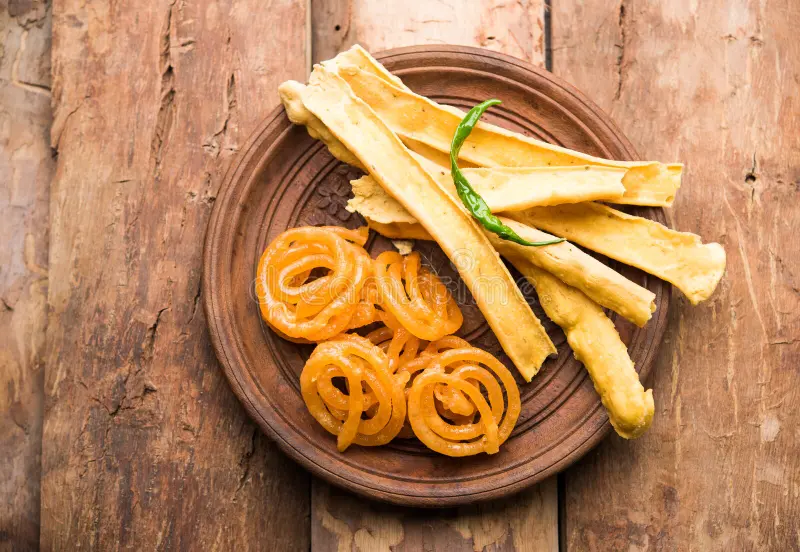
Across the nation, certain sweets unite regional preferences. Gulab Jamun, those golden, syrup-soaked spheres of pure indulgence, graces Dussehra tables from Punjab to Tamil Nadu. Jalebi, with its intricate spirals and amber hue, creates a sweet symphony when paired with regional accompaniments, served with rabri in North India or enjoyed alongside Gujarat’s beloved fafda.
Savory Celebrations: Regional Specialties Take Center Stage
Gujarat’s Dynamic Duo
Gujarat’s Dussehra morning ritual centers around the iconic Jalebi-Fafda combination. The crispy, gram flour-based fafda provides the perfect contrast to jalebi’s sweetness, creating a balanced flavor profile that aids digestion after the Navratri fasting period. Long queues outside sweet shops during the festival testify to this combination’s deep cultural significance and community appeal.
Bengal’s Sacred Sustenance
During Durga Puja’s Vijaya Dashami, Bhog Khichuri takes center stage as Bengal’s sacred meal. This comforting dish combines rice, moong dal, vegetables, ghee, and aromatic spices, creating a simple yet deeply satisfying offering that embodies the spirit of communal sharing. Accompanying this staple are traditional preparations like Labra (mixed vegetable curry), Beguni (crispy brinjal fritters), and Luchi (fluffy, deep-fried bread).
Maharashtra’s Festive Bread
Maharashtra celebrates Dussehra with Puran Poli, a sweet flatbread that represents abundance and joy. Made from whole wheat flour and filled with a mixture of boiled split chickpeas, jaggery, and cardamom, this golden-brown delicacy is often served with ghee, milk, or savory curry, creating a perfect balance of flavors that defines Maharashtrian festive dining.
North India’s Comfort Classics
Sacred Simplicity
Northern states, particularly in the Delhi-NCR region, embrace Kheer as their quintessential Dussehra dessert. This creamy rice pudding, enhanced with cardamom, saffron, and nuts, holds special significance as it’s believed to be Lord Ram’s favorite sweet. Variations like Sabudana Kheer (made with tapioca pearls) offer alternatives that maintain the traditional essence while providing different textures and flavors.
In Uttar Pradesh, the festival remains incomplete without the sacred offering of Dal Paratha and Kheer. Made with cooked chana dal and aromatic spices, these parathas served alongside rice kheer create a complete meal that’s believed to bring good luck, health, and prosperity to families.
Fasting-Friendly Favorites
Sabudana Khichdi emerges as a popular choice during the Navratri fasting period leading to Dussehra. This light yet flavorful dish, prepared with tapioca pearls, roasted peanuts, and aromatic spices, represents purity and devotion while providing essential energy during fasting days.
South India’s Temple Traditions
Tamil Nadu’s Protein Power
Tamil Nadu’s Dussehra celebrations, known as Golu, feature Sundal as the go-to festive snack. Made from various legumes including chickpeas and lentils, this protein-rich preparation showcases the state’s emphasis on nutritious yet flavorful festival foods that sustain energy throughout the celebrations.
Kerala’s Grand Feast
Kerala transforms Dussehra into a grand culinary spectacle with the Vijayadashami Sadya, an elaborate vegetarian feast that epitomizes the state’s reputation for generous hospitality. This comprehensive meal includes multiple curries, rice preparations, pickles, and desserts served on traditional banana leaves, creating an authentic cultural dining experience.
The state also celebrates with various Payasam preparations, including the delicate Palada Payasam made with rice flakes and Semiya Payasam prepared with vermicelli. These creamy, aromatic desserts symbolize sweetness, prosperity, and happiness while reflecting Kerala’s mastery of coconut-based cuisine.
The Cultural Tapestry of Flavors
Beyond their delicious taste, Dussehra foods carry deep cultural and spiritual meanings. Paan (betel leaves) holds special significance in Uttar Pradesh and Bihar, where offering betel leaves to Lord Hanuman is considered auspicious. The practice of eating paan on Dussehra represents respect, love, and the celebration of good’s victory over evil.
The tradition of consuming dahi-cheeni (curd and sugar) before undertaking new ventures finds special relevance during Dussehra. This practice, believed to bring good luck, connects the festival’s theme of new beginnings with culinary traditions that span generations.
Community and Connection
Dussehra’s food traditions extend beyond individual households to create community bonds. From temple prasadam distribution to neighborhood sweet exchanges, these culinary customs foster unity and shared joy. The preparation of festival foods often becomes a family affair, with recipes passed down through generations, ensuring cultural continuity while adapting to contemporary tastes.
As India celebrates another Dussehra, these diverse culinary traditions remind us that victory – whether over evil, adversity, or division – tastes sweetest when shared. Each regional specialty, from Karnataka’s royal Mysore Pak to Bengal’s comforting Khichuri, contributes to a national feast that celebrates not just the triumph of good over evil, but the beautiful diversity that makes India’s cultural landscape so rich and flavorful.
In kitchens across the subcontinent, the preparation of these traditional foods becomes an act of devotion, a celebration of heritage, and a delicious reminder that some victories are best savored one bite at a time.
By – Sonali