


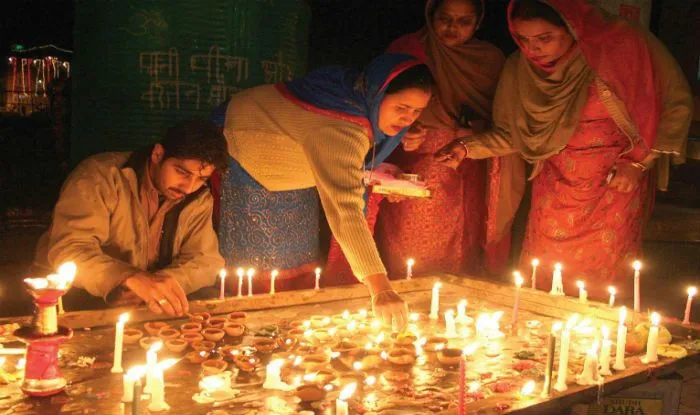
This year, as the rest of India ushers in Diwali with gleaming diyas, crackers, and sweets, the Kashmiri Pandit community turns to a centuries-old tradition known as Sukhsuptika, literally “sleep with happiness.” Far from the explosive revelry of the mainland, Pandits in the Valley observe Diwali in a quiet, contemplative spirit, welcoming restful slumber and inner peace as they celebrate the triumph of light over darkness.
A Festival Rooted in Ancient Lore
Long before modern celebrations enveloped the subcontinent, Kashmiri Pandits marked Diwali as a night for serenity. Legend traces Sukhsuptika to the 14th century, during a harsh winter famine that plagued the Valley. As the story goes, a Pandit elder, Suryananda, taught villagers a meditation chant promising dreams of abundance and protection. When the famine broke soon afterward, the chant gained sanctity as a ritual of hopeful slumber, today’s Sukhsuptika.
Preparations: From Altars to Ashams
In the weeks leading up to Diwali, families cleanse their homes and adorn the puja room with freshly picked marigold garlands and citrus fruits. The altar is laid out simply: a brass plate bearing lit mustard‐oil wicks, a bowl of rice mixed with saffron for the goddess Lakshmi, and sprigs of tulsi. In place of firecrackers, the emphasis falls on ‘ashams’ small conch-shell instruments whose gentle blowing wards off negative energy.
By dusk on Diwali eve, ceremonial lamps line windowsills, but they are never ignited all at once. Rather, one lamp is lit every half hour from sunset until moonrise, symbolising a gradual return to light. Conversations hush as each flame flickers into existence, and the ritual concludes with the family reciting a prayer for peace that invokes divinity through whispered Sanskrit verses.
Sukhsuptika: The Night of Compassionate Rest
Once the final lamp is aglow, the household transitions into the core of Sukhsuptika. The family gathers in the courtyard or puja room, sitting on thick woolen rugs. Elders share tales of past harvests and communal resilience. Children, clad in traditional phiran robes, listen wide-eyed to stories of heroism and dharma. At the stroke of ten, all lights are extinguished, save a single wick left burning by the altar and the chant begins:
“Oṃ śāntiṃ śāntiṃ śāntiṃ…Svapnānāṃ sukhaṃ…”
Translating to “Peace…peace…peace…may dreams be blissful,” the mantra is repeated nine times, each round slower than the last. In the hush that follows, worshippers, one by one, retreat to their beds, carrying the final flicker of the lamp to their bedside tables, a beacon of hope throughout the night.
Modern Revivals and Community Gatherings
In recent years, younger Kashmiri Pandits living in urban centres such as Delhi and Mumbai have rekindled Sukhsuptika as an anchor to their heritage. Cultural associations host Sukhsuptika soirées, bringing together diaspora members for collective chanting and storytelling. These events often feature live performances of saffron-yellow Kashmiri folk songs, followed by a communal sleepover that echoes the original vision of communal rest and solidarity.
“Diwali for us is not about noise or spectacle,” explains Dr. Renuka Kaul, a historian of Kashmiri culture. “It’s about turning inward, celebrating gratitude, and remembering our ancestors’ perseverance. Sukhsuptika embodies that ethos beautifully.”
Wellness and Mindfulness Dimensions
Beyond its cultural resonance, Sukhsuptika aligns with contemporary wellness philosophies. Sleep experts note that ritualised bedtime routines, such as candlelight, calming chants, and storytelling promote better sleep quality and reduce anxiety. “The interplay of light, sound, and community fosters a strong sense of safety,” says Dr. Anil Mehrotra, a Bengaluru-based sleep psychologist. “These elements mimic therapeutic sleep interventions, making Sukhsuptika a valuable practice for mental health.”
A Night to Remember And Dream
As dawn breaks over the frost-tipped roofs of Srinagar, the final mustard-oil lamp guttering out signals the end of Sukhsuptika. Families emerge, refreshed, to share a simple meal of sheer chai (pink milk tea) and saffron rice. The morning air carries a serene hush, a stark contrast to the typical holiday bustle elsewhere.
For Kashmiri Pandits, Diwali’s light shines from within, kindled by shared history, mindful ritual, and the promise of joyous dreams. Sukhsuptika may lack the dazzle of fireworks, but its luminous calm leaves an imprint far more enduring. And as Pandit households embrace the first smiles of sunrise, they awaken not just from sleep, but from darkness into a collective vision of hope and renewal.
By – Sonali