


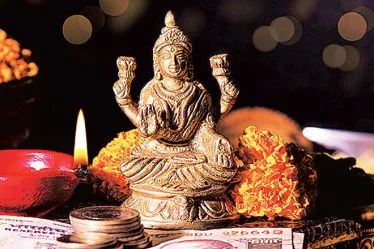
As a Sindhi, Diwali has always meant more than lights and sweets. It is the sound of coins clinking in a silver bowl during Laxmi Pooja for Diyari, the scent of incense filling the house, and the quiet gratitude for the prosperity our community has cherished and shared. Like most Hindu households, our Diwali begins with shopping for Dhanteras — buying diyas, silver coins, and sometimes a little gold — followed by cleaning, decorating, and preparing sweets. For Sindhis, the main pooja begins with Hatri Pooja, performed along with Laxmi Pooja, deeply tied to our community’s spirit of trade and gratitude. Over the years, small family touches have made the rituals feel personal, yet at its heart, Diwali still celebrates the timeless story of triumph over evil, intertwined with the folklore of Badh Dev and Jhulelal.
Hatri Pooja: Celebrating Trade and Prosperity
The festival begins with Hatri Pooja, performed alongside Laxmi Pooja. The “hatri” or hat symbolizes a shop, representing business and entrepreneurship. For centuries, Sindhis have been known as traders and merchants, but today, even those in other professions perform this pooja, celebrating success and prosperity in every field. Traditionally, this pooja is performed for young male members of the house. The hatri is usually made of clay, wood, or red bricks that are painted white, and on it, the names of male family members are written with sindoor or blue dye.
Inside the hatri, we place cloves to ward off the evil eye, raw rice and jaggery symbolizing abundance and sustenance, and “mitero” fruit representing growth, freshness, and new beginnings. Singhar ji Mithai, also called Sev Barfi, and chikki (the nut brittle made with jaggery) are added as customary offerings. Then, a diya is lit inside the hatri, illuminating the arrangement and inviting divine blessings.
I still remember when I was small, I quietly wished if my name could be added alongside the boys. My father smiled and did it, and since that day, it has quietly become a part of our family tradition — a gentle reminder that everyone contributes to prosperity and togetherness.
Laxmi Pooja: Welcoming Wealth
Along with Hatri Pooja, we perform Laxmi Pooja. In Sindhi tradition, gold or silver coins are an essential part of the ritual, representing wealth and Goddess Laxmi’s blessings for financial abundance. During this pooja, we use all the coins that have been collected over the years through Diwali celebrations, creating a living treasury of our family’s devotion and prosperity. Before the pooja, the coins are placed in raw milk and water along with sindoor, roli, and a small bite of roti and halwa — symbolizing spiritual cleansing and nourishment.
After the Lakshmi Aarti, we do Diyari Pooja, in our family also known as Tik-Tik Pooja, in which two or three coins are taken from the pile of coins kept inside the bowl and made to touch the symbolic Laxmi house in our mandir, and gently tapped against our teeth while reciting, “Lakshmi aayi, Danat vaai,” meaning, “Goddess Laxmi has arrived, poverty has gone away.” This ritual is a reminder that wealth is welcome in the home, but it is not for consumption – teaching detachment and reverence for material prosperity. After this, we perform Palao, holding a scarf or cloth while asking for blessings, completing the ceremony.
Badh Dev Pooja: Honoring Raja Bali
Next comes Badh Dev Pooja. In Sindhi culture, the story of Raja Bali, revered as Badh Devta, is cherished for its lessons in humility, generosity, and devotion. Raja Bali was a powerful demon king who ruled earth and heaven with justice and prosperity. Yet, his growing influence disturbed the cosmic balance. To restore harmony, Lord Vishnu incarnated as Vamana, a dwarf Brahmin, and approached Bali during his grand Ashwamedha Yajna. He humbly asked for just three paces of land. Bali, known for his truthfulness and generosity, agreed, despite his guru’s warnings.
Vamana then expanded into his cosmic Trivikrama form, covering the earth with his first step and the heavens with the second. For the third step, Bali offered his head in humility. Pleased by his devotion, Vishnu placed his foot on Bali’s head and blessed him to rule the netherworld (Patala) with honor and protection. Bali then requested that he be remembered during Diwali along with Laxmi Mata, allowing devotees to honor him annually through prayers and offerings.
In Sindhi households, Bali is offered bhuga chawla (sweet or brown rice), Palak Saag (spinach curry), and chikki. Depending on the lunar calendar, this pooja is observed either on Diwali or on the second day. Through this ritual, devotees are reminded of the virtues of humility, devotion, and selfless generosity.
Jhulelal Pooja: The Protector of Sindhis
This pooja is of Jhulelal, the incarnation of Varun Dev (god of water), who protected Sindhi Hindus during the Islamic invasions of the 10th century. Mirk Shah, the tyrannical ruler, forced Hindus to convert to Islam under threat of death, imposing heavy taxes, confiscating property, and abducting women.
Desperate for salvation, the Hindu Sindhi community prayed to the sacred Sindhu River, worshipped as Varun Dev, fasting rigorously for 40 days. On the fortieth day, Varun Dev appeared and promised divine intervention, after which he incarnated as Uderolal, later called Jhulelal, born to a Hindu family in Narasapur to protect the community.
Jhulelal was born under auspicious conditions, showing divine powers from a young age. His cradle mysteriously rocked, earning him the name “The One Who Swings.” Attempts by Mirk Shah to kill him failed repeatedly, affirming divine protection. As he grew, Jhulelal became a warrior riding a magnificent blue-white horse, commanding fire and wind to defeat the oppressors. One of his greatest miracles was breaking the Sindhu River’s banks to flood the city of Thatta, destroying Mirk Shah’s army and saving the Hindu people.
During Diwali, Sindhis honor Jhulelal alongside Laxmi Mata. The lighting of the Akhand Jyoti, an unbroken flame, symbolizes the divine light and guidance Jhulelal brought, leading devotees through darkness and adversity. The continuous lighting of the Jyoti and performance of poojas reaffirm his blessings, protection, and the triumph of good over evil.
Through Hatri Pooja, Laxmi Pooja, Badh Dev Pooja, and Jhulelal Pooja, Diwali in a Sindhi household is more than a festival—it is a living story of devotion, prosperity, folklore, and resilience. Each ritual, rooted in tradition yet personalized with small family touches, celebrates faith, history, and the timeless triumph of good over evil, passed lovingly from one generation to the next.
(The following pooja rituals may vary across Sindhi families, but these are a few of the rituals and poojas performed in my household and many others. The order of the poojas might differ from family to family.)
– By Charu Mandhyan