


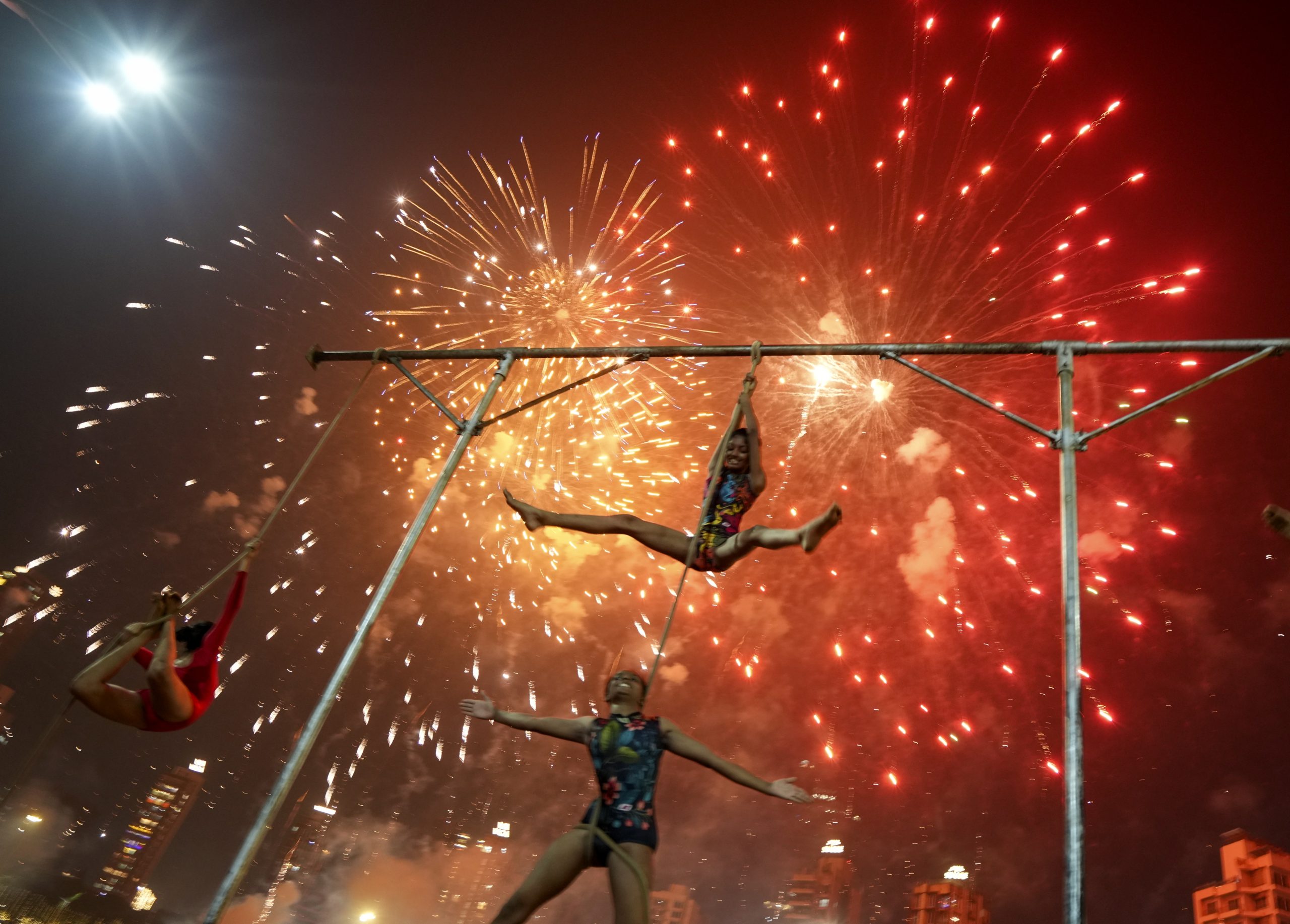
Every Diwali, the night sky bursts open with color, sound, and celebration. We often consider fireworks to be a Chinese invention that reached India through trade and kings.
But India’s story of light began long before gunpowder — in the age of sacred flames, lamps, and rituals meant to guide the soul itself.
The Tale We Know — The Chinese Spark
Fireworks, it’s said, were first invented in China during the Tang dynasty in the 9th century when alchemists accidentally created gunpowder. Bamboo tubes filled with the mixture were lit to scare away spirits, and soon became part of Chinese festivals.
From there, this art of “sky flowers” spread westward, reaching India around the 15th century — or so the story goes. Yet, when we look closer, the trail of fire doesn’t start in China, but glows first in India.
The Indian Connection
Chinese records mention an Indian Buddhist monk visiting China in 664 CE who identified soils rich in saltpetre — a key ingredient of gunpowder.
As historian Roger Pauly notes, this discovery helped Chinese alchemists experiment with mixtures that would later produce fireworks.
In other words, the spark that lit the Chinese night may have first glowed in Indian soil.
Ulka Daanam — India’s First Festival of Fire
Centuries before anyone spoke of gunpowder, Indian scriptures described rituals of fire meant to light the heavens.
One such ritual was Ulka Daanam, mentioned in the Skanda Purana (2.4.9.65–66):
“उल्काहस्ता नराः कुर्युः पितॄणां मार्गदर्शनम्।”
“People should hold firebrands in their hands to show the path to their departed ancestors.”
According to G. V. Tagare, ulka means firebrand — a torch of cloth or dry grass.
Indologist Dr. V. Raghavan, in Festivals, Sports and Pastimes of India, explains that during Ulka Daan, people raised fiery torches to guide their ancestors (Pitrs) home — light offered not to the sky, but to memory.
He also notes that lighting flames for the dead appears in other cultures, such as Mexico’s All Souls’ Day, often close to Diwali — across continents, light symbolized remembrance.
Kaunriya Kathi — Ulka Daan’s Living Flame
In parts of Odisha, this ancient fire still burns. Villagers perform Kaunriya Kathi, waving torches of reed and grass on Diwali nights.
The hissing stalks fill the darkness — perhaps the earliest echo of fireworks.
These ulkas were both sound and light, sacred and festive — fire that guided souls and delighted hearts.
The Science of Fire
Ancient treatises didn’t stop at ritual; they explored the science of fire itself.
In the Arthashastra (Book 2, Chapter 28), Chanakya warns of punishments for unauthorized explosive materials — proof that controlled combustion, or Agniyoga, was already known.
Texts like Rasaratnakara (attributed to King Bhoja) and the Atharvanarahasya describe mixtures of charcoal, sulphur, and saltpetre (suryakara) — the same three substances that form gunpowder.
Scholars such as Thomas Holland and R. Gustav Oppert identified these as among the earliest recipes for explosive compounds.
Alchemy and Fire — The Tamil Tradition
In the Tamil Siddha tradition, ritual and chemistry merged.
The Bogar Sattakandam (verses 415–418) describes how a saltpetre solution — Vediuppu Cheyanir — was prepared for sarakku vaippu (alchemical mixtures).
Among these were substances that produced flame, smoke, and sound — ancestors of today’s festive fireworks.
The Flame Grows — Medieval Celebrations
By the medieval period, the ritual of flame had become an art of celebration.
Travelers and chroniclers wrote of India’s dazzling displays of light and sound.
A Mongol ambassador described being welcomed with “3,000 fireworks” during Deepavali.
In 1443 CE, Persian envoy Abdur Razzaq saw “two great kinds of pyrotechnic displays” at Devaraya II’s Vijayanagara court.
Later, Lodovico de Varthema (1508 CE) and Duarte Barbosa (1510–1516 CE) recorded fireworks in Indian weddings and festivals — Barbosa even mentions a Brahmin wedding in Gujarat lit by rockets and sparklers.
In Odisha, the royal text Kautuka Chintamani, composed during Gajapati Prataparudradeva’s reign, lists eight types of fireworks — Kalpavrkshabanaha, Chamarabanaha, Chandrajyotihi, Champabanah, Pushpavartih, Chuchundarirabana, Teekshnanaalah, and Pushpabanah — showing how refined this art had become by the 15th century.
Fireworks in Faith and Poetry
Even devotional literature embraced this radiance.
The Ananda Ramayana describes the skies lighting up — “gaganantarvirajitan” — when Lord Rama returned to Ayodhya, symbolizing joy through fire and sound.
Later, Marathi saints like Eknath and Samarth Ramdas wrote of fireworks — Agniyantra, Havai, Sumanmala, Bhuinala, Phuljhari — in temple and festival life.
The Enduring Spark
To this day, firecracker makers in Andhra and Sivakasi use the same ancient trio:
Suryakara (सूर्यकार) – Saltpetre
Gandhaka (गन्धक) – Sulphur
Sand
Their Sanskritic names still survive, echoing a lineage of light older than recorded fireworks themselves.
From Sacred Fire to Celebration
Whether as the ulka guiding ancestors or the phuljhari brightening a child’s eyes, India’s story with light has never been just about spectacle.
It has always been sacred — a celebration of life, remembrance, and renewal.
While China may have perfected the art of the firecracker, India gave it soul — turning every flame into prayer and every spark into memory.
From torch to spark, from ritual to celebration — the fire has only changed its form, never its spirit.
–By Charu Mandhyan