


As the autumn sun dips below the horizon each year, millions of devotees wade into India’s sacred rivers with offerings held high, not in despair, but in profound gratitude. This is Chhath Puja, where four days of earthly abstinence become a gateway to spiritual abundance. What begins as a personal vow transforms entire communities into a tapestry of devotion, proving that true power lies not in indulgence, but in sacrifice.
A Festival Born from Ancient Wisdom
Chhath Puja stands as one of India’s most ancient festivals, its roots stretching deep into the Vedic era when sages and rishis first recognized the sun as the ultimate life force. Unlike most Hindu festivals that emphasize mythological narratives, Chhath is rooted in pure reverence for nature itself. The festival’s name derives from “Chhath,” meaning the sixth day, as it is celebrated on the sixth day of Kartik month in the Hindu calendar. Historical texts reference Karna, the legendary warrior from the Mahabharata and son of Lord Surya, as the first devotee to perform this sacred ritual, standing in water daily to offer prayers to the Sun God. The Pandavas themselves reportedly observed Chhath during their trials, seeking divine intervention through unwavering devotion.
The Four-Day Journey of Inner Strength
Chhath Puja 2025 unfolds across four days, October 25 to 28, each carrying distinct spiritual significance. The festival begins with Nahay Khay, where devotees take ritual baths in sacred waters and consume their first meal, marking the commencement of their spiritual journey. The second day, Kharna introduces the first true test: a rigorous waterless fast from sunrise to sunset. After sunset, devotees break this fast with kheer (rice pudding), symbolizing the breaking of worldly desires.
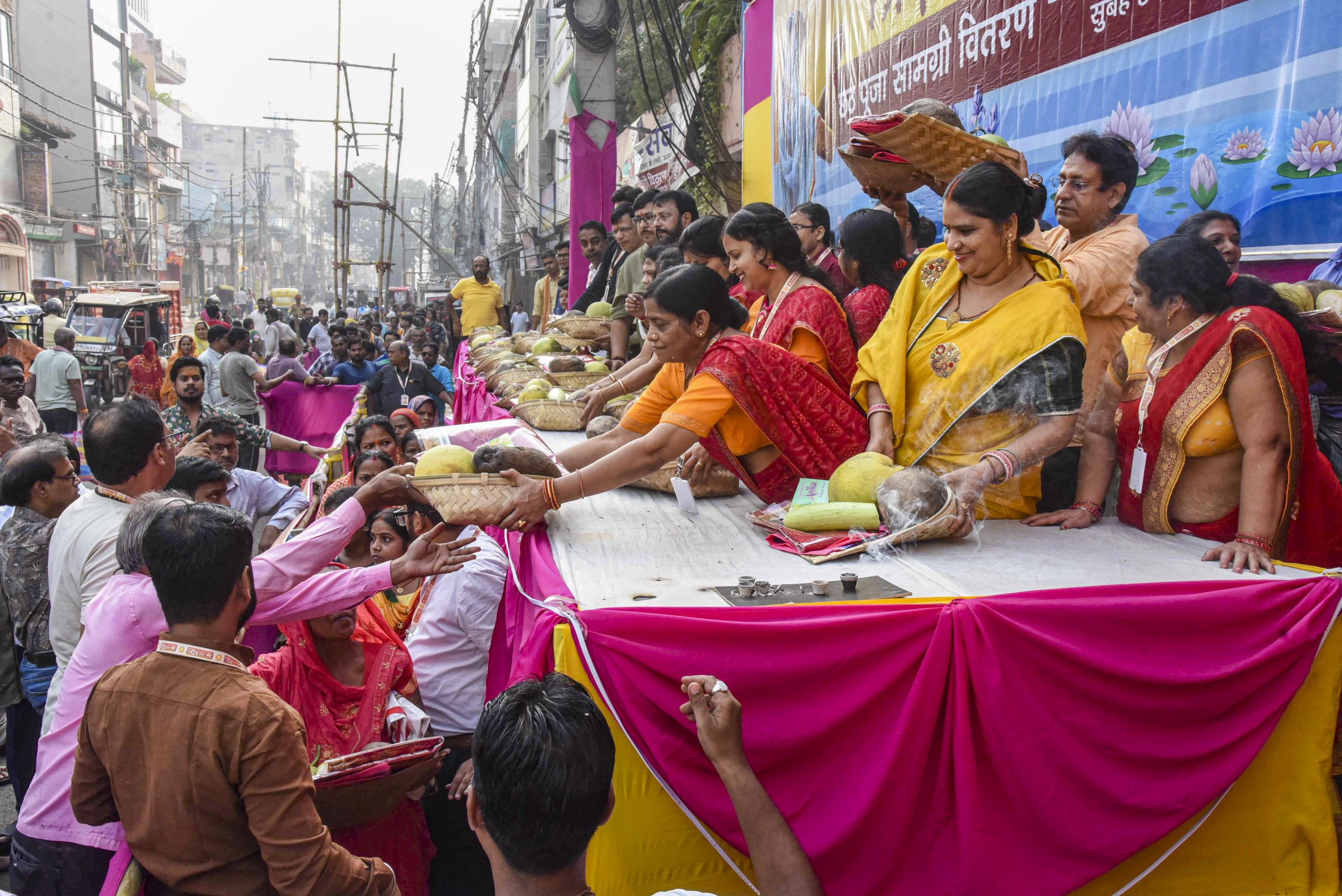
Day three, Sandhya Arghya, represents the zenith of Chhath’s spiritual intensity. Devotees observe a strict 36-hour water-free fast; neither food nor water passes their lips. As sunset approaches, entire families converge at riverbanks, ponds, and water bodies dressed in traditional attire, holding bamboo baskets filled with fruits, sugarcane, and thekua (traditional cookies). They wade into the water, offering prayers and arghya (water offerings) to the setting sun. This evening witnesses the ritual of Kosi, where sugarcane is arranged to form a ceremonial canopy, decorated with earthen lamps and prasad offerings, creating an atmosphere of collective spirituality.
The festival culminates on the fourth day with Usha Arghya, as devotees gather before dawn to offer prayers to the rising sun. Once this final offering concludes, the nearly 36-hour fast is ceremonially broken with prasad and water, a moment of profound release and completion.
Beyond Ritual: The Science of Spiritual Discipline
What distinguishes Chhath from other festivals is its emphasis on discipline over decoration. There are no elaborate pandals, no material extravagance, only devotion, fasting, and nature. This austerity serves a deeper purpose: health. The practice of fasting triggers metabolic renewal, while standing in cold river water boosts circulation and immunity. Ancient wisdom recognized that gratitude toward natural elements strengthens both body and spirit.
The festival fosters environmental consciousness, celebrating water as sacred and the sun as a blessing rather than a resource to exploit. Devotees view their sacrifice as both personal purification and cosmic gratitude.
A Celebration of Community and Culture
Chhath transcends individual piety to become a communal phenomenon, predominantly celebrated in Bihar, Jharkhand, eastern Uttar Pradesh, and Nepal. Families participate together, children witness the power of discipline, and traditional folk songs echo along riverbanks, preserving centuries-old cultural narratives. The festival creates a bridge between generations, reminding modern devotees of their spiritual heritage.
Faith in Motion
Chhath Puja is not merely a four-day festival; it is a philosophy manifested in human dedication. In an era of excess, it stands as a testament to the transformative power of restraint, reminding us that true enrichment comes not from consuming more, but from giving more. Six days of preparation and celebration dissolve into a lifetime of spiritual discipline, proving that the greatest offerings are those we make of ourselves.
By – Sonali