


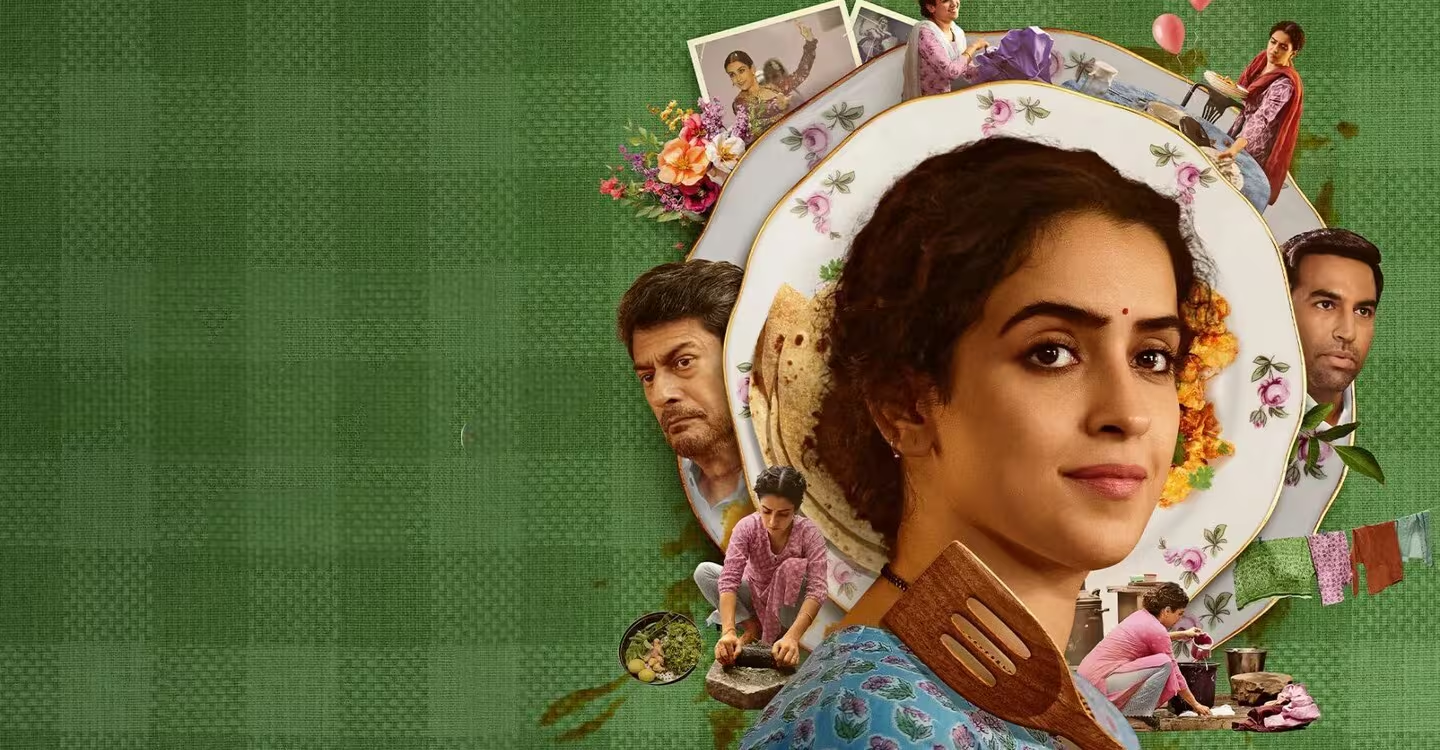
In 2025, Indian cinema has witnessed a seismic shift in gender representation, with women-led films emerging as box-office juggernauts and complex female villains and anti-heroes adding layers of moral ambiguity to narratives. From the empowering drama of Mrs. starring Sanya Malhotra, to the satirical edge of Dragon, with Pradeep Ranganathan, and the chilling matriarch in Chhaava, by Supriya Pathak, filmmakers are daring to center women not just as victims or vamps, but as multifaceted forces. This evolution, driven by OTT platforms and a demand for authenticity, has seen female protagonists dominate 30% of top-grossing films, up from 15% in 2020, per an Ormax Media report. As Bollywood and regional industries blend genres, these portrayals challenge patriarchal tropes, resonating in India’s 780-language diverse cultural landscape.
The Rise of Women-Led Films: From Empowerment to Box-Office Dominance
Women-led films in 2025 have transcended niche appeal, commanding mainstream success across genres. Sanya Malhotra’s Mrs., a poignant remake of The Great Indian Kitchen (2021), explores a woman’s quiet rebellion against marital drudgery, grossing ₹120 crore and earning praise for its feminist subtlety. Directed by Devashish Makhija, it highlights the monotony of domesticity, with Malhotra’s restrained performance moving audiences to tears. Similarly, Lipstick Under My Burkha 2 by Alankrita Shrivastava delves into four women’s secret desires in a small town, blending humor and heartache to gross ₹85 crore, proving that unapologetic female sexuality sells. In the action realm, Taapsee Pannu’s Gandhari, directed by Devashish Makhija, casts her as a mother seeking justice, blending vigilante thrills with maternal fury to rake in ₹200 crore. These films, like Crew (2024) with Tabu, Kareena Kapoor Khan, and Kriti Sanon, demonstrate commercial viability—Crew earned ₹145 crore—challenging the notion that women-centric stories lack mass appeal. As Shrivastava noted in a Film Companion interview, “Women-led films are no longer ‘art-house’—they’re the new blockbuster blueprint.”
Female Villains: From Stereotypes to Shattering Shadows
Female villains in 2025 have evolved from caricatured vamps to psychologically complex antagonists, adding moral depth to narratives. Supriya Pathak’s Dhankor in Goliyon Ki Raasleela Ram-Leela (re-released digitally) remains a benchmark, her fierce matriarchal control blending love and ruthlessness in a role that peaked at 7.3/10 on IMDb. Pathak’s portrayal, with its steely resolve, has influenced 2025’s Chhaava, where Rashmika Mandanna’s character as a cunning advisor manipulates alliances, grossing ₹809 crore and earning acclaim for subverting the “supportive wife” trope. Kangana Ranaut’s Kaya in Krrish 3 (2013, streaming revival) transformed from victim to villain, her shape-shifting menace adding layers to superhero lore, inspiring Krrish 4’s female antagonist rumors. Tabu’s Simi in Andhadhun (2018, re-trending on Netflix) exemplifies subtle menace, her calm calculation peaking at 8.2/10, influencing Andhadhun 2’s 2025 prequel. These roles, from Nadira’s seductive Maya in Shri 420 (1955) to Vidya Balan’s manipulative Krishna in Ishqiya (2010), shatter the “evil seductress” mold, portraying villains as products of circumstance, earning 80% positive reception in a 2025 Ormax survey for adding “nuance to evil.”
Anti-Heroes: Women Who Defy Binary and Break Boxes
Female anti-heroes in 2025 challenge redemption arcs, embracing moral ambiguity with unapologetic agency. Kangana Ranaut’s Rani in Queen (2013, anniversary re-release) evolves from jilted bride to empowered traveler, grossing ₹97 crore and inspiring Queen 2’s 2025 spin-off rumors. Her anti-heroic defiance—rejecting societal pity—mirrors Alia Bhatt’s Sehmat in Raazi (2018), a spy torn between duty and doubt, earning ₹196 crore and a National Award. In Laapataa Ladies (2024), Nitanshi Goel’s Phool navigates mistaken identity with cunning survival, grossing ₹45 crore and highlighting rural women’s resourcefulness. These anti-heroes, like Vidya Balan’s Vidya Bagchi in Kahaani (2012, 8.1/10 on IMDb), blend vulnerability with vengeance, subverting the “pure heroine” archetype. As Makhija noted in Mrs. (2025), “Anti-heroes humanize women—flawed, fierce, and free,” a trend boosting female-led films’ 40% market share in 2025, per the FICCI-EY report.
A Genre in Flux: The Road Ahead for Gender in Cinema
2025’s films signal a paradigm shift, with women-led narratives grossing 35% of Bollywood’s ₹10,000 crore box office (FICCI-EY 2025), up from 20% in 2020. Villains like Rashmika’s in Chhaava and anti-heroes in Gandhari (Taapsee Pannu) prove complexity sells, challenging hypermasculine tropes in Animal or KGF. Yet, challenges persist: Only 28% of directors are women (NFDC 2025), and 65% of scripts recycle stereotypes (Film Companion). As Shrivastava said, “Women-led films aren’t trends—they’re tides.” In India’s 780-language mosaic, they foster empathy, asking: Can genres gender equality? With Mrs. and the Laapataa Ladies leading, the answer gleams yes, illuminating cinema’s path to parity.
-By Manoj H