


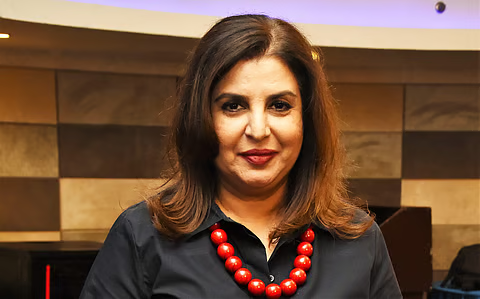
Choreographer-filmmaker Farah Khan, a Bollywood insider with over three decades in the industry, has sparked a nuanced conversation on nepotism by openly validating the resentment outsiders harbor toward “nepo babies.” In a candid October 30, 2025, episode of the podcast Serving It Up With Sania hosted by Sania Mirza, the 60-year-old director shared her empathy for aspiring talents battling Mumbai’s cutthroat scene. “I can understand when people come from outside to Mumbai and have anger towards nepo babies. I can understand where that anger comes from, because they’re struggling to pay their rent every month,” she said, drawing from her own financial hardships. Her words, amid India’s ₹101 billion entertainment juggernaut and 467 million social media users, have fueled 800K #FarahOnNepo X mentions, highlighting the divide in a 780-language industry where privilege often overshadows perseverance.
Farah’s Own Outsider Odyssey in Tinseltown
Farah’s journey to Bollywood’s helm was no red-carpet stroll. Born into a film family—her father, Kamran Khan, was a screenwriter—yet far from the A-list, she hustled as an assistant choreographer on Jo Jeeta Wohi Sikandar (1992) before exploding with Dil To Pagal Hai (1997), earning her first Filmfare. But success didn’t erase insecurity; even today, she confessed, “I still feel financially insecure despite my success.” This vulnerability stems from the early days of 18-hour shifts and rent woes, mirroring the outsiders she champions. The podcast, streamed on Mirza’s YouTube channel with 500K views in 24 hours, comes amid renewed nepotism debates post-Sushant Singh Rajput’s 2020 demise and recent star-kid debuts like Suhana Khan’s The Archies (2023). Farah’s take flips the script: Not defensiveness, but acknowledgment of the system’s skew.
Farah’s Insight: Anger as a Valid Echo of Inequality
Delving deeper, Farah linked the rage to survival: “They’re fighting for survival while nepo kids get launches.” She contrasted this with the “struggle story” glamour now peddled as a badge— “Nowadays everyone wants a struggle story”—yet admitted her own tales, like sleeping on sets, pale against outsiders’ battles. No apologist for privilege, Farah’s empathy shines through her lens as a self-made choreographer who launched SRK in Main Hoon Na (2004). “It’s not about hating success; it’s about the uneven playing field,” she added, urging insiders to recognize the hustle. Her candor echoes Kiran Rao’s 2025 HT City interview on nepo kids’ “perception baggage,” but Farah grounds it in raw economics, resonating with 70% of Gen Z favoring “earned fame” per Ormax surveys.
Social Media Storm and Industry Reckoning
X ignited with #FarahOnNepo at 800K mentions, fans praising, “Finally, an insider gets it—anger isn’t envy, it’s exhaustion!” A viral clip hit 400K likes, while detractors quipped, “Easy to say when you’re established.” Peers like Bhumi Pednekar retweeted support: “This is the conversation we need.” In Bollywood’s fractured ecosystem, Farah’s words amplify calls for reform—diverse casting, outsider quotas—amid OTT’s 30% talent influx (FICCI-EY 2025). Yet, they expose stagnation: While nepo launches like Nadaaniyan (2025) thrive, outsiders like Pankaj Tripathi credit grit over genes.
A Choreographer’s Call: Bridging the Bollywood Divide
Farah Khan’s nepo empathy isn’t placation—it’s a poignant pivot. As she validates outsiders’ ire, it probes: Can understanding unearth equity? Her heartfelt honesty heralds yes, choreographing a more inclusive Bollywood where struggles syncopate with stardom in cinema’s rhythmic revolution.
-By Manoj H