


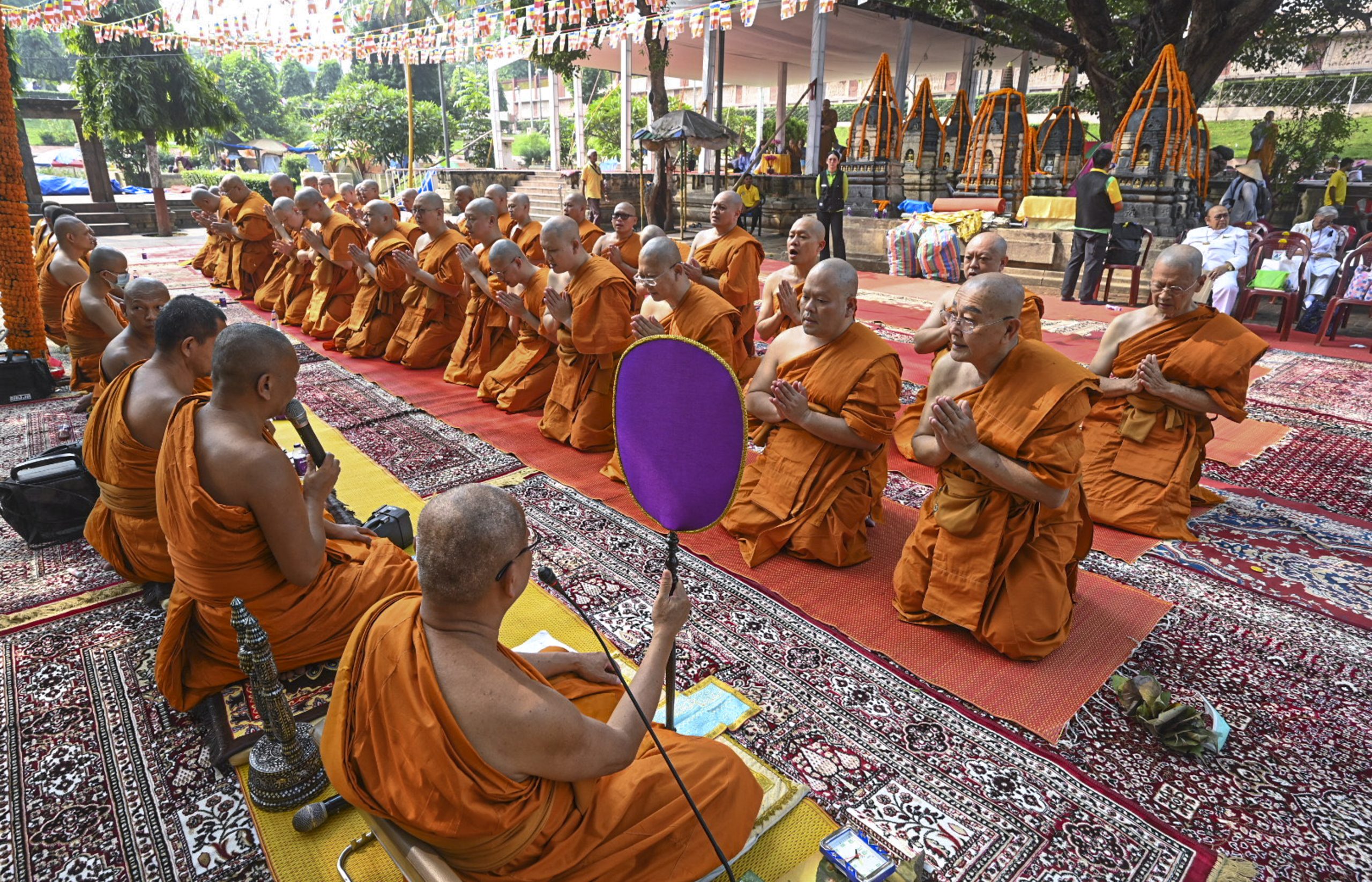
As autumn rains retreat from the temples of Southeast Asia, a different kind of downpour begins, one not of water, but of golden robes, flowers, and the boundless generosity of communities united in spiritual purpose. For over 2,500 years, the Kathina ceremony has remained Buddhism’s most luminous festival of giving, a time when the sacred bond between monks and laypeople transforms into visible, tangible love. It is a ceremony that whispers ancient wisdom through modern times, reminding the world that true wealth lies not in what we keep, but in what we freely offer.
The Roots of Sacred Generosity: Understanding Kathina’s Timeless Origins
The story of Kathina doesn’t start in big temples; it starts on muddy paths and with strong devotion. According to ancient Buddhist texts, during the Buddha’s lifetime, a group of thirty monks journeyed from the city of Saket toward Jetavana Temple to visit the enlightened one. However, the monsoon rains arrived earlier than expected, transforming the roads into impassable streams and the earth into fields of freshly planted crops that demanded protection. The monks chose to pause their journey and remain in one location for three months, dedicating themselves entirely to intensive spiritual practice rather than disturbing the newly sown land.
When the dedicated monks finally reached the Buddha after the rains subsided, they arrived with robes that were torn, wet, and utterly worn down from their ordeal. Rather than criticism, the Buddha responded with compassion and foresight. A pious laywoman named Visakha Mahaupasika, who was present at that moment, recognized the monks’ suffering and offered cloth for new robes. Touched by this convergence of sacrifice and support, the Buddha established the Kathina ceremony as a permanent tradition, one that would forever commemorate both monastic dedication and lay devotion.
The Sacred Month: When Kathina Transforms Communities into Temples
The Kathina ceremony does not occur by chance but follows the completion of Vassa, the Buddhist rains retreat. For three months, beginning around July or August, Buddhist monks remain within their monasteries, secluded from the outside world, focusing entirely on meditation, study, and spiritual purification. This period represents a time of intense self-discipline and transformation, mirroring the Buddha’s own retreat practices. When Vassa concludes, the Kathina season begins, typically spanning from the first day of the eleventh waning moon to the fifteenth day of the twelfth waxing moon, usually falling between October and November.
During this month-long window, each Buddhist temple selects a single day to organize its Kathina ceremony, though the exact timing varies according to local traditions and temple preferences. This flexibility reflects Buddhism’s adaptive wisdom; the spirit of Kathina matters far more than rigid adherence to specific dates, ensuring that communities worldwide can participate in this profound act of merit-making.
The Ritual: Where Gold Cloth Becomes Spiritual Currency
The Kathina ceremony unfolds as a carefully orchestrated symphony of devotion. The day begins early in the morning as community members, bearing offerings and dressed often in traditional attire or modest white clothing, arrive at their temples. The atmosphere buzzes with anticipation; this is not merely a religious obligation but a joyful gathering of families and friends united by common purpose.
The centerpiece of the ceremony is the robe of merit, traditionally made from three square meters of cloth, the exact amount needed to construct a complete monastic robe. However, the Kathina ceremony extends far beyond a single robe. Devotees present an entire “forest of gifts” decorated with essential items, including medicines, toiletries, food, monetary donations, and other necessities for the monks’ sustenance. These offerings acknowledge that monastics depend entirely on the generosity of laypeople for their basic survival.
A joyful procession precedes the formal ritual, with community members carrying offerings three times around the temple while chanting, music, and sometimes even dancing accompany their steps. This procession is not somber but vibrant, reflecting the celebration inherent in giving. Once the procession concludes and everyone gathers in the temple hall, senior monks deliver Dharma talks, explaining the deep spiritual significance of Kathina and its connection to Buddhist principles of generosity, gratitude, and interdependence.
The Heart of Merit: Why Kathina Generates Immeasurable Spiritual Benefit
According to Buddhist philosophy, Kathina stands as one of the most meritorious acts available to laypeople, second only to Vesak (the Buddha’s birthday celebration) in significance. The reason is beautifully logical: when something pure offers itself, the merit generated multiplies exponentially. Since monks have maintained their precepts and purified themselves through three months of retreat, any gift offered to them creates merit of incomparable magnitude.
The merit-making aspect of Kathina transcends selfish accumulation. Participants often dedicate their merit not to personal gain but to the happiness, health, and liberation of loved ones, or even to all sentient beings. This practice of merit transference embodies Buddhism’s highest ideal, the recognition that spiritual growth and happiness are not zero-sum games but shared human experiences that benefit from collective intention.
The Forest Transforms: How Kathina Differs Across Buddhist Lands
While the core significance of Kathina remains constant, regional variations add beautiful complexity to the ceremony. In Thailand, known as Thot Kathin, celebrations overflow with vibrant floats, colorful processions, and traditional performances that turn entire cities into festivals. In Cambodia, Laos, and Myanmar, similar colorful variations emerge, each reflecting local cultural aesthetics while maintaining Buddhist principles. Even in Western Buddhist communities, adaptations emerge. One American monastery creatively replaced elephants (traditional in Asian processions) with a moose placard to honor local culture while honoring ancient tradition.
What remains universal is the closing ceremony: after formal offerings are presented, the entire community, monks and laypeople alike, shares a festive communal meal, symbolizing the harmonious interdependence between monastics and the lay society they serve.
The Golden Thread: Why Kathina Matters Today
In an age fractured by digital distancing and consumer isolation, Kathina reminds humanity of timeless truths: interdependence creates strength, generosity multiplies abundance, and communities bound by shared values transcend all boundaries. The ceremony proves that rituals need not fade into irrelevance but can remain eternally vital, adapting to new contexts while preserving ancient wisdom. For millions across Southeast Asia and beyond, Kathina is not merely a religious observance but a reaffirmation that the deepest human connection blooms when we give freely and receive graciously.
As golden robes are offered and hearts overflow with gratitude, the Kathina ceremony continues its 2,500-year conversation between monks and laypeople, between those who seek enlightenment and those who support their journey, a dialogue that echoes through time, reminding us all that generosity remains the most beautiful language the human heart can speak.
By – Sonali