


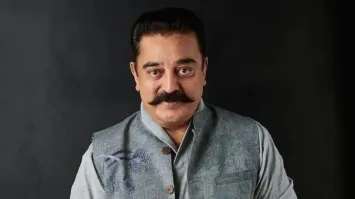
On November 7, 2025, Kamal Haasan celebrates his 71st birthday, a milestone that illuminates a career spanning over six decades and a life woven with artistry, innovation, and unyielding social conscience. As the Ulaganayagan (Universal Hero) of Indian cinema, Haasan transcends screens, embodying a maestro whose transformations—physical, emotional, and philosophical—have redefined storytelling. From child prodigy to Rajya Sabha MP, his journey inspires millions, blending Tamil pride with pan-India vision. In a year marked by triumphs like Thug Life and Kalki 2898 AD, Haasan’s birthday invites reflection on a legacy that bridges generations.
The Early Spark: From Child Star to Cinema’s Chameleon
Haasan’s cinematic odyssey ignited at age five in Kalathur Kannamma (1960), earning him the Rashtrapati Award for Best Child Artist—a prophetic nod to his prodigious talent. By the 1970s, he evolved under mentors like K. Balachander, delivering breakout turns in Apoorva Raagangal (1975), where his nuanced portrayal of a man in a controversial romance showcased raw vulnerability. The 1980s cemented his chameleon status: Nayakan (1987), inspired by The Godfather, won him his first National Award for Best Actor, transforming him into the brooding Velu Nayakan—a role Martin Scorsese lauded as “Shakespearean.” Sadma (1983) opposite Sridevi displayed his emotional range, while Swathi Muthyam (1986) tackled autism with groundbreaking sensitivity, earning a second National Award. Haasan’s versatility shone across languages, from Telugu’s Sagara Sangamam (1983) to Malayalam’s Kannum Karalum (1972), proving his borderless brilliance.
Iconic Reinventions: A Legacy of Bold Narratives
Haasan’s genius lies in reinvention: Hey Ram (2000), where he directed and starred as a vengeful Hindu, delved into Partition’s scars, earning a third National Award. Dasavathaaram (2008) saw him morph through 10 roles—from a 12th-century poet to a 21st-century scientist—netting a fourth National Award and Padma Shri. His political foray with Makkal Needhi Maiam (2018) fused activism with art, allying with DMK for a 2025 Rajya Sabha seat, where he champions education and welfare. Recent triumphs include Vikram (2022), a Telugu-Hindi smash grossing ₹425 crore, and Kalki 2898 AD (2024), blending sci-fi with mythology for ₹1,100 crore worldwide. In Thug Life (2025), Mani Ratnam’s epic, Haasan reunites with Madhavan, streaming on Netflix to rave reviews. At 71, he remains prolific, with Thalaivar 173 alongside Rajinikanth on the horizon.
Personal Milestones: Family, Faith, and Fan Clubs’ Philanthropy
Haasan’s life mirrors his art’s depth: Married thrice, he cherishes daughters Shruti and Akshara, who paid loving tributes—Shruti calling him her “favourite human” with a montage of shared laughs and music sessions. His fan clubs, converted into welfare organizations, fund education and healthcare, embodying his ethos of service. “There is only one religion, the religion of love,” he often quotes, a mantra from his spiritual leanings. With a net worth of ₹150 crore, Haasan invests in cinema—producing Vikram and mentoring talents—while his Rajya Sabha role amplifies calls for film policy reforms.
A Birthday Beacon: Haasan’s Enduring Enlightenment
Kamal Haasan’s 71st isn’t aging—it’s ascension. As Shruti’s wish—”be all that you continue to dream”—echoes, it thunders: Can one soul illuminate cinema’s cosmos? His chameleon charm affirms yes, scripting a legacy where versatility vaults to victory in Bollywood’s boundless ballet.
-By Manoj H