


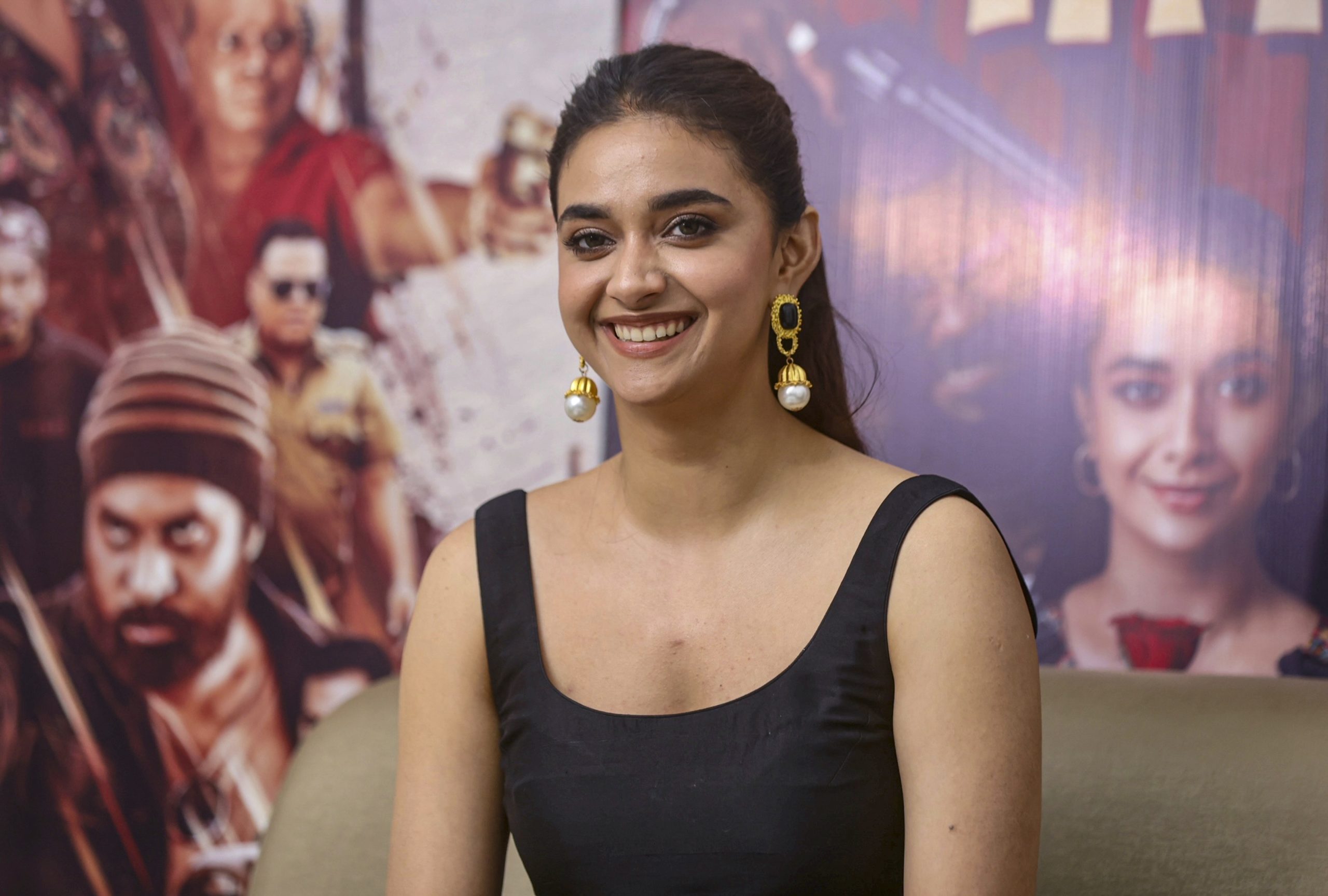
Tamil actor Keerthy Suresh has raised her voice against the alarming misuse of artificial intelligence in creating morphed images of herself, describing the experience as both “irritating and hurting.” Speaking at a press conference in Chennai while promoting her upcoming film Revolver Rita, Suresh opened up about the emotional toll of seeing her photographs manipulated by AI technology, bringing fresh attention to a crisis that extends far beyond the entertainment industry.
The Personal Impact: When Technology Strips Away Consent
During her candid remarks, Keerthy Suresh shared disturbing examples of how AI-generated alterations have affected her personally. “AI has become a huge issue. It has turned into a boon and a bane. Humans invented technology, but we are losing control,” she stated, highlighting the paradox of innovation creating uncontrollable consequences.
The actor revealed a particularly troubling incident involving an outfit she wore for a movie puja ceremony. The image was altered in unfavorable ways from different angles, creating fabricated content that bore a striking resemblance to authentic photographs. “For a second, I was wondering, and then I realized that I didn’t pose in such a way. It is definitely irritating. It is definitely hurting,” Suresh explained, underscoring how realistic these AI-morphed images have become. The sophistication of deepfake technology has reached a point where distinguishing between genuine and manipulated content has become nearly impossible for the untrained eye.
A Universal Problem Beyond Celebrity Circles
Critically, Keerthy Suresh emphasized that this issue is not confined to actors and public figures but poses significant risks to any individual with a digital footprint. “The issue is not confined to the film industry, but can affect anyone who is exposed to social media and digital platforms,” she noted, expanding the scope of concern to encompass millions of ordinary citizens who fall victim to AI-based identity theft and misuse.
Industry-Wide Alarm: Andrea Jeremiah’s Warning
Actor Andrea Jeremiah, who shared the platform at the press conference, amplified concerns about AI’s broader implications. “Not just actors, even for the public, AI is becoming a problem. AI should work for us and not the other way round,” Jeremiah asserted, capturing the sentiment that artificial intelligence has shifted from being a tool humanity controls to a force that now controls our digital identities.
A Crescendo of Legal Action
Keerthy Suresh’s comments arrive amid a judicial awakening in India regarding AI misuse and personality rights. Several prominent Bollywood actors—including Aishwarya Rai, Abhishek Bachchan, Suniel Shetty, Hrithik Roshan, and Akshay Kumar—have moved courts seeking protection against unauthorized AI-generated content, voice cloning, and deepfake pornography. In landmark cases, the Delhi High Court and Bombay High Court have granted comprehensive injunctions barring the creation, distribution, and monetization of deepfakes and morphed content.
The Bombay High Court, in its order protecting actor Suniel Shetty, described the situation as a “lethal combination of a depraved mind and the misuse of technology,” emphasizing the severity of personality rights infringement in the digital age.
The Need for Comprehensive Legal Safeguards
While judicial interventions have provided temporary relief, experts argue that India urgently needs a dedicated statutory framework addressing AI and deepfakes, similar to the European Union’s AI Act. The current piecemeal approach through individual court cases remains expensive, reactive, and accessible only to celebrities with substantial financial resources. Without comprehensive legislation, vulnerable populations particularly women and marginalized communities lack adequate protection against AI-based exploitation and harassment.
As Keerthy Suresh’s case underscores, the battle against AI misuse is not merely about protecting celebrity images but about safeguarding fundamental rights to privacy, dignity, and consent for everyone navigating the digital landscape.
By – Sonali