


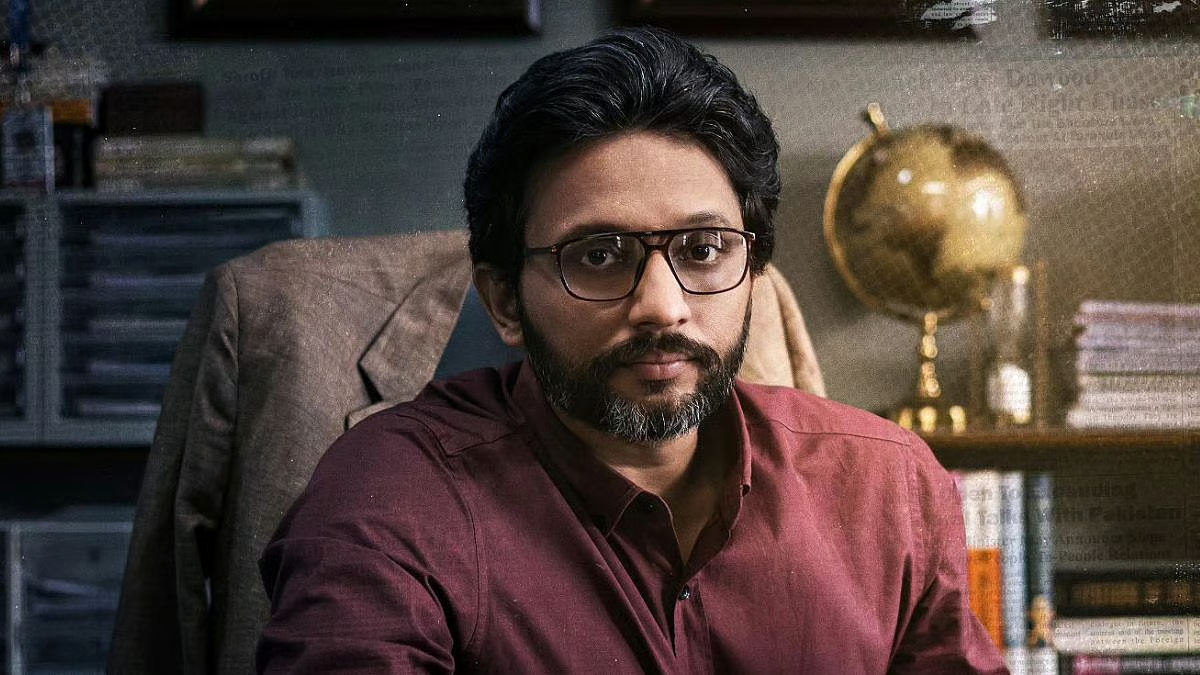
Actor Mohammed Zeeshan Ayyub, who played a pivotal role in Aanand L. Rai’s 2013 film Raanjhanaa, has publicly called the film “problematic” and refused to defend its narrative surrounding aggressive one-sided love. Speaking to The Sheroes TV, Ayyub admitted that the central character portrayed by Dhanush was indeed deeply flawed and that the film actively promoted harmful behaviors. “I did not defend it then, nor will I do it now. I saw a lot of people coming up with arguments to defend what’s portrayed in it. But I won’t. It was problematic, and the film promoted it,” he stated.
The actor emphasized that glorifying aggression in unrequited love should never be celebrated, marking a significant stance within the industry. Ayyub stressed that such narratives have real-world consequences and that romanticizing obsessive behavior under the guise of love is fundamentally wrong. His remarks carry particular weight, as he appears in a cameo role in Tere Ishk Mein, the spiritual successor to Raanjhanaa.
A Delayed Reckoning for a Box Office Success
When Raanjhanaa was released in 2013, the film starring Dhanush and Sonam Kapoor enjoyed both critical acclaim and impressive box office success. However, as years passed and cultural discourse evolved, audiences began to reassess the film through a critical lens, identifying its portrayal of stalking and harassment as glorification of toxic masculinity. What was initially celebrated as a romantic drama gradually became recognized as a film that normalized predatory behavior.
Ayyub’s current commentary reflects this cultural shift, suggesting that the industry is beginning to acknowledge the harm caused by such narratives. Unlike the 2013 release, which faced criticism only retrospectively, the current backlash against Tere Ishk Mein is unfolding in real time, indicating a faster cultural awakening.
Tere Ishk Mein Faces Immediate Backlash
The Dhanush and Kriti Sanon starrer, directed by the same filmmaker, Aanand L. Rai, with writer Himanshu Sharma returning to reprise their Raanjhanaa collaboration, has opened to widespread negative reviews. Many viewers have criticized the film for seemingly romanticizing toxic masculinity and promoting misogyny through its narrative. The film explores love and revenge, with the bond between lead characters becoming increasingly tense.
In response to the backlash, director Aanand L. Rai indicated that he expected such reactions and remains firm about the story he wanted to tell. However, Ayyub’s comments underscore the urgency with which the industry must reckon with such storytelling choices.
The Necessity of Critical Engagement with Cinema
Ayyub went beyond merely criticizing the films, calling for a broader cultural shift toward critical film engagement. He argued that dismissing problematic content as harmless entertainment is irresponsible and detrimental to societal progress. “Many people say that it’s just a piece of art and ask us to move on. But that’s not right. If something problematic is depicted in a film, it’s important to have discussions about it and criticise it,” he explained.
The actor advocated for critical approaches to all cinema, even well-intentioned work. “It’s essential to have a critical approach to everything. Even if someone is making something right, we should still look at it critically. Only then will our society move forward,” Ayyub concluded.
The AI Controversy Compounds the Dispute
The broader controversy surrounding Raanjhanaa has intensified with the recent AI-altered re-release of the film. In the original 2013 version, Dhanush’s character Kundan dies after being shot, with Sonam Kapoor’s Zoya by his side as the tragic climax unfolds. The AI-modified re-release fundamentally alters this ending—Kundan survives and wakes up in a hospital as supporting characters Bindiya (Swara Bhasker) and Murari (Ayyub) shed tears of relief.
This AI intervention has sparked a major dispute between director Aanand L. Rai and production house Eros International. Rai condemned the move, stating it was executed without his consent and warning that such interventions set a “dangerous precedent” for Indian cinema. He emphasized that while Eros may possess certain rights as producers, such decisions disregard fundamental principles of creative intent and artistic consent.
Eros, in turn, has defended the AI changes and asserted its rights over the film’s content, claiming to examine how technology can enhance storytelling. The studio further complicated matters by accusing Rai of using Raanjhanaa intellectual property in his upcoming film Tere Ishk Mein, escalating tensions between filmmaker and studio. Lead actor Dhanush has also publicly voiced disapproval of the altered ending, joining Rai in condemning the studio’s actions as a threat to cinema’s creative integrity.
By – Sonali