


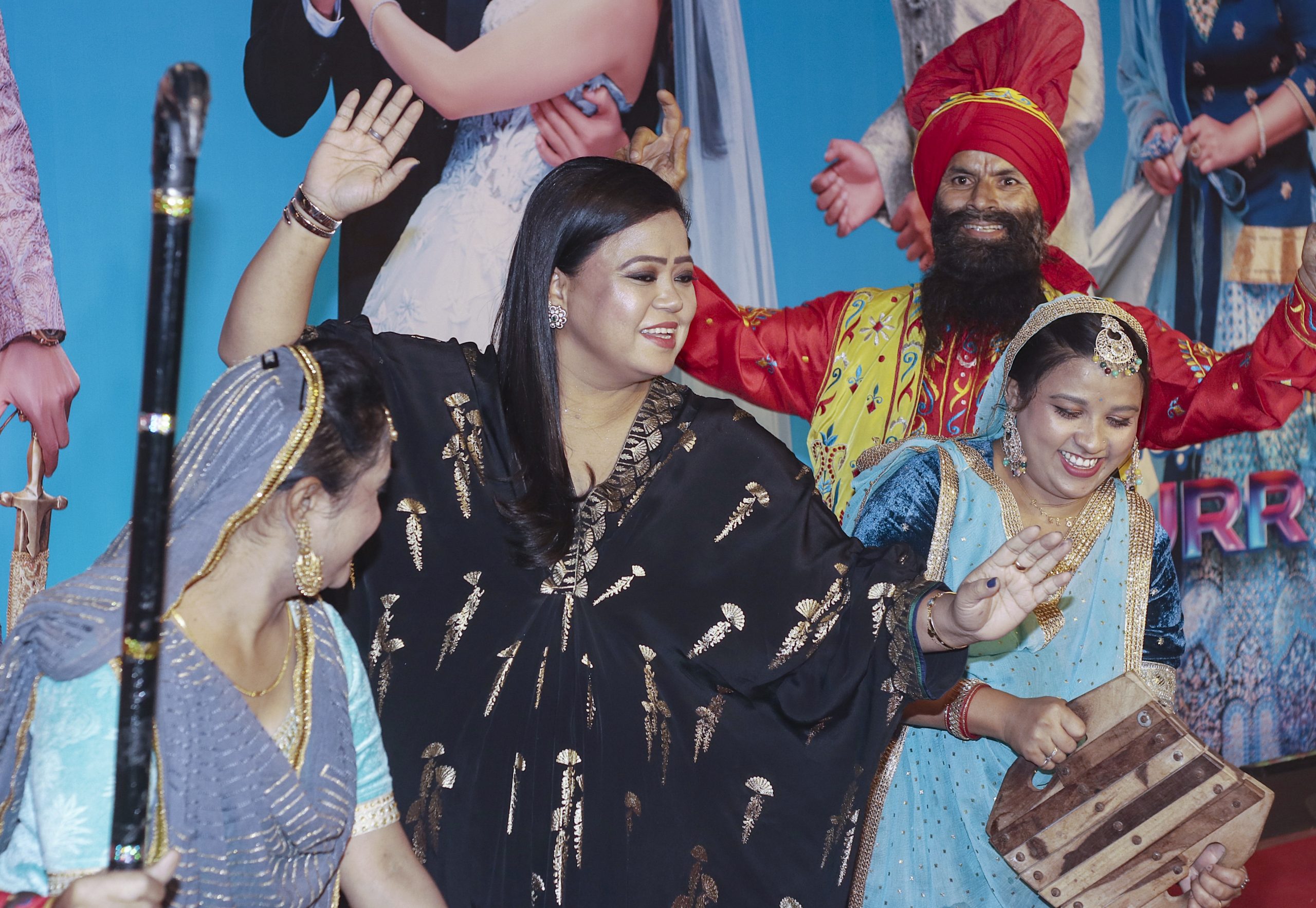
Bharti Singh, a comedian and television host, has faced intense online criticism following a widely perceived body-shaming remark on Laughter Chefs Season 3. The moment, which has since circulated in short clips across social media, triggered a broader discussion on where “banter” ends and personal commentary begins on prime-time entertainment shows.
What happened on the show
According to multiple reports, the controversy unfolded during an episode that featured the cast of Kis Kisko Pyaar Karoon 2 on the show for film promotions, including actress Ayesha Khan. During the interaction, Bharti compared Ayesha to comedian Krushna Abhishek—reportedly pointing to Ayesha’s height—an observation several viewers interpreted as an unnecessary remark on appearance rather than a harmless joke.
One report describes Ayesha appearing visibly uncomfortable in the moment, while other guests and participants reacted to the remark on-air.
Why viewers objected
The backlash was driven less by the format—Laughter Chefs often leans into roast-style humour—and more by the sense that the comment singled out a guest’s physical appearance. Online reactions criticised the normalisation of appearance-based humour on reality TV, with some users arguing that such jokes reinforce the very insecurities and social pressures that public figures have repeatedly spoken against.
Several posts also highlighted the perceived contradiction between body-positivity messaging in popular culture and the persistence of “casual” body commentary in mainstream comedy segments.
Was there an apology or clarification?
As of the latest reports, there has been no detailed public statement from Bharti Singh addressing the criticism; coverage largely reflects viewer reactions and the viral spread of the clip.
Separately, one report notes an on-set attempt to soften the moment after the remark, but that did not prevent the clip from drawing criticism online.
The bigger issue: comedy, consent, and “roast culture”
The episode has reignited a familiar debate in Indian television comedy: when a show’s tone encourages teasing, how should creators and hosts ensure that humour does not become personal—especially when guests may not share the same comfort with “roast” dynamics?
Critics argue that comedy formats can still be high-energy without defaulting to remarks about body, weight, height, or physical features—areas that are often sensitive and historically weaponised against women in particular. Supporters of roast-style humour, meanwhile, tend to view such exchanges as part of the genre, though this incident shows that audience tolerance for appearance-based jokes is shrinking.
By – Manoj